
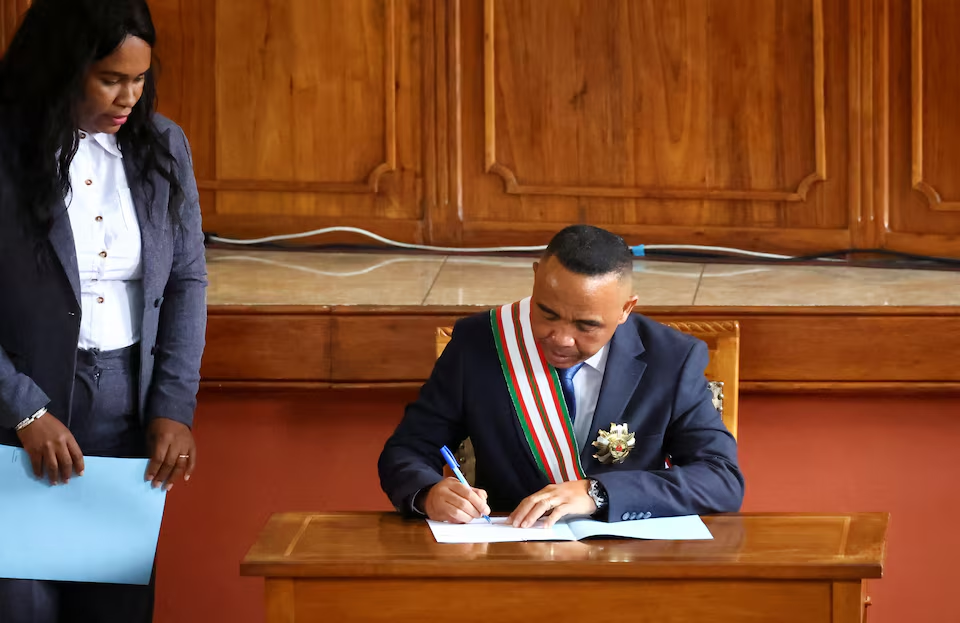
Days after conducting a military takeover in response to youth-led protests, Colonel Michael Randrianirina took over as president of Madagascar on Friday with ceremonial fanfare, including trumpets, raised swords, and cheering. His installation signifies a significant change in leadership, solidifying a military-run administration after weeks of protests over economic hardship and infrastructure breakdowns.
Youths’ prolonged protests calling for relief from ongoing power outages, water shortages, and ingrained corruption led to the coup. Although many viewed the coup as a time of reckoning, the focus now is on whether the new government can provide stability or slide into more unrest.
After he went overseas due to increasing criticism over the protests, former President Andry Rajoelina was impeached by lawmakers. Rajoelina’s grip weakened as defections raced through the security system, despite his condemnation of the coup and refusal to cede power while in exile. Hours after the military’s declaration, Randrianirina’s president was officially approved by Madagascar’s High Constitutional Court. Randrianirina promised to “fully, completely, and justly fulfil the high responsibilities” of his position during the swearing-in event at the lofty Constitutional Court. He also said he would use “all my strength to defend and strengthen national unity and human rights.” As trumpets blasted, he took office surrounded by armed officers with swords.
Read Also: AU Freezes Madagascar Membership After Army Seizes Power
He declared the dissolution of all state institutions save the National Assembly. For up to two years before to fresh elections, a transitional body will work with a military-led Council of the Presidency for the Re-Foundation of the Republic to govern.
The elite CAPSAT unit, which Randrianirina commanded, was a significant military force that was instrumental in the 2009 coup in Madagascar that first installed Rajoelina. He deviated from his prior allegiance during last week’s protests by advising soldiers not to shoot demonstrators. His sudden promotion illustrates how the importance of teenage protest movements is changing. Madagascar’s demographics, which include a high rate of poverty and an average age under 20, have made young people a powerful political force. However, some activists are already voicing concerns about how quickly the military took over, casting doubt on whether their demands will result in significant change.
In a prompt action, the African Union suspended Madagascar’s membership and denounced the military takeover as an illegitimate transfer of power. António Guterres, the UN secretary-general, condemned the coup and demanded that democratic governance and the rule of law be restored. Concerns about destabilizing precedents have been raised by SADC and other regional organizations.