
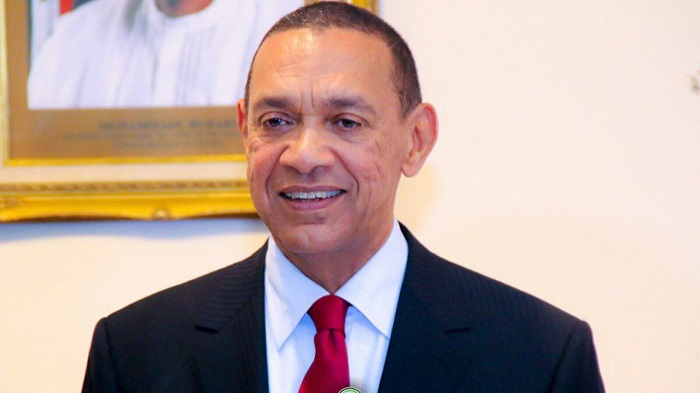
Former senator Ben Murray-Bruce has dismissed claims that the wave of defections from the Peoples Democratic Party (PDP) to the All Progressives Congress (APC) marks the decline of Nigeria’s multiparty democracy.
Speaking on Arise TV’s Prime Time on Thursday, a day after announcing his defection to the ruling APC, Murray-Bruce insisted that political transitions are part of every democracy and do not signal the death of opposition politics.
“Things get destroyed for others to show up. There will be other parties. It may not be called PDP, but there will be opposition,” he said. “If PDP dies, it dies. Somebody is going to show up — for sure.”
According to the media entrepreneur and Silverbird Group founder, Nigeria’s political structure inherently fosters the rise of alternative voices and movements that are able to oppose the ruling government. “There will be opposition, there will be election,” he continued. “There are people who will challenge the president, and it’s going to be a tough election.
Read Also: Enugu Governor, Peter Mbah Joins APC From PDP
Murray-Bruce’s remarks came as a result of the tumultuous week for PDP, as numerous federal lawmakers, Bayelsa State Governor Douye Diri, and Enugu State Governor Peter Mbah defected to the APC, escalating worries about the possibility of a one-party system. The former senator allayed those concerns, emphasizing that the exit of prominent PDP members should not be interpreted as a sign that Nigeria’s democratic system is failing. “Don’t think because PDP is half dead means the democratic process is dead,” he said. “It feels that way, people think that way, but somebody will emerge, a leader will show up, and there will be tough opposition.”
Murray-Bruce also named several prominent politicians who, in his view, remain capable of keeping Nigeria’s opposition alive. “Peter Obi is not dead. Kwankwaso is not dead. Atiku is not dead. So there will be opposition,” he said.
The former lawmaker formally joined the APC on Wednesday, praising President Bola Tinubu’s “economic vision and leadership” as his reason for switching allegiance, according to the Punch.
With a number of significant elections approaching, focus will now shift to whether new opposition groups, like those led by Peter Obi of the Labour Party and Rabiu Kwankwaso of the NNPP, can unite to effectively oppose the APC.