
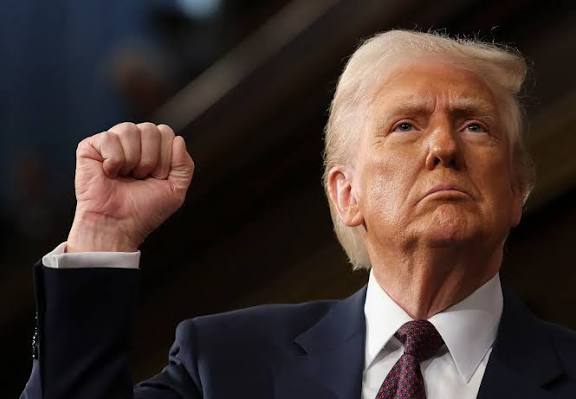
President Donald Trump says high-tech skilled immigrants are needed to train United States workers, pushing back against conservative critics.
President Donald Trump defended his support for high-tech skilled immigrants on Wednesday November 19, 2025, describing their role in training U.S. workers as consistent with his “Make America Great Again” (MAGA) agenda, despite pushback from conservative critics.
Speaking at the U.S.-Saudi Investment Forum in Washington, Trump highlighted the importance of foreign talent in advancing domestic manufacturing, including semiconductor and other advanced industries. He said that skilled immigrants could help train American workers in complex technical roles, after which they could return home if needed.
“I love my conservative friends. I love MAGA. But this is MAGA,” Trump told an audience of business executives and Saudi Crown Prince Mohammed bin Salman, who was on a visit to the U.S. “Those people are going to teach our people how to make computer chips, and in a short period of time, our people are going to be doing great. And those people can go home,” he added.
Read Also: White House: Press Secretary Opens Up About Age-Gap
Trump’s remarks come amid criticism from some MAGA supporters and conservative commentators, who have expressed concern over expanding the H-1B visa program and allowing skilled foreign workers to enter the U.S. on long-term or temporary visas. Last week, the President sparred with Fox News host Laura Ingraham over the issue. Ingraham argued that the country already has “plenty of talented people,” while Trump countered that “No, you don’t,” adding, “people have to learn.”
The President has previously been known for his hardline immigration policies, including strict enforcement measures and visa restrictions. His latest comments signal a more nuanced approach, emphasizing the strategic need for talent in industries crucial to U.S. economic competitiveness.
Trump framed skilled immigration as a short-term investment that strengthens American workers and domestic industries, rather than a challenge to conservative principles. Observers note that his position could influence debates over workforce development, visa programs, and domestic manufacturing policies as the administration seeks to expand the U.S. high-tech sector.
Analysts say the president’s stance may help address labor shortages in specialized fields while also highlighting a tension within conservative ranks between immigration restrictions and economic priorities. With global competition intensifying in technology and manufacturing, Trump’s support for foreign talent appears aimed at ensuring that U.S. workers are trained for critical high-tech roles, reinforcing the administration’s economic agenda.