
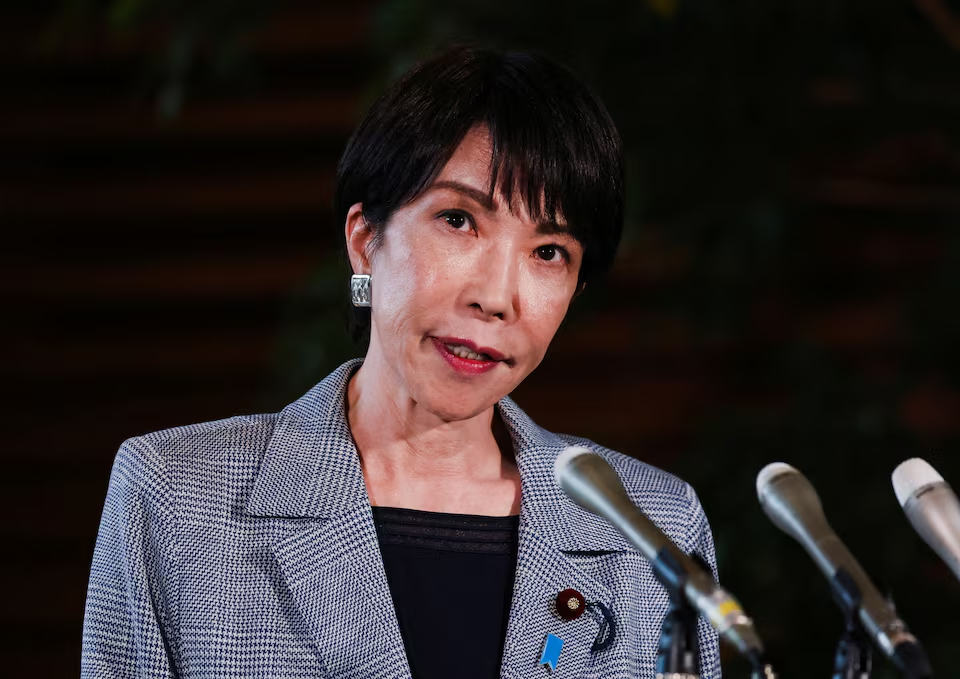
Japan will raise its tax free income threshold and widen deductions for middle income earners after Prime Minister Sanae Takaichi’s minority government struck an agreement with a key opposition party, a move aimed at easing pressure from rising living costs.
The ruling Liberal Democratic Party and the Democratic Party for the People agreed on Thursday to lift the minimum taxable income to 1.78 million yen, up from 1.6 million yen, according to government and party officials. The changes will be included in the tax reform framework for the next fiscal year beginning in April.
The adjustment is expected to benefit roughly 80 percent of taxpayers, reducing annual income tax bills for many middle income households by between 30,000 and 60,000 yen. Yuichiro Tamaki, leader of the Democratic Party for the People, said the measures would offer direct relief to households squeezed by higher prices.
“This will help people who are struggling with surging prices,” Tamaki told reporters after meeting Takaichi. He added that the threshold increase would result in a total tax cut of about 1.8 trillion yen when combined with an earlier, partial adjustment made this year.
In addition to the higher tax free threshold, the agreement includes expanded deductions for workers earning up to 6.65 million yen a year. The reform package is also expected to outline further tax breaks aimed at encouraging corporate investment, while setting out plans to raise income taxes from 2027 to help fund higher defence spending, according to domestic media reports.
Read Also: South Korea Air Defense Zone Breached By China And Russia
The government is due to formally announce the tax reform framework on Friday, followed by the compilation of the draft budget for the next fiscal year.
Total spending in Japan’s draft budget for fiscal 2026 is likely to exceed 120 trillion yen, marking a new record, two government sources familiar with the matter told Reuters. The size of the budget highlights the challenge facing Takaichi’s administration as it balances inflation relief, economic growth and longer term fiscal pressures.
Analysts say the tax changes underscore how a minority government is increasingly relying on opposition support to push through policies, particularly those tied to household incomes and price stability.