
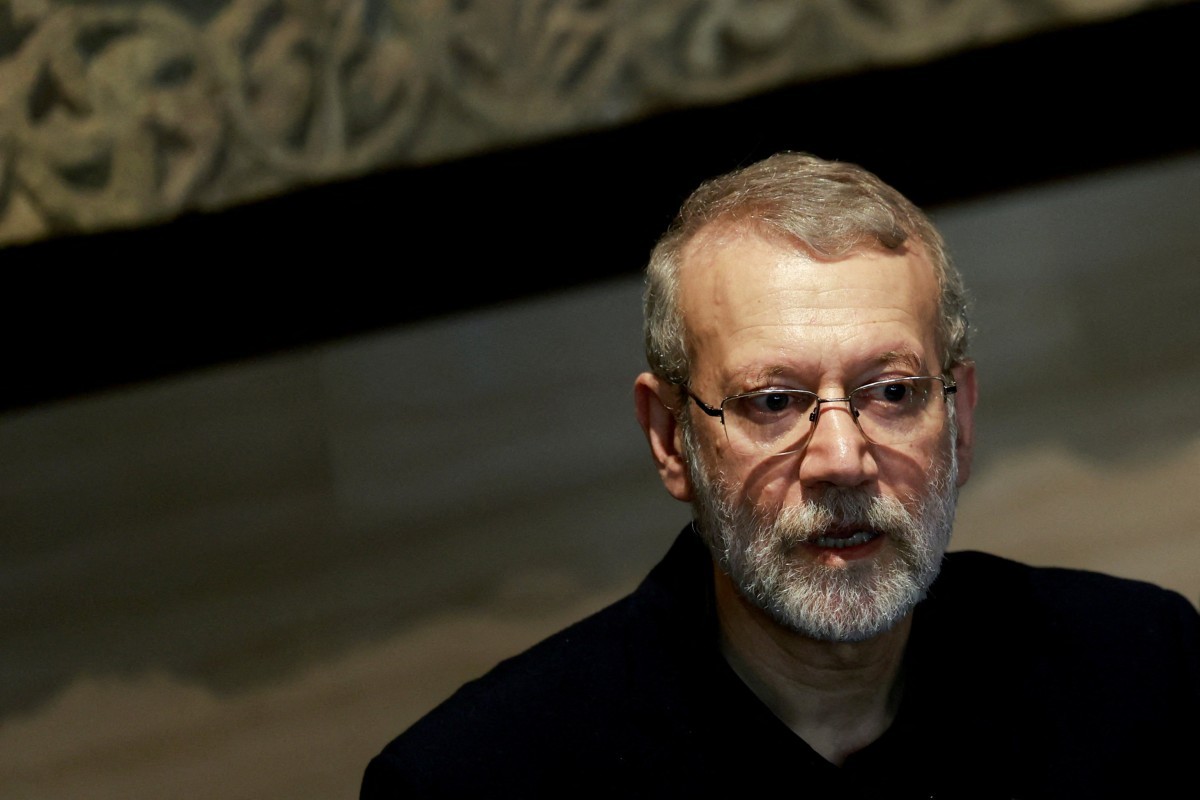
Ali Larijani has emerged as Iran’s most visible security official in the hours following airstrikes that killed Supreme Leader Ayatollah Ali Khamenei, announcing a temporary leadership council while simultaneously managing the country’s military response and its faltering nuclear negotiations with Washington.
The veteran politician, who holds the position of secretary of Iran’s Supreme National Security Council, accused the United States and Israel on Sunday of attempting to plunder and disintegrate Iran.
He warned what he called “secessionist groups” they would face harsh consequences if they exploited the crisis, according to state television, nearly 24 hours after American and Israeli forces launched attacks across Iranian territory. Armed Forces Chief of Staff Abdolrahim Mousavi was also killed in the strikes, state broadcaster Iran TV said.
Larijani’s prominence in the crisis reflects his unusual position straddling Iran’s often-competing power centers.
Appointed to lead the Supreme National Security Council in August, he had spent recent months shuttling between Oman and Moscow to prepare for indirect nuclear talks with Washington while also overseeing Tehran’s violent suppression of anti-government protests that erupted in January. The United States sanctioned him just weeks ago for allegedly directing a crackdown that rights groups say killed thousands of demonstrators, the worst domestic unrest Iran has experienced since the 1979 Islamic Revolution.
Despite those sanctions, Larijani traveled to Oman last month to lay groundwork for negotiations aimed at preventing further escalation between Tehran and Washington. His presence at those talks underscored his status as one of Khamenei’s most trusted strategists, a role built over decades of loyalty to the supreme leader and a reputation for navigating Iran’s fractious political landscape.
He had struck a pragmatic tone in public statements about the nuclear issue. “In my view, this issue is resolvable,” Larijani told Oman state television last month. “If the Americans’ concern is that Iran should not move toward acquiring a nuclear weapon, that can be addressed.”
Read also: Abu Dhabi Complex Housing Embassies Damaged In Strikes
Those remarks came as the Trump administration deployed additional military assets to the Middle East in what analysts described as an effort to extract concessions from Iran before launching Saturday’s strikes.
Larijani hails from one of Iran’s leading clerical families and has held senior positions throughout a career marked by close alignment with the country’s security apparatus. He previously led the Supreme National Security Council two decades ago before returning to the post last year following a 12-day air war between Iran, Israel and the United States.
His recent trips to Moscow signal Iran’s deepening security ties with Russia as both countries face mounting pressure from Western governments. Those visits covered a range of military and strategic cooperation issues, according to officials familiar with the discussions.
The contradiction between Larijani’s role as a diplomatic interlocutor and his alleged leadership of the January crackdown reflects tensions within Iran’s system between officials seeking accommodation with the West and those prioritizing internal control.
A U.S. Treasury statement issued January 15 said Larijani “was one of the first Iranian leaders to call for violence in response to the legitimate demands of the Iranian people,” adding he had acted at Khamenei’s direction. The sanctions froze any assets he holds in US jurisdiction and barred American entities from transactions with him.
Like other Iranian officials, Larijani has expressed understanding for demonstrations driven by economic hardship while condemning what he characterizes as armed actions instigated by Israel, Iran’s regional adversary.
His management of multiple crisis fronts—leadership transition, military response, nuclear diplomacy and internal security—positions him as a central figure in determining Iran’s direction in coming weeks.
Whether he can balance those competing pressures while maintaining unity among Iran’s fractured elite remains uncertain.
The temporary leadership council he announced will govern until the Assembly of Experts, a body of senior clerics, selects a permanent successor to Khamenei. Under Iran’s constitution, that council includes the president, the chief justice and a religious figure from the Guardian Council.
Read more: Flight Chaos After Iran Strikes Disrupts Global Air Travel
Larijani’s role overseeing both the transition and the military response gives him extraordinary influence over decisions that will shape Iran’s posture toward the United States, its regional strategy and its approach to internal dissent.
His ability to navigate those challenges while managing opposition from hardliners skeptical of any accommodation with Washington will test the pragmatic reputation he has cultivated.