
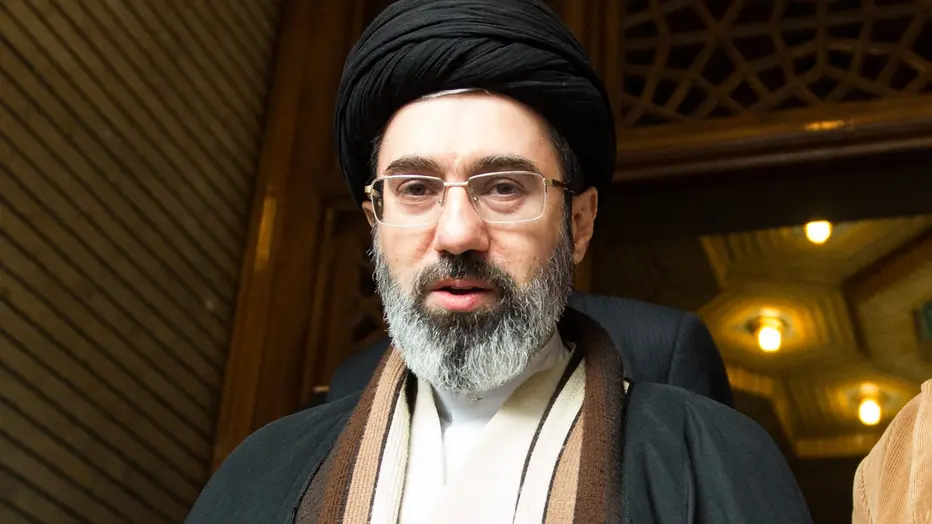
Washington put a bounty on Iran’s head of state Friday, offering $10 million for intelligence about Mojtaba Khamenei and nine other officials in what amounts to a public declaration that the United States views the country’s entire leadership structure as a terrorism apparatus worth dismantling through rewards and potential defection.
The State Department framed the announcement as targeting individuals who “command and direct various elements of Iran’s Islamic Revolutionary Guard Corps, which plans, organises and executes terrorism around the world.” Interior Minister Eskandar Momeni and Intelligence Minister Esmail Khatib appeared on the list alongside the supreme leader, whose father died in a February 28 bombing that launched the current war.
Tipsters were directed to submit information via encrypted channels Tor or Signal, with assurances that valuable intelligence “could make you eligible for relocation and a reward.” The language suggests Washington is prepared to extract and resettle informants willing to provide actionable details on Iran’s top tier.
Read also: Trump: Iran World Cup Presence ‘Inappropriate’ For Safety
The Rewards for Justice program typically targets fugitives, militants and figures accused of plotting attacks against American interests. Extending it to a sitting supreme leader marks an escalation that treats Iran’s constitutional government as an organized criminal enterprise rather than a sovereign state, however hostile.
Mojtaba Khamenei assumed office after his father’s killing, a hereditary succession that drew criticism from exiled opposition figures and defied Washington’s demand for approval of whoever took the position. President Donald Trump had dismissed the younger Khamenei as an unacceptable “lightweight” before Iran’s Assembly of Experts selected him anyway.
Read also: 15 Jailed For Life For Crocus City Hall Concert Massacre
Whether the bounty produces useful information or simply inflames tensions depends partly on whether anyone close to the listed officials calculates that $10 million and American protection outweigh loyalty or fear of reprisal. Iran’s security services have demonstrated reach beyond its borders in tracking dissidents and punishing perceived traitors.
The inclusion of intelligence and interior ministers alongside the supreme leader suggests an effort to pressure multiple power centers simultaneously. Both positions control enforcement mechanisms that keep the Islamic Republic functioning, and losing either to defection or targeted action would create operational gaps difficult to fill quickly.
How Iran will respond to having its leadership officially designated bounty targets remains unclear. Previous American sanctions and designations prompted retaliation through proxies and asymmetric operations, though the current war has already pushed confrontation beyond the proxy stage into direct combat.
The announcement came as fighting entered its third week, with casualty tolls mounting and energy markets absorbing the shock of Strait of Hormuz closure. Whether placing financial incentives on information about Iranian leaders will hasten the conflict’s end or prolong it by eliminating any diplomatic off-ramps is uncertain.