
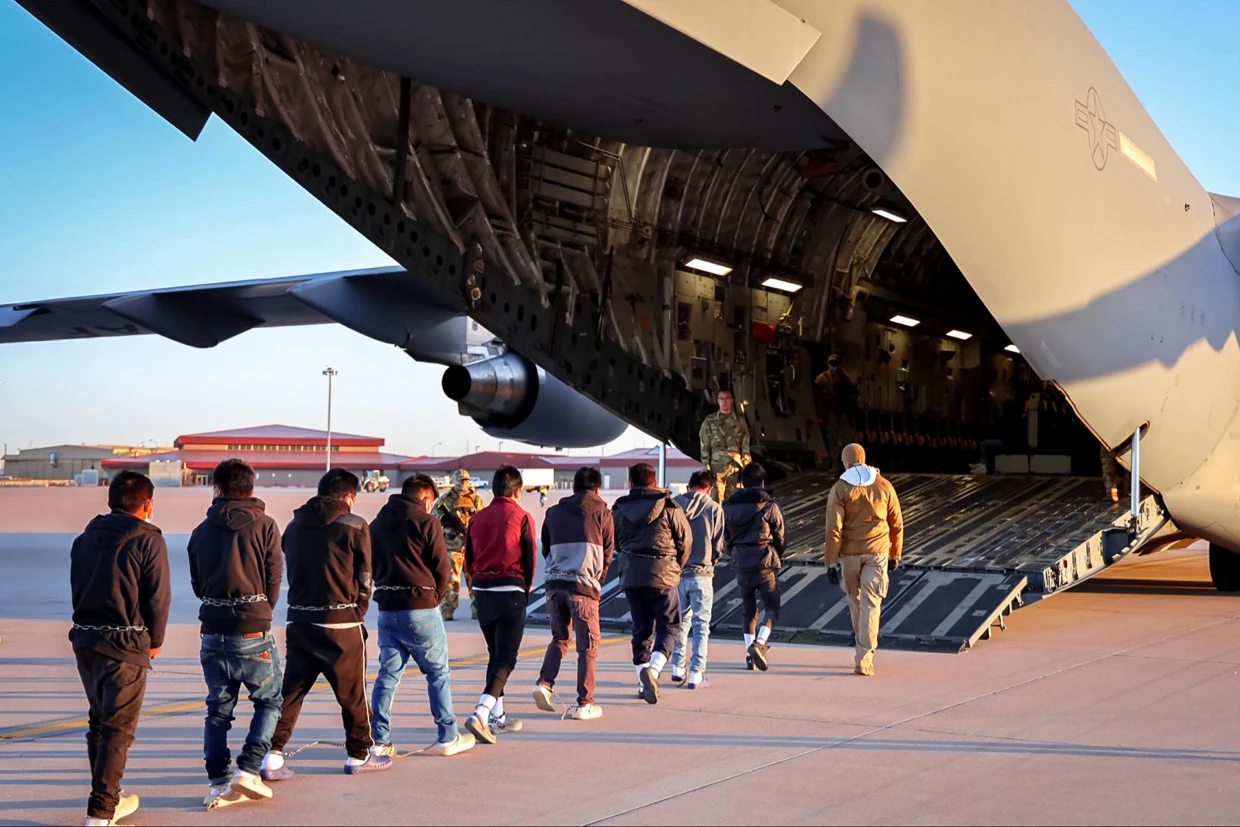
The United States has carried out a second round of controversial “third-country” deportations, sending a group of foreign nationals to the small southern African kingdom of Eswatini despite mounting human rights concerns.
Eswatini’s government confirmed on Monday that it had received ten deportees from the U.S., none of whom were citizens of the country. This follows an earlier deportation in July, when five non-Eswatini nationals were sent there under the same policy.
The White House defended the decision, saying the individuals deported had been convicted of serious crimes. However, officials from both Washington and Mbabane declined to disclose their nationalities.
U.S.-based immigration lawyer Tin Thanh Nguyen told Reuters that the new arrivals included three Vietnamese nationals, one Filipino, and one Cambodian. He said he also represented two of those sent in this latest flight and two others from the July group — yet had still not been able to contact any of them.
Read more: Israel Deports Greta Thunberg, 170 Activists
“I cannot call them. I cannot email them. I cannot communicate through local counsel because the Eswatini government blocks all attorney access,” Nguyen said, calling the situation “a clear violation of international due process norms.”
Human rights groups have condemned the policy and accused U.S. authorities of outsourcing deportations to countries with weak legal systems. They allege that the first group of deportees sent to Eswatini — which reportedly included individuals from Vietnam, Jamaica, Laos, Cuba, and Yemen — were held in solitary confinement and denied access to legal counsel.
Rights advocates fear the practice could leave deportees stranded in foreign countries where they do not speak the language, lack documentation, and may be vulnerable to abuse or indefinite detention.
The controversial practice of sending deportees to “third countries” — nations with which they have no ties — dates back to the Trump administration, which also sent individuals to South Sudan, Ghana, and Rwanda.
White House spokesperson Abigail Jackson defended the latest operation, saying the deportees had been convicted of “heinous crimes, including murder and rape.”
“They do not belong in the United States,” she said.
The move has reignited debate about the legality and morality of third-country deportations, as rights groups demand transparency and accountability for those affected.