
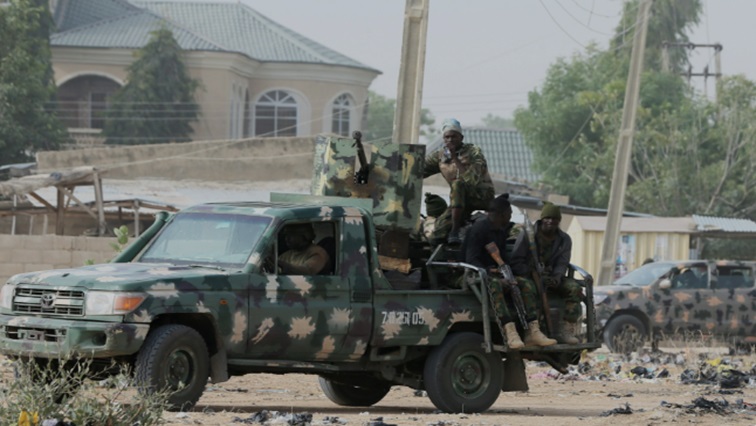
Islamist insurgents launched coordinated assaults overnight across four districts in Borno and Yobe states, employing armed drones, rocket fire, and arson to strike military installations, a Nigerian army spokesperson said on Thursday.
The attacks occurred between midnight and 03:00 GMT, targeting three positions in Borno and one in Yobe. In Mafa and Dikwa, insurgents briefly breached defences, setting vehicles and barracks ablaze with drone and RPG attacks, according to Sani Uba, the military’s counterinsurgency spokesman. Some troops were wounded but are reported to be in stable condition. The military says it killed 50 attackers and recovered arms and ammunition.
Security sources said militants attempted to cut off troop reinforcements before being forced to retreat under pressure from aerial support. Four soldiers have been confirmed killed in related engagements this month in Borno.
Read Also: Jonathan Denies Linking Buhari To Boko Haram Amid Backlash
Nigeria has been experiencing Islamist insurgency for more than 15 years. Tens of thousands have died, and over two million displaced by violence, particularly in the northeast. Humanitarian agencies describe the security crisis as one of Africa’s most protracted.
Earlier this year, Borno State’s governor warned that jihadist groups like Boko Haram and its offshoot ISWAP were making renewed gains, even as the military claimed successes. The use of drones in the latest attacks reflects evolving militant tactics.
In March 2025, suspected Islamists struck two military bases in Borno, killing four soldiers and damaging installations. The military responded with air force reinforcements.
These simultaneous attacks highlight militants’ ability to coordinate high-intensity operations, stretching military resources across districts. Observers say the deployment of drones represents a dangerous escalation in insurgent capabilities. The Multinational Joint Task Force (MNJTF), a regional counterterrorism effort, has recently faced setbacks—most notably Niger’s exit in 2025, which critics say weakens collective response in the Lake Chad region.
Domestically, insecurity deepens divisions over resource allocation and military strategy. The federal government under President Bola Tinubu has pledged to intensify counterterrorism efforts, but it’s been argued that endemic corruption, weak command structure, and poor coordination hamper the campaign.
With insurgents regularly striking military posts, villages, and markets, the conflict is balancing on a knife’s edge. The coming weeks will test whether Nigeria can reclaim momentum or find itself increasingly on the back foot.