
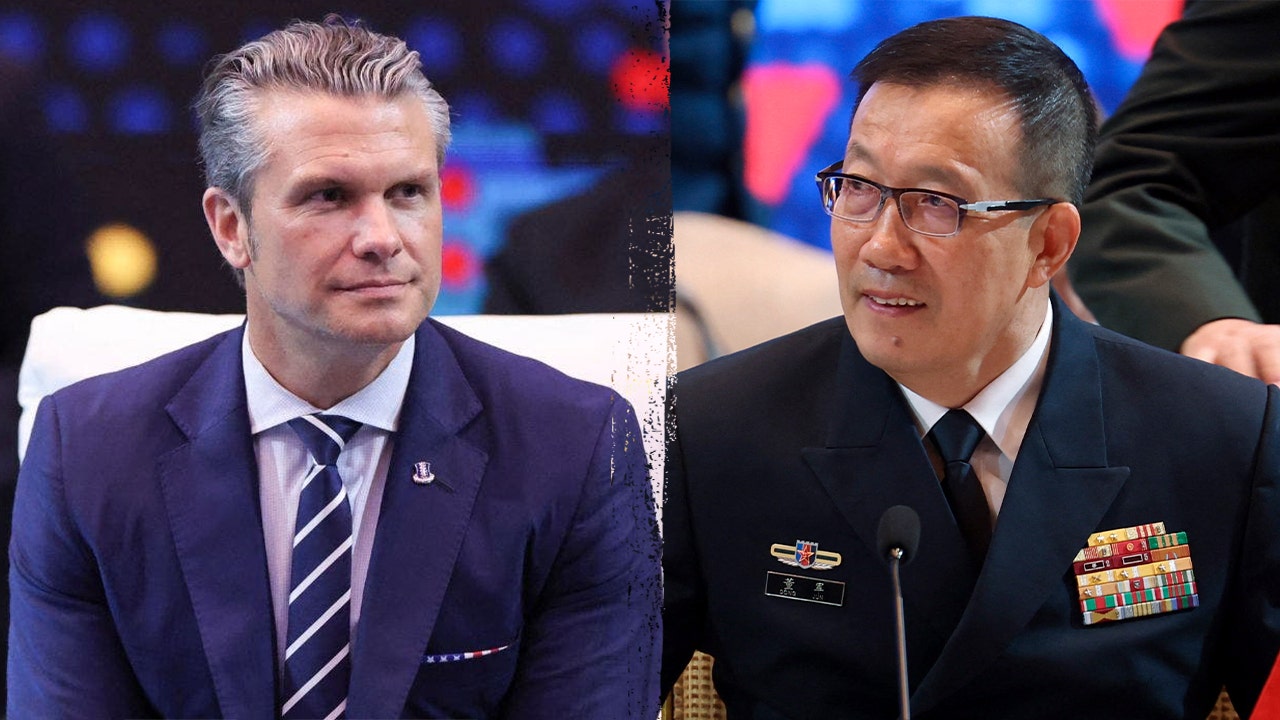
The United States and China have agreed to re-establish military-to-military communication channels in a bid to prevent potential conflicts and ease tensions between the two global powers.
US Defence Secretary Pete Hegseth announced the decision following a phone call with China’s Minister of National Defence, Admiral Dong Jun, on Friday night. The agreement comes in the wake of a “historic” meeting between US President Donald Trump and Chinese President Xi Jinping in South Korea earlier this week.
“Admiral Dong and I agreed that peace, stability, and good relations are the best path for our two great nations,” Hegseth said. “We will set up direct channels to deconflict and deescalate any problems that arise.”
Beijing has yet to issue an official statement, but the move marks a notable thaw after years of strained military communication. Analysts have long warned that the absence of such links increases the risk of miscalculation, especially in the South China Sea and the Taiwan Strait, where both militaries operate in close proximity.
Relations between Washington and Beijing have fluctuated sharply over the past decade. During Trump’s first term, most of the more than 90 existing communication channels between the two governments fell dormant. Under the Biden administration, China suspended remaining military contacts after a high-profile visit to Taiwan by then–House Speaker Nancy Pelosi in 2022.
Since then, both sides have reported several near-miss incidents, including confrontations between naval destroyers and fighter jets. Each side accused the other of unsafe manoeuvres and provocation. The lack of crisis-management mechanisms has worried regional allies and security experts alike.
The recent Trump-Xi meeting sought to reverse that course. Alongside the military hotline agreement, Trump announced a partial easing of tariffs on Chinese goods—from 57% to 47%—and said China had agreed to maintain its exports of rare earth materials vital to US industries. The leaders also discussed technology and trade issues but stopped short of a deal over TikTok or semiconductor sales.
Hegseth, who later met Dong in Malaysia, said he reaffirmed America’s commitment to maintaining a “balance of power” in the Indo-Pacific and raised concerns about China’s actions around Taiwan and in the South China Sea.
Read Also: Deadly Supermarket Blast Kills 23 In Northern Mexico
China’s defence minister, for his part, reiterated Beijing’s position that reunification with Taiwan remains “an unstoppable historical trend.”
Trump is expected to visit China in April, with Xi scheduled to make a reciprocal trip to the United States later this year — signalling a cautious but significant reopening of dialogue between the world’s two dominant powers.