
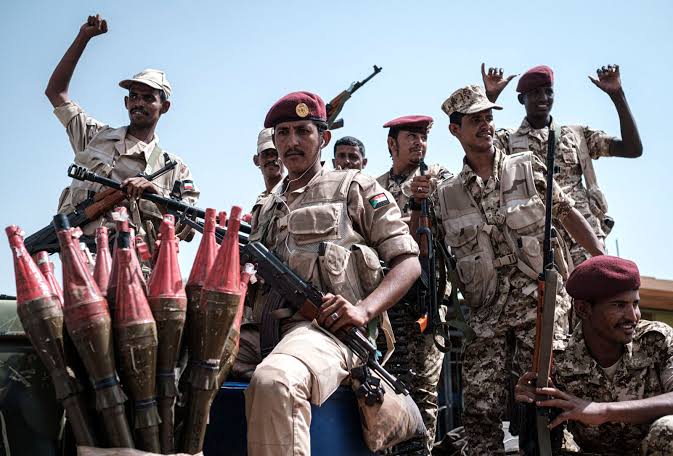
Sudan’s paramilitary Rapid Support Forces (RSF) last week accepted a U.S.-brokered ceasefire following international outcry over reports of mass civilian killings in al-Fashir, the army’s last major stronghold in Darfur. The Sudanese army, however, has rejected the proposal, leaving fighting and displacement ongoing, and raising concerns over humanitarian access after two and a half years of conflict.
The ceasefire could provide a critical window for delivering much-needed aid, but analysts warn the respite may be limited as both sides continue to mobilize for further operations.
The RSF expanded operations into Kordofan after capturing al-Fashir last month, seizing the town of Bara in North Kordofan, a key route linking Darfur to central Sudan. The army had retaken the town just two months prior. “You celebrated with the army … we have to kill you,” said Khalil, an escapee from Bara who was wounded by RSF fire. He described witnessing soldiers shooting at a row of nine men, killing two.
Read Also: Sudan Ceasefire Proposal Accepted By Rapid Support Forces
Other survivors recounted brutal home raids, summary executions, and extortion for money and valuables. Ismail hid in a house while men were shot in the streets, and Mohamed reported his father was fatally shot by RSF troops before he fled on foot with his family.
Amy Pope, head of the International Organization for Migration, said up to 50,000 people have been displaced from Kordofan since the offensive began. Emergency Lawyers, a Sudanese activist group, estimates that hundreds were killed in Bara. The RSF denied responsibility for the killings in Bara, claiming the army blocked peace attempts.
“Any place where the army is present is a legitimate target and we will attack in any area in Kordofan, Khartoum, or Port Sudan,” an RSF leader said, dismissing widespread abuse reports as exaggerated.
Reports indicate that fighting may shift toward El Obeid, North Kordofan’s capital, while Babanusa in West Kordofan, home to a major army base, is surrounded by RSF forces. In South Kordofan, RSF fighters and the SPLM-N armed group are encircling army positions in Kadugli and al-Dalanj, where UN monitors warn famine is affecting residents.
Observers note a broader military buildup, including arms deliveries via South Sudan and increased cargo flights to Port Sudan. Reuters could not independently confirm these reports.
The conflict, rooted in a power struggle, has caused ethnic violence, widespread destruction, and mass displacement, drawing in foreign powers and raising fears of a fractured Sudan. Both sides have increasingly used drone strikes, resulting in heavy civilian casualties. On November 3, a drone attack in Sheikan locality reportedly killed 49 people, including women and children, according to Emergency Lawyers.
“Developments on the ground indicate clear preparations for intensified hostilities, with everything that implies for its long-suffering people,” U.N. human rights chief Volker Turk said.