
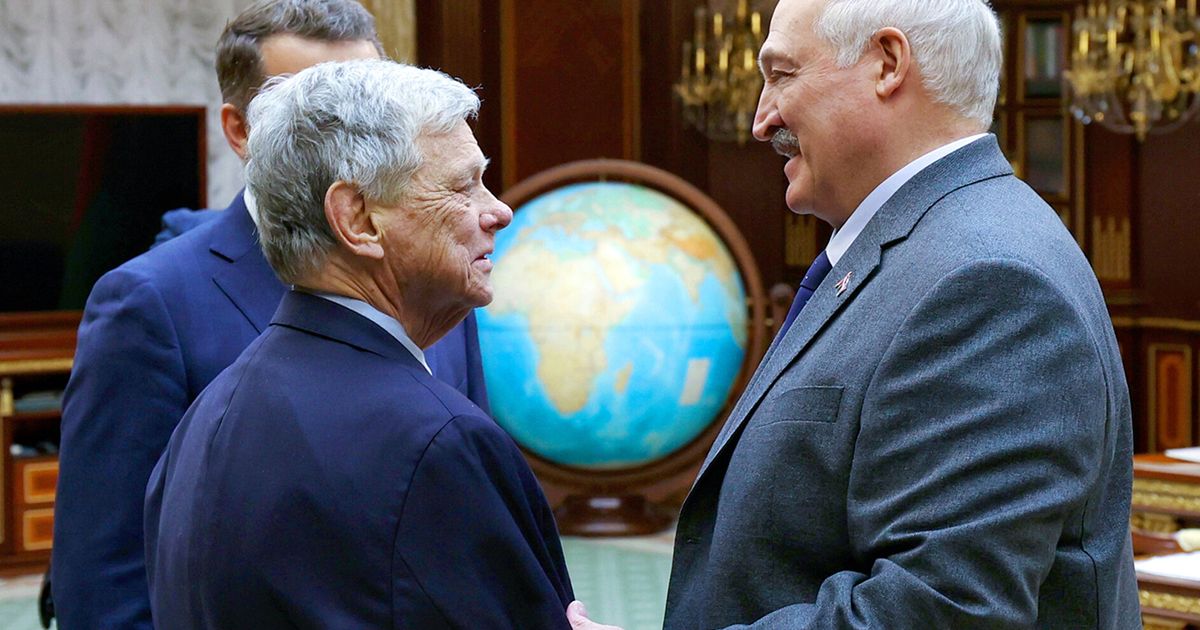
The United States has agreed to lift sanctions on Belarusian potash, a key export for the Eastern European country, following two days of talks in Minsk between President Alexander Lukashenko and a senior envoy of U.S. President Donald Trump, according to statements released Saturday.
The move was confirmed by John Coale, Trump’s special envoy, who said the decision was made under direct instructions from the U.S. president after meetings focused on political prisoners, regional security, and broader geopolitical issues.
Belarus is one of the world’s major producers of potash, an essential ingredient in agricultural fertilizer. U.S. sanctions on the sector had been in place for several years as part of broader measures targeting Lukashenko’s government.
“Per the instructions of President Trump, we, the United States, will be lifting sanctions on potash,” Coale said, according to video footage published by the Telegram channel of Belarus’s presidential administration.
While Coale described the move as positive for Belarus’s economy, he did not specify what concessions, if any, Lukashenko had agreed to in return.
Coale has been tasked by the White House with negotiating the release of more than 1,000 political prisoners held in Belarus following years of political repression.
The United States and the European Union first imposed sweeping sanctions on Minsk after the disputed 2020 presidential election, which Lukashenko claimed to have won and which was followed by a violent crackdown on mass protests. Nearly all prominent opposition figures were jailed or forced into exile.
Sanctions were later expanded after Belarus allowed its territory to be used as a staging ground for Russia’s invasion of Ukraine in 2022.
The decision to lift U.S. sanctions on potash drew sharp criticism from Belarusian opposition figures, who warned it could embolden Lukashenko without producing meaningful political change.
Franak Viacorka, a senior adviser to opposition leader Sviatlana Tsikhanouskaya, said the move should be viewed with caution.
“Lukashenko has not changed his policy. Repression continues, and he continues to support Russia’s war against Ukraine,” Viacorka told Reuters. He added that European Union sanctions—particularly restrictions on exporting potash through EU ports—remain more consequential than U.S. measures.
Read Also: U.S. Plans Mandatory Social Media Checks for Visa-Free Entry
“That is why we must be extremely careful with any talk of easing sanctions, so that we do not end up strengthening Russia’s war machine or rewarding ongoing repression,” he said.
Belarusian state news agency Belta reported that Coale and Lukashenko discussed a broad range of international issues during the talks, including Russia’s war in Ukraine and the political situation in Venezuela.
Lukashenko has recently hosted senior Venezuelan officials and said President Nicolás Maduro—whom Trump has openly pressured to step aside—would be welcome to visit Belarus.
Coale suggested Lukashenko’s close relationship with Russian President Vladimir Putin could play a role in diplomatic efforts to end the war in Ukraine.
“Your president has a long history with President Putin and the ability to advise him,” Coale said, according to Belta. “They are longtime friends and have the necessary level of relationship to discuss such issues.”