
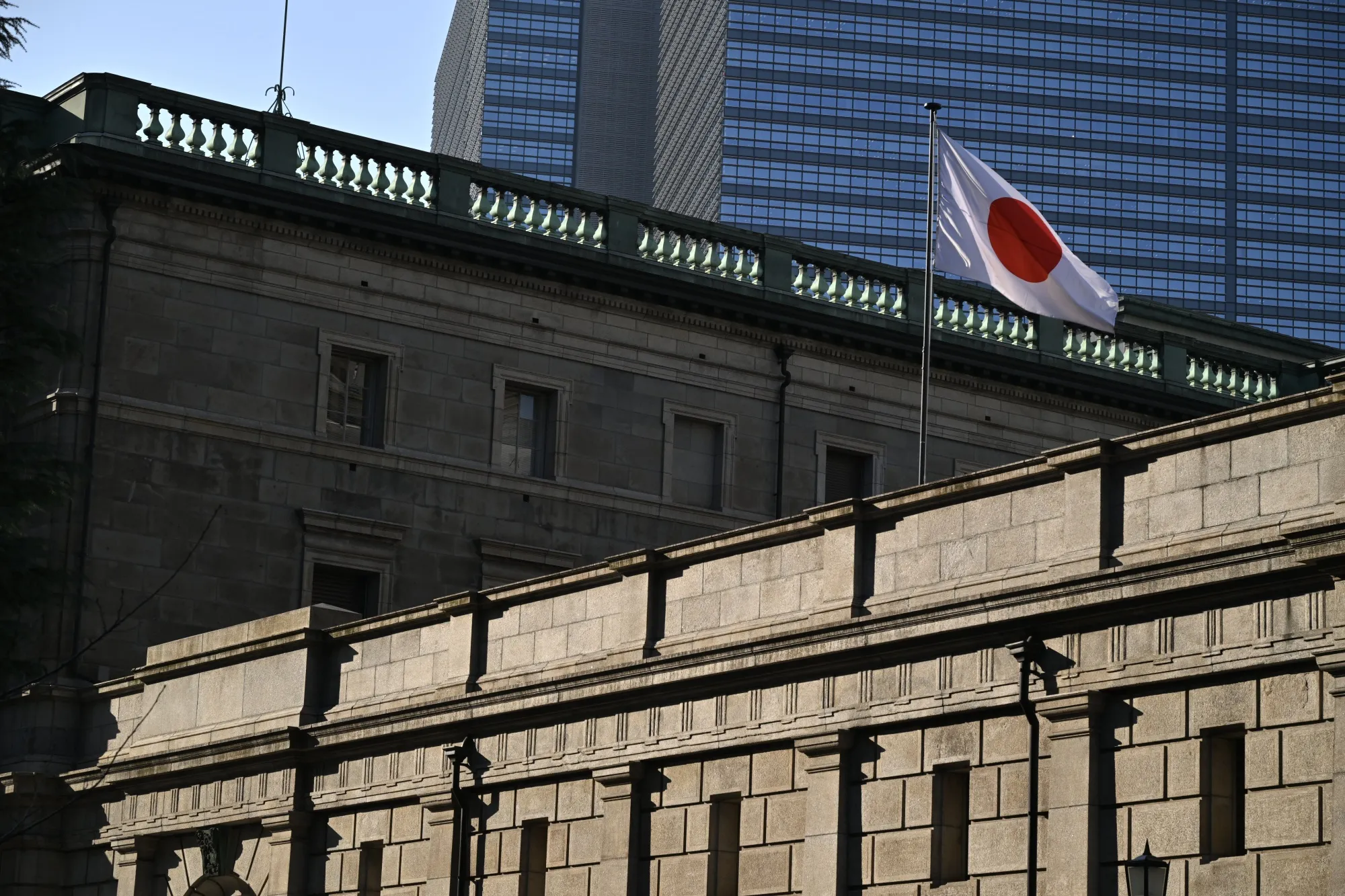
Japan’s Central Bank lifts interest rates for the first time since January 2025, signaling further hikes as inflation and wage growth gain momentum.
Bank of Japan raised interest rates on Friday December 19, 2025, to levels not seen in three decades, signaling a decisive shift toward normalizing monetary policy after years of near-zero borrowing costs. The central bank’s move reflects growing confidence that Japan’s economy is on track to meet its 2% inflation target, supported by rising wages.
In a unanimous decision, the BOJ lifted short-term interest rates from 0.5% to 0.75%, marking the first increase since January 2025. This brings borrowing costs to levels last seen in 1995, during the aftermath of Japan’s asset bubble collapse and a prolonged battle with deflation.
“Judging from recent data and surveys, there is a high chance the mechanism in which wages and inflation rise moderately in tandem will be sustained,” the BOJ said in a statement. It added that real interest rates remain significantly low, and further rate hikes will follow if economic and price forecasts materialize.
Governor Kazuo Ueda is expected to provide additional clarity on the pace and extent of future increases during a post-meeting news briefing. Markets are closely watching, as changes in Japan’s monetary policy could influence the yen’s role as a low-cost funding currency for investors globally.
Read Also: Japan Tax Free Income Threshold Raised To Ease Inflation
Following the announcement, the yen fell more than 0.3% to 156.02 per dollar, a move largely anticipated by investors. Meanwhile, the benchmark 10-year Japanese government bond yield rose 3.5 basis points to 2.0%, its highest level since May 2006.
Financial analysts expect the BOJ to maintain a gradualist approach. “Having been a major funding currency for a sustained period of time, we expect the Bank of Japan to remain gradualist in its approach to normalizing monetary policy and to clearly signal any future changes,” said Mel Siew, Asia credit portfolio manager at Muzinich & Co in Singapore.
However, the decision was not without internal debate. Board members Hajime Takata and Naoki Tamura dissented, arguing that underlying inflation has either already reached or will soon reach the central bank’s target, sooner than the broader projection period ending in fiscal 2027.
The move underscores a pivotal moment in Japan’s monetary policy, as the country transitions away from decades of aggressive stimulus and low-interest-rate policies. Investors worldwide are now recalibrating strategies around the yen and Japanese government debt, anticipating the central bank’s next steps in a slowly normalizing economic landscape.