
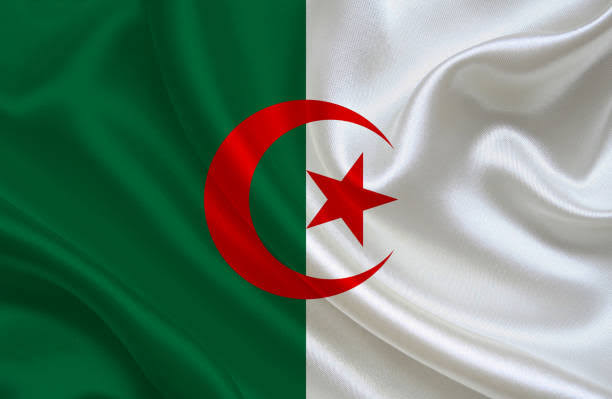
Exiled Kabyle leaders proclaim a new republic in Paris, challenging Algeria’s territorial integrity and raising fresh questions for Western diplomacy in North Africa.
A group representing Algeria’s Kabyle minority has declared the creation of an independent state, marking a symbolic but highly contentious development in North African politics that has drawn cautious attention from governments and analysts across Europe, the United States, and the Middle East.
On December 14, 2025, the Movement for the Self-Determination of Kabylia (MAK), an organization banned in Algeria, proclaimed what it called the Federal Republic of Kabylia during a gathering in Paris. The declaration was led by Ferhat Mehenni, head of the movement, who was presented as president of the newly announced entity.
The announcement, made outside Algeria and without international recognition, immediately underscored the deep political sensitivities surrounding Kabylia, a mountainous region in northern Algeria with a distinct Amazigh (Berber) identity and a population estimated at about nine million. Algerian authorities have long rejected Kabyle separatism, labeling MAK a terrorist organization and accusing it of undermining national unity.
MAK leaders described the declaration as the culmination of decades of political marginalization and cultural repression. They said the proposed state would be secular, democratic, and aligned with Western political values, including gender equality and freedom of religion. A draft constitution circulated by the movement bans foreign religious financing and emphasizes civilian rule.
Algeria’s government did not immediately comment on the Paris declaration. In the past, it has insisted that Kabylia’s future can only be discussed within the framework of Algeria’s sovereignty and constitution.
Read Also: Morocco Emergency Relief Operation After Deadly Floods
The announcement comes at a time of heightened geopolitical competition in North Africa. Algeria is a major energy supplier to Europe and one of Russia’s closest military partners in the region, purchasing advanced weapons systems and maintaining longstanding defense ties with Moscow. Western officials have increasingly expressed concern about Russia’s growing footprint across the Sahel and the Mediterranean.
Supporters of the Kabyle movement argue that an independent Kabylia would alter regional dynamics by weakening Algiers’ influence and offering a new, pro-Western political actor in the Maghreb. They point to Kabylia’s Mediterranean coastline and the port city of Bejaia as strategically significant.
The declaration has also drawn interest in Israel and Morocco. Kabyle leaders have highlighted historical and cultural parallels with Israel and said they seek closer ties. Moroccan analysts note that the move highlights tensions in Algeria’s support for self-determination abroad while rejecting similar demands at home.
For now, the proclamation remains largely symbolic. No country has recognized Kabylia as a state, and there is no indication of imminent changes on the ground inside Algeria. Still, the Paris declaration has reopened debates over self-determination, sovereignty, and external influence in a region already shaped by conflict and rivalry.
Diplomats say Western governments are likely to tread carefully, balancing human rights concerns with the risks of further destabilizing a key North African state.