
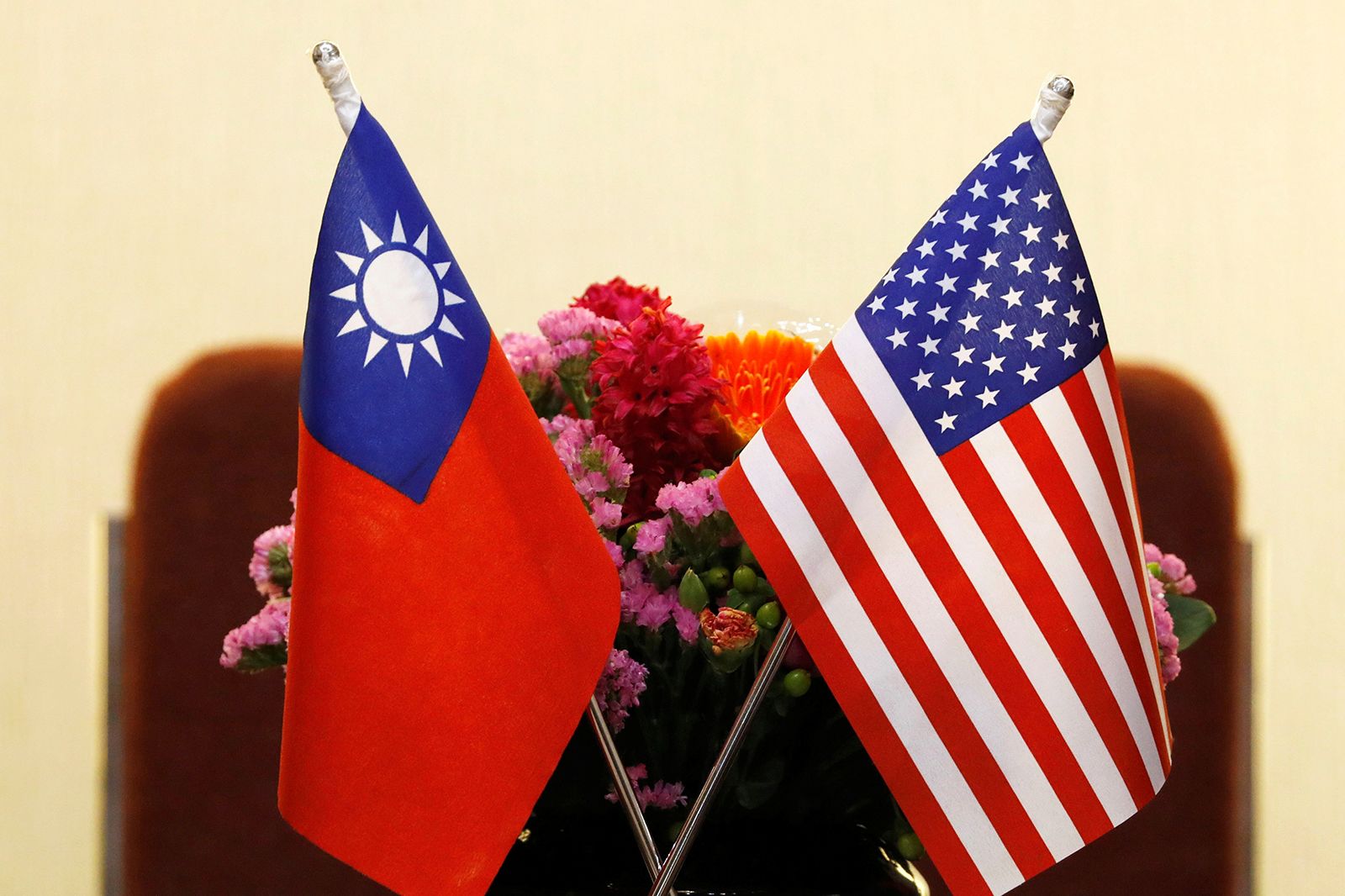
Taiwan and the United States have reached a general consensus on a trade agreement that would cut U.S. tariffs on Taiwanese exports, officials in Taipei said Tuesday, marking a significant step in months long negotiations.
Taiwan’s Office of Trade Negotiations said talks with U.S. counterparts had produced an outline agreement aimed at lowering tariffs on both sides while avoiding layered duties and securing preferential treatment under U.S. national security trade rules.
“The goal of the U.S. Taiwan tariff negotiations has always been to seek reciprocal tariff reductions without stacking tariffs and to obtain preferential treatment under Section 232,” the office said in a statement reported by AFP.
Details of the agreement were not immediately released. However, Bloomberg and The New York Times reported that Taiwan’s tariff rate would fall to 15 percent, down from the 20 percent level imposed earlier this year.
U.S. President Donald Trump announced a 32 percent tariff on Taiwanese goods in April as part of his broader trade push, before lowering the rate in August to allow space for further negotiations.
Since launching his trade campaign last year, Trump has encouraged foreign partners to boost investment in the United States in exchange for tariff relief. Japan and South Korea reached similar arrangements, pledging $550 billion and $350 billion respectively and securing lower tariff rates.
As part of the emerging agreement, Taiwan Semiconductor Manufacturing Company is expected to expand its U.S. footprint. Bloomberg and The New York Times, citing unnamed officials, reported that TSMC would commit to building at least four additional manufacturing facilities in Arizona.
TSMC, the world’s largest contract chipmaker and a key supplier to companies including Nvidia and Apple, announced in March plans to spend $100 billion on new fabrication and packaging plants in the United States. That would raise its total U.S. investment to about $165 billion.
Washington has pressed the company for years to expand production outside Taiwan because of its strategic importance to global technology supply chains.
U.S. officials have repeatedly warned that a Chinese blockade of Taiwan could disrupt access to advanced chips. Beijing claims Taiwan as its territory, a position the self governed island rejects.
Read Also: China Sanctions U.S. Defense Firms Over Taiwan Arms Sales
Although TSMC is building new facilities in the United States, Japan, and Germany, the company continues to manufacture its most advanced chips in Taiwan.
The trade office in Taipei did not immediately respond to requests for additional comment, and U.S. officials have yet to publicly confirm the terms of the agreement.