
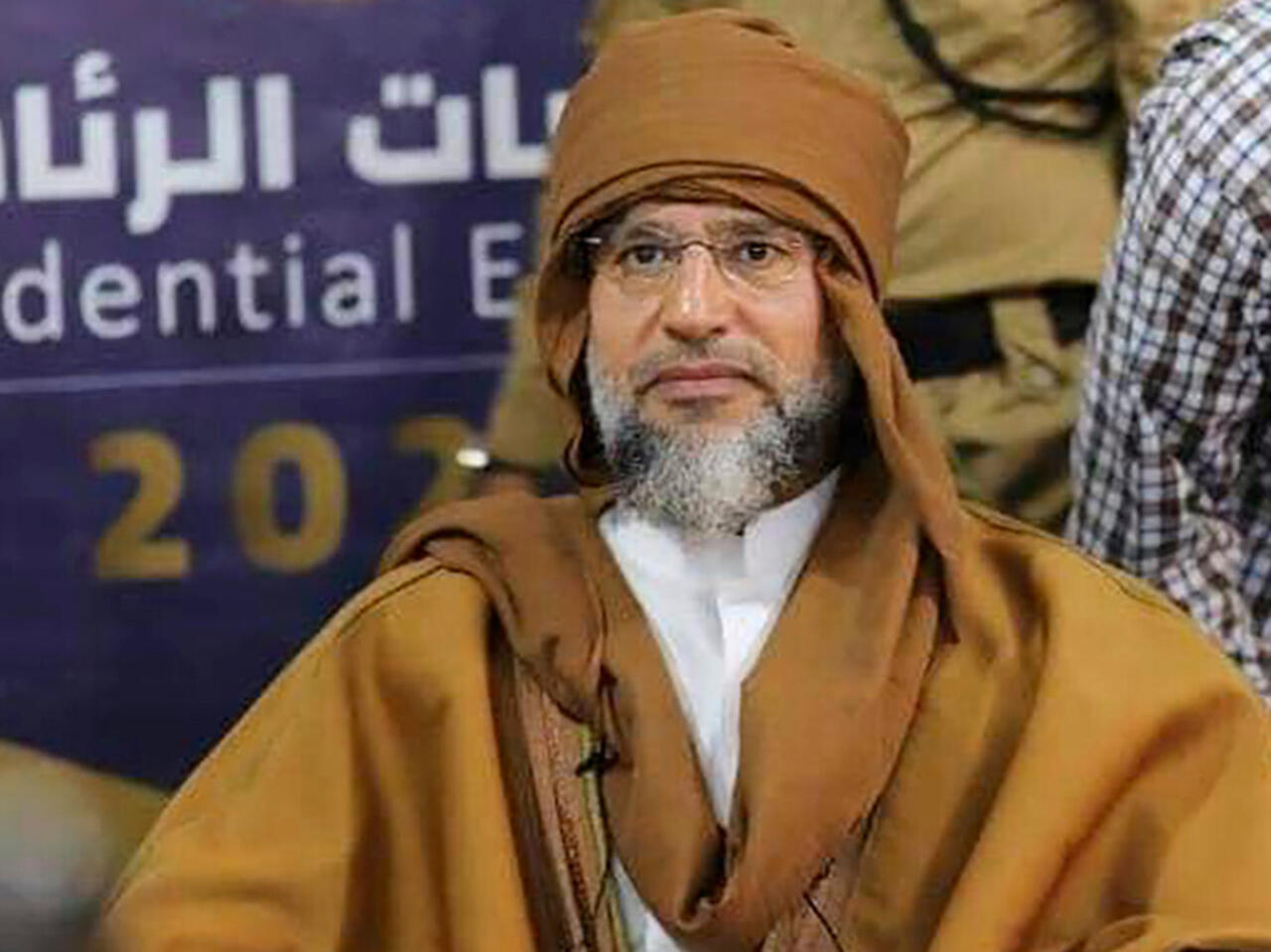
Saif al-Islam Gaddafi, the son of Libya’s former ruler Muammar Gaddafi and once regarded as the regime’s most prominent political figure after his father, has reportedly been killed in a shooting, according to Libyan media accounts emerging on Tuesday.
The Libyan News Agency cited the head of his political team as confirming the death of the 53-year-old, marking a dramatic end to a figure who remained both influential and divisive more than a decade after the collapse of his father’s rule. His lawyer told the AFP news agency that Saif al-Islam was assassinated at his residence in the western city of Zintan, allegedly by a four-man commando unit. No group has claimed responsibility, and the identities or motives of the attackers remain unclear. Adding to the uncertainty, his sister offered a conflicting account on Libyan television, saying he died near Libya’s border with Algeria.
Born in 1972, Saif al-Islam rose to prominence in the early 2000s as Libya sought to repair strained relations with Western powers. Although he held no formal government position, he played a central role in high-level negotiations, including talks that led Libya to abandon its nuclear weapons programme. Those efforts paved the way for the lifting of international sanctions and earned him a reputation in some circles as the public face of a more reform-minded Libya.
Read also: Libyan Army Leader Dies In Turkish Aircraft Crash
That image collapsed during the 2011 uprising. Saif al-Islam was accused of being deeply involved in the violent suppression of anti-government protests that preceded his father’s overthrow and death. He was later captured and detained by a militia in Zintan, where he spent nearly six years in custody.
International legal pressure followed. The International Criminal Court sought his extradition to face charges of crimes against humanity linked to the 2011 crackdown. In 2015, a court in Tripoli sentenced him to death in absentia, though the ruling was issued in territory controlled by Libya’s UN-backed authorities. He was later freed by forces aligned with eastern Libya under a controversial amnesty law.
Despite years of silence, Saif al-Islam re-emerged politically in 2021 when he declared his intention to run for president in elections that were ultimately postponed indefinitely. He had long denied any dynastic ambition, once saying power was not something to be inherited. His reported killing now adds another layer of instability to a country still fractured by rival governments, armed groups, and unresolved legacies of the Gaddafi era.