
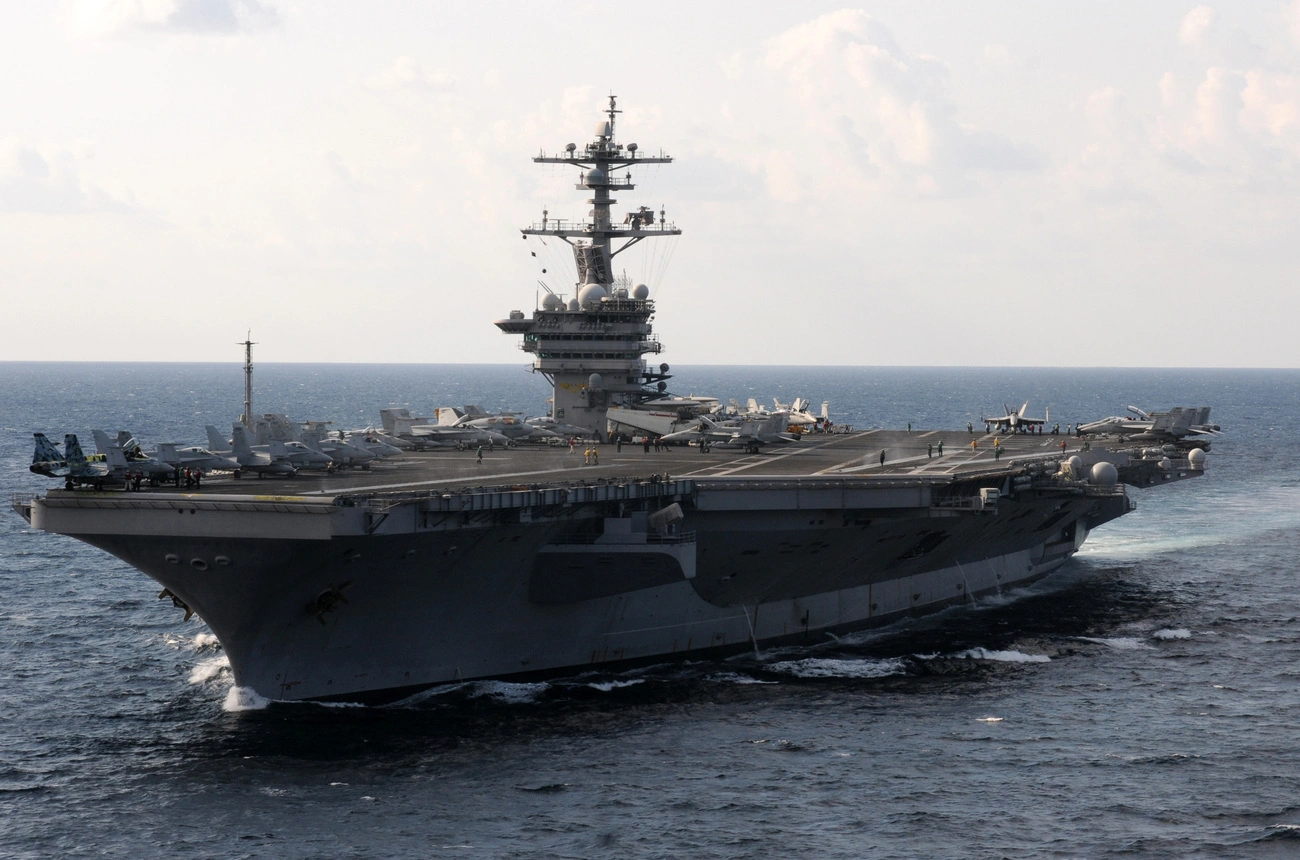
The United States is deploying a second aircraft carrier to the Middle East amid ongoing tensions with Iran, according to multiple U.S. media reports.
The move comes as Washington presses for a negotiated settlement with Tehran over its nuclear program and regional activities.
U.S. officials told the New York Times that the USS Gerald R. Ford, accompanied by escort vessels, will transit from the Caribbean to the region.
The report cited unnamed sources familiar with the deployment. The White House and the Pentagon did not immediately respond to requests for comment outside normal business hours.
Earlier this week, President Donald Trump indicated that he was considering sending an additional aircraft carrier to the Middle East if talks with Iran failed to produce an agreement. “We have to make a deal, otherwise it’s going to be very traumatic, very traumatic,” Trump told reporters on Thursday.
He suggested that a resolution could be reached within the coming month, reiterating the administration’s preference for a diplomatic outcome while maintaining a military presence as leverage.
The U.S. currently has the USS Abraham Lincoln and a contingent of guided-missile destroyers operating in the region. That carrier strike group arrived in the Middle East in January, part of a broader U.S. military posture aimed at deterring Iranian activity and reassuring regional partners.
Israeli Prime Minister Benjamin Netanyahu, speaking on Thursday, said he hoped that the U.S. actions were intended to create conditions conducive to a diplomatic deal with Iran, potentially avoiding military confrontation.
Israel has repeatedly expressed concern over Iran’s nuclear program and its influence in neighboring countries, including Syria and Lebanon.
Read Also: US Plans To Target Citizenship Of Foreign-Born Americans
The deployment of a second carrier would reinforce U.S. naval presence at a time of heightened concern over Iran’s maritime activity in the Gulf and surrounding waters.
In recent months, the U.S. Navy has reported a series of incidents involving Iranian forces, including harassment of commercial and military vessels.
Officials in Washington have framed such deployments as both a deterrent and a signal of U.S. commitment to allies in the region.
Carrier strike groups are central to U.S. naval operations and can conduct a range of missions, from airstrikes and intelligence gathering to logistical support for ground forces. Each group typically includes an aircraft carrier, guided-missile cruisers, destroyers, and a complement of support ships.
The USS Gerald R. Ford is the lead vessel of a new class of carriers featuring advanced radar and aircraft launch systems, designed to increase operational efficiency.
The decision to send an additional carrier has been interpreted by some analysts as a precautionary measure intended to strengthen the United States’ bargaining position in ongoing diplomatic efforts with Iran.
While the Trump administration has pursued negotiations, it has also emphasized the potential for military escalation should Iran fail to comply with international demands, particularly regarding its nuclear program and missile development.
Since January, U.S. officials have stressed that a combination of diplomatic engagement and military readiness is necessary to influence Tehran’s behavior.
Read Also: Retired U.S. Army Colonel Sentenced For Leaking Classified Intel
The administration has imposed a series of economic sanctions targeting Iran’s oil exports and financial institutions, alongside military deployments intended to demonstrate the United States’ capacity to respond to threats.
The deployment timeline for the USS Gerald R. Ford and its escort ships has not been publicly disclosed.
The strike group’s movement from the Caribbean suggests a rapid repositioning capability, allowing the U.S. Navy to project force in the Gulf region without immediate reliance on forward-deployed assets. Such flexibility is considered vital given the narrow and strategically sensitive waterways through which Gulf shipping passes, including the Strait of Hormuz.
Observers note that the presence of multiple carrier strike groups in the region could serve several functions simultaneously: deterring Iranian action, signaling commitment to regional partners such as Israel and Gulf states, and providing military options if diplomatic efforts fail.
Past deployments have been accompanied by air and naval exercises to ensure readiness and interoperability among U.S. and allied forces. While officials have framed the buildup as precautionary, regional actors closely monitor U.S. movements for indications of policy shifts.
Tehran has in the past criticized carrier deployments as provocative, arguing that they escalate tensions and threaten regional stability.
The Iranian government has maintained that its nuclear program is for peaceful purposes, a position that has been contested by the United States and other countries citing intelligence assessments of potential weapons development.
Diplomatic efforts involving the U.S., Iran, and international partners have continued intermittently over the last year, though concrete agreements have been elusive.
The Trump administration has emphasized that any deal must address Iran’s nuclear capabilities, ballistic missile program, and regional military activities.
Both sides have indicated that a resolution could be reached in coming weeks, though skepticism remains about the likelihood of a timely settlement.