
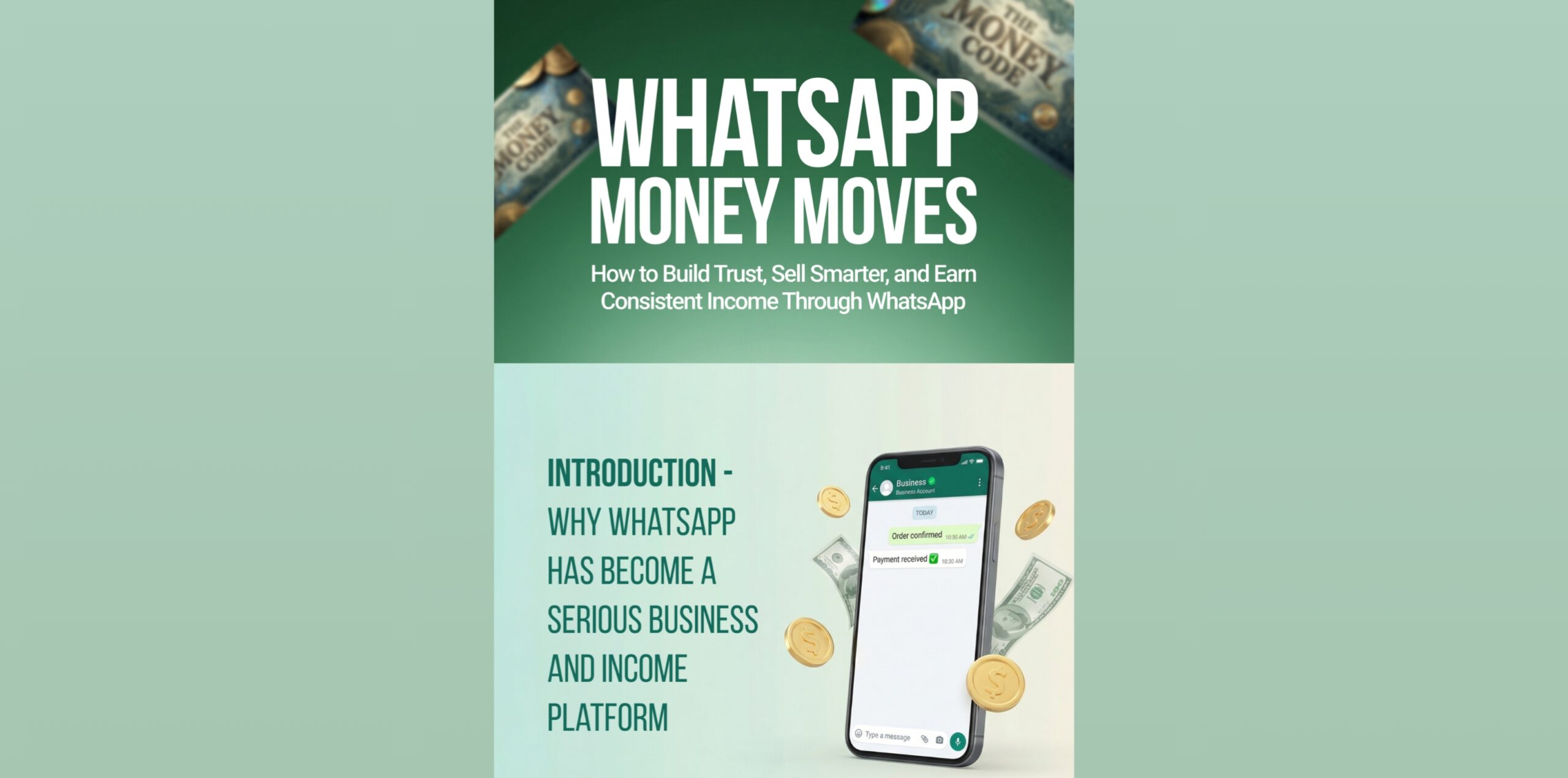
Introduction
There is a quiet kind of business happening every day on WhatsApp.
It does not always look glamorous. It does not always announce itself with polished landing pages, expensive software, or dramatic social media campaigns. More often, it begins with a message. A question. A recommendation. A follow-up. A reminder. A simple exchange between two people, one of whom has a need and the other a solution.
That is precisely why WhatsApp matters.
For many people, especially in emerging and fast-moving digital markets, WhatsApp is not just a messaging app. It is a storefront, a customer service desk, a lead-generation channel, a trust-building environment, and in some cases, the entire front end of a business. The broader WhatsApp for Business ecosystem exists to help companies organize, automate, and respond to customer communication more effectively. At scale, that matters. But scale alone is not the story.
The deeper story is behavioral. People open WhatsApp with a different mindset than they open most public platforms. They are not necessarily there to browse aimlessly. They are there to communicate, confirm, ask, check, coordinate, and decide. The app sits close to daily life. Friends use it. Families use it. Customers use it. Teams use it. Communities use it. Businesses use it. That means commercial activity on WhatsApp does not begin with spectacle. It begins with relevance.
This guide is about how to use that reality intelligently.
Not manipulatively. Not recklessly. Not with spam. And certainly not with the lazy fantasy that posting a few links in random groups is a business model. It is not. People who treat WhatsApp like a dumping ground for desperate selling usually damage their credibility long before they make meaningful income.
Real WhatsApp income comes from something more disciplined.
It comes from understanding how trust travels through private communication. It comes from learning how to position an offer clearly, how to build a small but responsive audience, and how to move people from curiosity to confidence. It comes from offering products, services, access, solutions, and convenience in a format people already use every day.
Read more: Zero To Revenue: Build A Business In 90 Days—Part 7
That is the promise of this guide.
By the end of it, you should not merely know more about WhatsApp. You should understand how to think like a WhatsApp-based operator. You should be able to identify viable income paths, set up your business presence properly, build communication systems that make selling easier, and create a process that can generate repeatable revenue without turning you into a nuisance.
The goal here is realism.
WhatsApp can help you make money, but not by magic. It rewards clarity, patience, responsiveness, and structure. It is especially powerful for people who can sell through conversation, community, trust, and follow-up. That includes freelancers, consultants, coaches, digital product sellers, affiliate marketers, educators, service providers, event organizers, resellers, and local business owners. It can support high-ticket sales or small daily transactions. It can help you get your first customer or retain your hundredth.
But to use it well, you need to move past myths.
One myth says WhatsApp is only useful for chatting after you have already found customers elsewhere. That is false. WhatsApp can absolutely function as part of customer acquisition, especially when paired with referrals, communities, content, or other platforms. Another myth says WhatsApp is only for tiny informal businesses. Also false. Its business tools create real structure for sellers who use them well.
A third myth, perhaps the most dangerous, says that because WhatsApp is private, people will tolerate aggressive sales tactics there. They will not. Private spaces create opportunity, but they also raise the cost of poor behavior. Spam feels worse in a messaging app because it feels closer. People remember it. They block faster. They mistrust faster. They warn others faster.
So this book takes a different route.
We will treat WhatsApp not as a shortcut, but as an infrastructure of digital trust.
We will look at how income actually emerges from conversations. We will look at the mechanics of business setup, content flow, list-building, customer segmentation, group management, offer design, and follow-up. We will examine the difference between broadcasting and building. We will talk about how not to sound needy, how to sound useful, how to avoid being ignored, and how to make people feel guided rather than pressured.
Along the way, hold onto one simple insight: on WhatsApp, money often follows clarity.
If people understand what you do, who it is for, how it helps them, what it costs, and how to get started, you are already ahead of many sellers. Most people lose sales on WhatsApp not because their product is terrible, but because their communication is scattered. Their profile says one thing, their status says another, their messages ramble, their pricing is vague, and their follow-up feels either absent or frantic.
Good WhatsApp income is cleaner than that.
It is structured. It is responsive. It feels human.
And that last point matters. Because a great WhatsApp business does not read like a robot with payment instructions. It feels like talking to someone who understands the problem, respects the buyer, and knows how to help.
That is where we begin.