
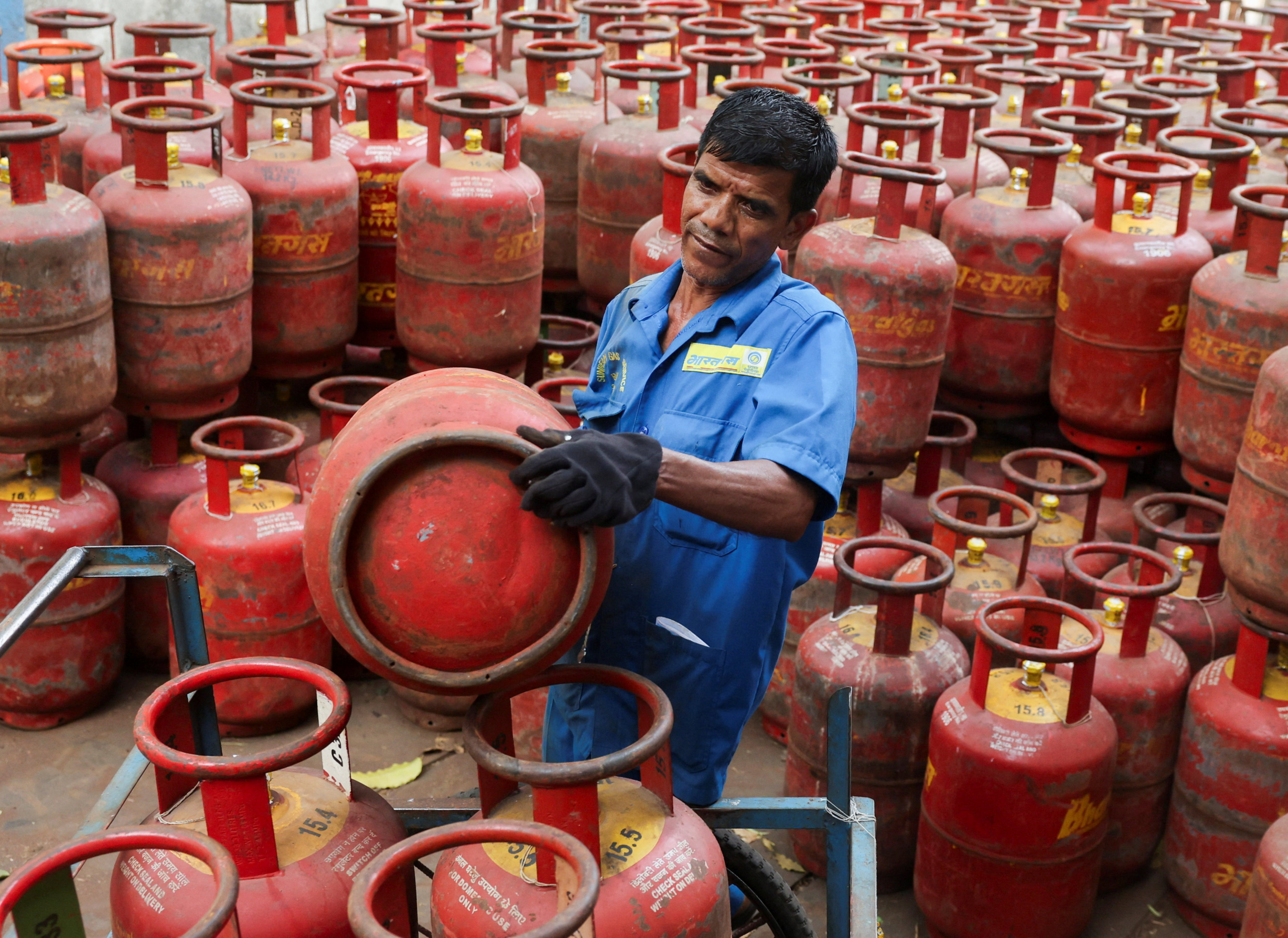
India is converting an energy crisis into a structural reform, using the LPG supply disruptions triggered by the Iran war to accelerate a shift toward piped gas that the country’s energy planners had long wanted to make but never had the political urgency to push through at speed.
The world’s second-largest LPG importer, India shipped approximately 22 million metric tons of the cooking fuel in 2025, meeting roughly 60 percent of its needs with overseas purchases that cost nearly $12 billion — most of it sourced from the Middle East. The US-Israeli war on Iran, and the supply disruptions that followed, exposed how comprehensively that dependence could be disrupted in a crisis, and officials are now moving to ensure it is never quite as acute again.
The government has invoked emergency powers to redirect limited LPG supplies exclusively toward household use, and has set a three-month clock for halting cylinder deliveries to customers who already have piped gas connections — a measure designed to close a loophole that has allowed distributed cooking gas to leak into commercial and grey-market channels rather than reaching the subsidised household customers it is intended to serve. Simultaneously, India issued an order last month setting firm timelines for new pipeline approvals, with permissions automatically granted if authorities fail to respond within the specified window, and requiring landowners and local bodies to allow pipeline access across their land.
Read also: How Cooking Gas Export Ban Crashed Domestic Price – Marketers
The results are already visible in the connection data. In March, India added 580,000 new households to its piped city gas distribution network — compared with 342,300 in the same month a year earlier, a 70 percent acceleration driven directly by the crisis conditions and the policy response to them.
Neeraj Mittal, Secretary of the Ministry of Petroleum and Natural Gas, posted on social media that the country was witnessing “rapid expansion of the CGD network across the country — a crisis turned into an opportunity.” The framing captures the essential logic of what India is attempting: a supply shock that might have been purely damaging is being channelled into infrastructure investment that reduces future vulnerability.
The economics of the shift are compelling from the government’s perspective. Household LPG is sold at subsidised rates approximately 56 percent below what commercial users pay at market prices, and the compensation this requires cost the government $3.4 billion in subsidy payments last year alone. Piped gas, sold closer to market rates, eliminates most of that fiscal exposure. Prashant Vashist of credit rating agency ICRA estimates that the measures being implemented — pipeline expansion chief among them — could reduce Indian LPG imports by 10 to 15 percent by 2030, cutting both the import bill and the subsidy burden simultaneously.
India currently has 16.3 million households connected to piped gas networks, against 333.7 million LPG customers including 106 million low-income families receiving subsidised cylinder gas. Local gas suppliers have been connecting two to two-and-a-half million new households annually under normal conditions. Gajendra Singh, a former member of the Petroleum and Natural Gas Regulatory Board, said the recent policy changes should push that annual connection rate to approximately 7.5 million — tripling the pace — and bring the national total to between 35 and 40 million piped connections by 2030.
Read more: Gulf War Pummels India’s Glass Hub, Tests Factory Push
The private sector has moved in parallel with the policy push. Suppliers including Indraprastha Gas, Mahanagar Gas, GAIL Gas and Bharat Petroleum have been offering incentives since the war began, cutting installation charges for new piped connections to accelerate uptake among consumers who might otherwise wait for the economics to improve on their own.
India’s vulnerability to the current disruption is structural rather than incidental. The country satisfies half of its natural gas consumption through liquefied natural gas imports, and with Middle Eastern suppliers representing the bulk of its LPG sourcing, any sustained disruption to Gulf energy flows hits Indian households with particular directness. The 333 million LPG customers who depend on cylinder deliveries for daily cooking — many of them among the country’s lowest-income families — are the most exposed point in that chain.
The piped gas expansion addresses that vulnerability from the demand side, reducing the volume of imported LPG the country needs rather than trying to diversify the sources from which it buys. It is a slower solution than finding alternative suppliers, but a more durable one — infrastructure built now generates reduced import dependence for decades.
Whether the acceleration survives the end of the immediate crisis, or whether the urgency dissipates when Gulf LPG supplies normalise and the political pressure to act diminishes, will determine whether India has genuinely turned this disruption into a structural shift or simply moved faster than usual for a period before returning to the existing pace.
The policy architecture being put in place — automatic approvals, mandatory land access, supply cutoffs for dual-connected customers — suggests an attempt to lock in the momentum rather than rely on continued emergency conditions to sustain it.