
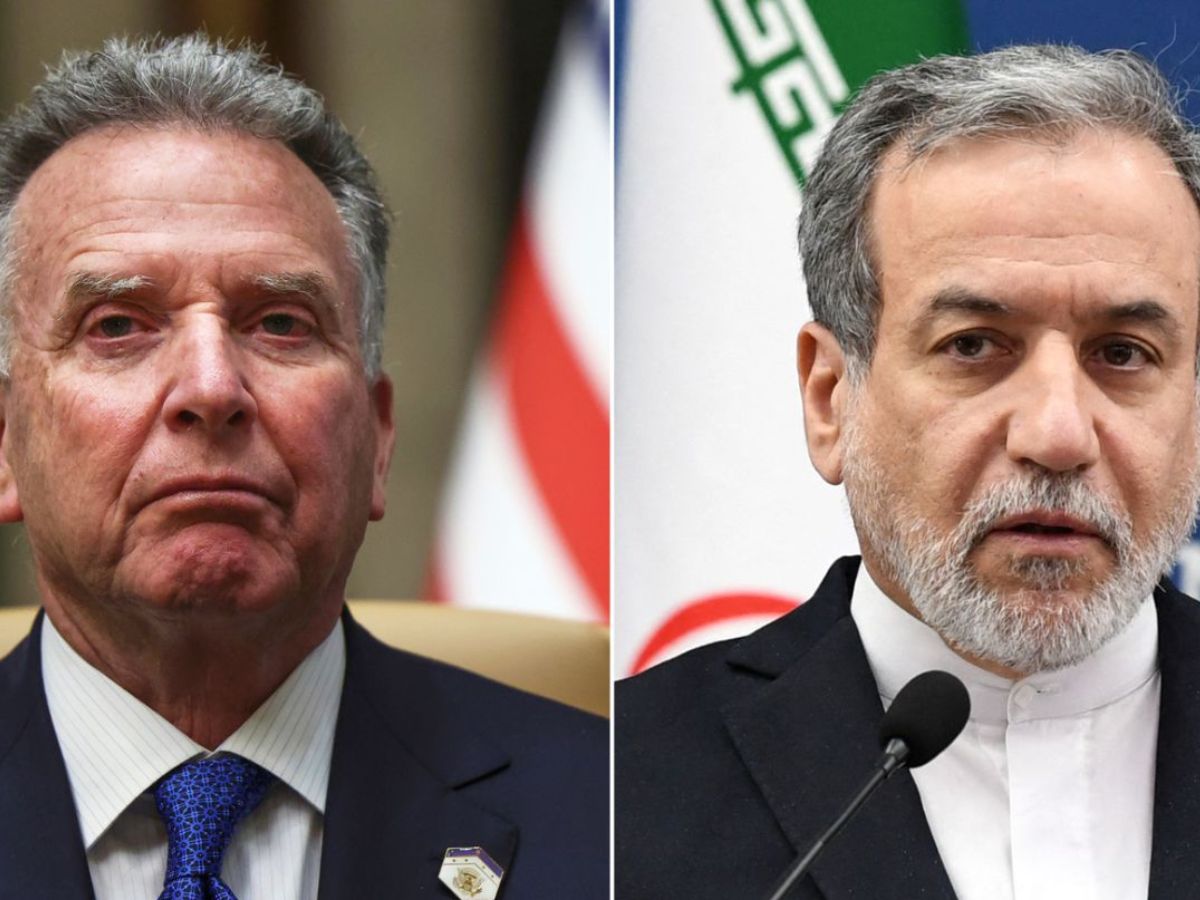
Donald Trump cancelled a planned US diplomatic mission to Pakistan on Saturday and declared that Iran had offered concessions that fell short of American demands — before revealing that Tehran improved its proposal within ten minutes of the cancellation, a sequence that appeared to validate his stated belief that he holds all the leverage in a war now approaching its two-month mark.
Speaking to reporters before boarding Air Force One, Trump said Iran’s leadership had “offered a lot, but not enough” and that the paper Tehran presented should have been better. The cancellation of the trip by envoys Steve Witkoff and Jared Kushner was itself the pressure tactic. “Interestingly, immediately when I canceled it, within ten minutes, we got a new paper that was much better,” he said.
He dismissed the logistics of the diplomatic process with characteristic directness, framing the decision to cancel not as a setback but as a demonstration of strength. “There’s no reason to wait two days — have people traveling for 16, 17 hours — we’re not doing it that way. When they want, they can call me. We have all the cards. We’ve won everything. We have all the cards.”
Trump pointed to what he described as significant internal turbulence within Iran’s leadership, noting that two levels of the country’s command structure had been eliminated during the conflict and that intense competition for the positions that remained was complicating Tehran’s ability to present a unified negotiating position. He expressed indifference about who ultimately emerged. “They’re probably fighting for leadership. In many cases, I think they’re fighting not to be the leader because we knocked out two levels of leaders. But I’ll deal with whoever we have to.”
Read also: Syrian Minority Asylum Seekers Face European Rejection Wave
Iranian Foreign Minister Abbas Araghchi was in Pakistan’s capital earlier Saturday, holding talks with the country’s prime minister, and was subsequently reported to be planning a return to Islamabad after a stop in Oman and before a scheduled visit to Russia — a diplomatic itinerary that suggests Tehran is managing multiple tracks simultaneously even as it publicly resists committing to formal negotiations under current conditions.
On the American domestic front, Hillary Clinton used a New Hampshire Democratic Party dinner to deliver one of her sharpest assessments yet of the conflict’s consequences. The former secretary of state argued that Trump had walked into a strategic trap when Iran closed the Strait of Hormuz, and that the economic and security damage flowing from that miscalculation was being felt by ordinary Americans at the petrol pump and grocery store.
“Americans see the truth at the gas station, in the grocery aisle,” Clinton said. “Trump promised to lower prices. He did not even try. And now his ill-advised and reckless war is making things worse. It’s not only energy prices, it’s the cost of fertilizer. Food will get even more expensive — everything will because shipping has come to a stop.”
Read more: Zelensky Slams Absence Of US Envoys Visit To Kyiv
She went further, arguing that the conflict had strengthened Iran’s strategic hand rather than weakening it. “Donald Trump was caught by surprise. He couldn’t believe that they would close the Strait of Hormuz. He walked right into the trap, and he gave Iran a powerful new strategic advantage. Because of Trump, they now know they can close the strait whenever they want and bring the global economy to its knees.” She described the outcome as a gift to Russia, China and what she called Trump’s allies in the oil industry, while making America less safe.
Military analysts offered a different read on the balance of power in the strait itself. Retired Navy Captain Chuck Nash, appearing on Fox News, argued that Iranian small boats posed a limited threat to keeping Hormuz closed permanently. “You can cause the insurance companies to maybe stay up a little bit late at night, but you’re not going to shut the strait down,” he said. Nash maintained that the US currently controls the waterway and that every day of American control brings Iran closer to losing leverage over its own oil infrastructure. He also noted that newer unmanned mine-detection and disposal technology had reduced the risk and time required to clear the three classes of mines believed to be present in the strait.
Iranian-American analysts watching Tehran’s internal dynamics cautioned against reading the regime’s negotiating posture as reflecting genuine moderation. Mariam Memarsadeghi of the Macdonald-Laurier Institute argued that Iran’s decades-long strategy of presenting moderate faces in negotiations while hardliners maintained real control had now collapsed under the pressure of the war. Navid Mohebbi, a former Persian media analyst for the State Department, said factional disagreements within the Islamic Republic were real but tactical rather than fundamental. “Their disagreements are primarily over tactics, not fundamental direction,” he said, adding that genuine decision-making power had always resided with the supreme leader and the IRGC regardless of who appeared at the negotiating table.