
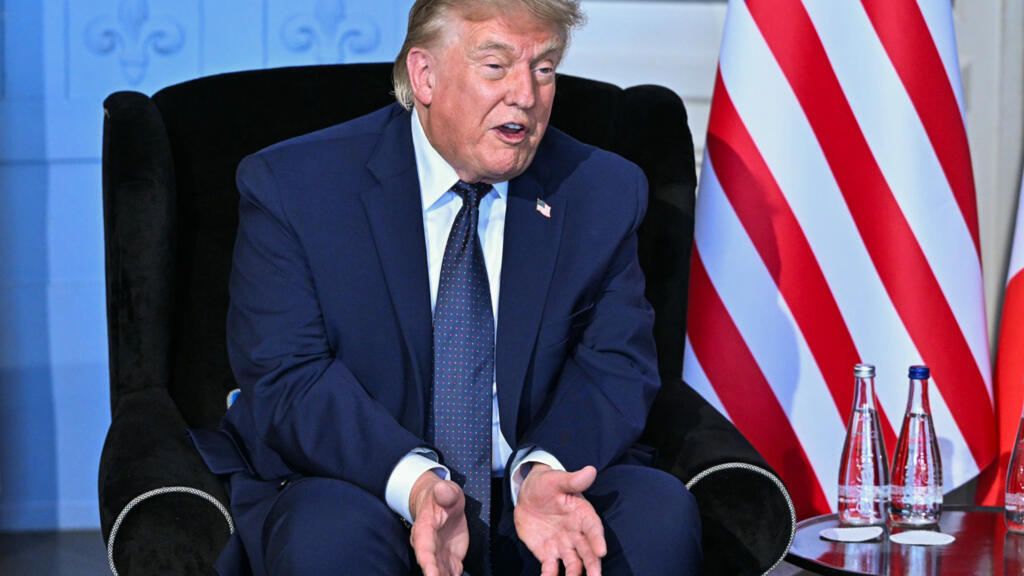
A preliminary agreement ending the U.S.-Iran war has been signed, President Donald Trump announced Monday on the sidelines of the G7 summit in France, with the formal ceremony set for Geneva on Friday and the Strait of Hormuz scheduled to reopen the same day.
“I am very happy to say it’s signed, the deal is all signed,” Trump told French President Emmanuel Macron during bilateral talks in Evian-les-Bains. The memorandum of understanding was executed electronically by Trump, Vice President JD Vance, and Iranian parliamentary speaker Mohammad Bagher Ghalibaf.
Vance, who has emerged as the administration’s primary explicator of the agreement, described the document as roughly a page and a half — a general framework that commits both sides to a framework while leaving the architecture of a final deal to subsequent negotiations. “On a number of issues, we are going to have to figure this stuff out during the technical negotiation phase,” he told CNN, “but what the MOU does is set up a framework whereby the Iranians get the benefits of the bargain by meeting their obligations under the bargain.”
The deal’s core provisions, as described by U.S. officials, include Iran’s commitment to regional peace and stability — which Vance said explicitly encompasses halting funding to what he called terrorist organizations — and a verifiable pledge not to build a nuclear weapon. IAEA inspectors will be allowed back into Iran, Vance confirmed, and the agency along with the United States will assist in destroying Iran’s highly enriched uranium stockpile. Technical talks on the nuclear program are expected to begin this week. Sanctions relief and the release of frozen assets remain contingent on Tehran meeting its commitments.
Read also: Trump Sons Give Testimony In New York Civil Fraud Trial
Vance told Fox News that Trump may release the preliminary text before Friday’s Geneva signing, reversing an earlier expectation that the document would not be made public until after the formal ceremony.
The ceasefire, which the deal extends for 60 days, covers Lebanon as well — a provision Iran’s Foreign Minister Seyed Abbas Araghchi framed in terms that immediately put pressure on Israel. Iran considers the U.S. and Israel one party to the agreement and Iran and Hezbollah the other, Araghchi said, and any continued Israeli military presence in Lebanese territory or fresh strikes there would constitute a violation of the interim accord.
That framing collided almost immediately with events on the ground. Lebanese media reported a deadly Israeli airstrike on a vehicle in southern Lebanon — the first since the peace announcement — and Hezbollah responded with missiles and drones against Israeli positions. The Israel Defense Forces confirmed four people were killed in strikes it said targeted militants.
Israeli Prime Minister Benjamin Netanyahu made no concessions. Speaking at a news conference Monday evening, he said Israeli forces would remain in security zones in Lebanon, Syria, and Gaza for as long as necessary and retain full freedom to act against attacks. On the nuclear question, Netanyahu was categorical: Iran would not be permitted to obtain nuclear weapons, he said, with or without any deal.
The friction between the U.S.-brokered framework and Israeli operational posture represents the most volatile fault line in an agreement that is, by Washington’s own description, still largely unfinished.
Read also: Trump Threatens Musk Amid Fierce Budget Bill Dispute
Pakistan’s Prime Minister Shehbaz Sharif, whose government served as mediator, announced the breakthrough on Sunday, describing it as covering “the immediate and permanent termination of military operations on all fronts, including in Lebanon.” U.S. officials subsequently clarified that while Lebanon falls within the ceasefire’s scope, the withdrawal of Israeli forces from Lebanese soil is not a condition of the preliminary deal.
At the G7, the Iran question is commanding its own dedicated session Tuesday, bringing together the leaders of Egypt, Qatar, and the United Arab Emirates alongside the summit’s core members. Britain and France had been coordinating plans for a naval mission to protect commercial shipping in the Strait of Hormuz during the blockade period. Trump said Monday he did not think the U.S. would need much help keeping the waterway open but stopped short of dismissing allied contributions outright.
Trump ordered the U.S. naval blockade of Iranian ports lifted on Sunday and claimed ships were already beginning to move through the Strait of Hormuz loaded with oil.