
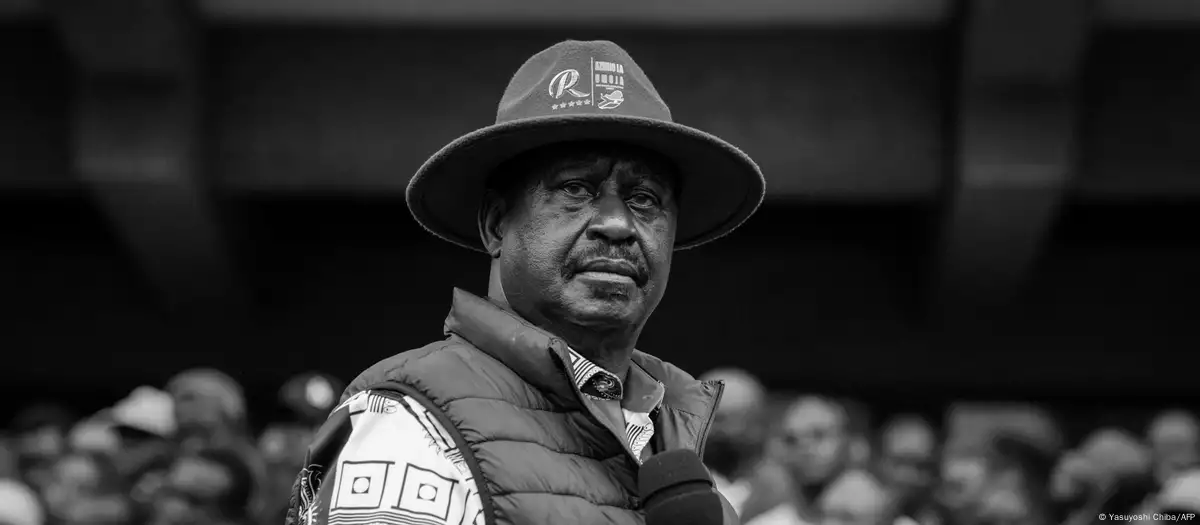
Kenyans gathered on Sunday to lay to rest Raila Odinga — the towering opposition leader, freedom icon, and former prime minister whose decades-long political journey helped shape modern Kenya.
Odinga, affectionately known as Baba (Swahili for “father”), was buried at his family compound in Bondo, western Kenya, following an Anglican service attended by thousands of mourners, dignitaries, and foreign leaders. His flag-draped casket, guarded by military officers, was lowered into the ground as trumpets sounded the solemn notes of the Last Post.
“Now, finally, Baba is home,” said his son, Raila Odinga Jr., in a brief, emotional tribute.
The private interment followed a funeral mass at a nearby university — the culmination of a week of mourning that at times turned tragic. At least five people were killed and hundreds injured earlier in Nairobi as massive crowds overwhelmed security during public viewings of Odinga’s body.
Read also: Raila Odinga Funeral Chaos As Thousands Storm Nairobi Airport
Among the mourners in Bondo were President William Ruto, former President Uhuru Kenyatta, and Nigeria’s ex-president Olusegun Obasanjo. “Raila was not only a Kenyan statesman; he was a continental figure, deeply respected across Africa,” said journalist Catherine Soi, reporting from the ceremony.
Odinga, 80, died on Wednesday in southern India from a suspected heart attack. His remains were flown back to Nairobi on Thursday, where tens of thousands lined the streets to receive him.
Though best remembered as Kenya’s most formidable opposition figure, Odinga’s career spanned every side of politics — from prime minister between 2008 and 2013 to coalition partner in uneasy alliances with both Kenyatta and Ruto. Despite five unsuccessful bids for the presidency, he remained the moral compass for Kenya’s democracy, credited with steering the nation toward multi-party governance in the 1990s and inspiring the progressive constitution of 2010.
President Ruto described him as a “unifier” who helped “steady the country” during turbulent political periods, including this year’s reconciliation pact that ended months of violent anti-government protests.
Erastus Mwencha, former deputy chairperson of the African Union, called Odinga “one of the architects of Africa’s second liberation,” praising his lifelong fight for democratic reform.
Odinga’s passing leaves a gaping void within Kenya’s opposition movement, which now faces a test of identity and leadership ahead of the 2027 elections.
As dusk settled over Bondo, mourners stood in silence — some weeping, others raising clenched fists — as the man who defined generations of Kenyan politics was finally laid to rest.