
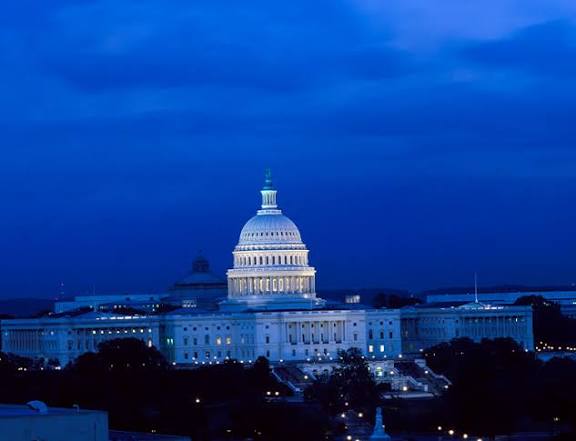
U.S. Government shutdown is in its 38th day, Democrats gain leverage from recent election wins as Trump admits the standoff is politically hurting Republicans.
The longest government shutdown in U.S. history has entered its 36th day, and Democrats in the Senate say they have no intention of relenting—especially now that the political tide appears to favor them.
Their resolve has strengthened in the wake of decisive Democratic victories in recent gubernatorial elections in New Jersey, Virginia, and California. Party leaders argue the results prove voters support their strategy to keep the government closed until Republicans agree to extend health insurance subsidies, a major sticking point in the current budget impasse.
President Donald Trump, speaking privately to Senate Republicans at a closed-door breakfast, reportedly conceded that the shutdown is “killing” the party politically. According to several sources, Trump urged his party to consider ending the standoff by eliminating the filibuster rule, a move that would allow a simple majority to reopen the government.
Democrats quickly seized on Trump’s comments as further validation of their position. Senate Majority Leader Chuck Schumer said the president’s remarks confirmed that “Americans realize Republicans are responsible for this awful shutdown.”
Read Also: United States: $1 Billion Pact With AMD To Build Supercomputers
The impasse has had far-reaching effects. Hundreds of thousands of federal workers remain furloughed or unpaid. National parks, food safety inspections, and other critical services have slowed or shut down entirely.
Prominent progressive Democrats, including Bernie Sanders and Elizabeth Warren, have urged their colleagues not to settle for anything less than a meaningful deal on health care affordability. Sanders called the recent election results “a sweeping indictment of Trumpism,” while Warren insisted that any compromise lacking real support for working families would be unacceptable.
Some Republicans have also sounded alarms over the political cost of the stalemate. Senator Lisa Murkowski of Alaska acknowledged that, with Republicans controlling both Congress and the White House, “people see this as our doing.” But others, like Senator Josh Hawley of Missouri, warned that talk of Democrats “winning” could prolong the shutdown further.
Bipartisan negotiations continue, but progress is slow. Centrist Democrats are in quiet talks with Republican counterparts, yet progressive lawmakers say they will block any deal that does not fully extend Affordable Care Act subsidies.
For now, the nation waits as political pressure mounts on both sides. With no clear end in sight, the shutdown’s impact—and the blame—are becoming defining issues for Trump’s leadership and the road to the 2026 midterms.