
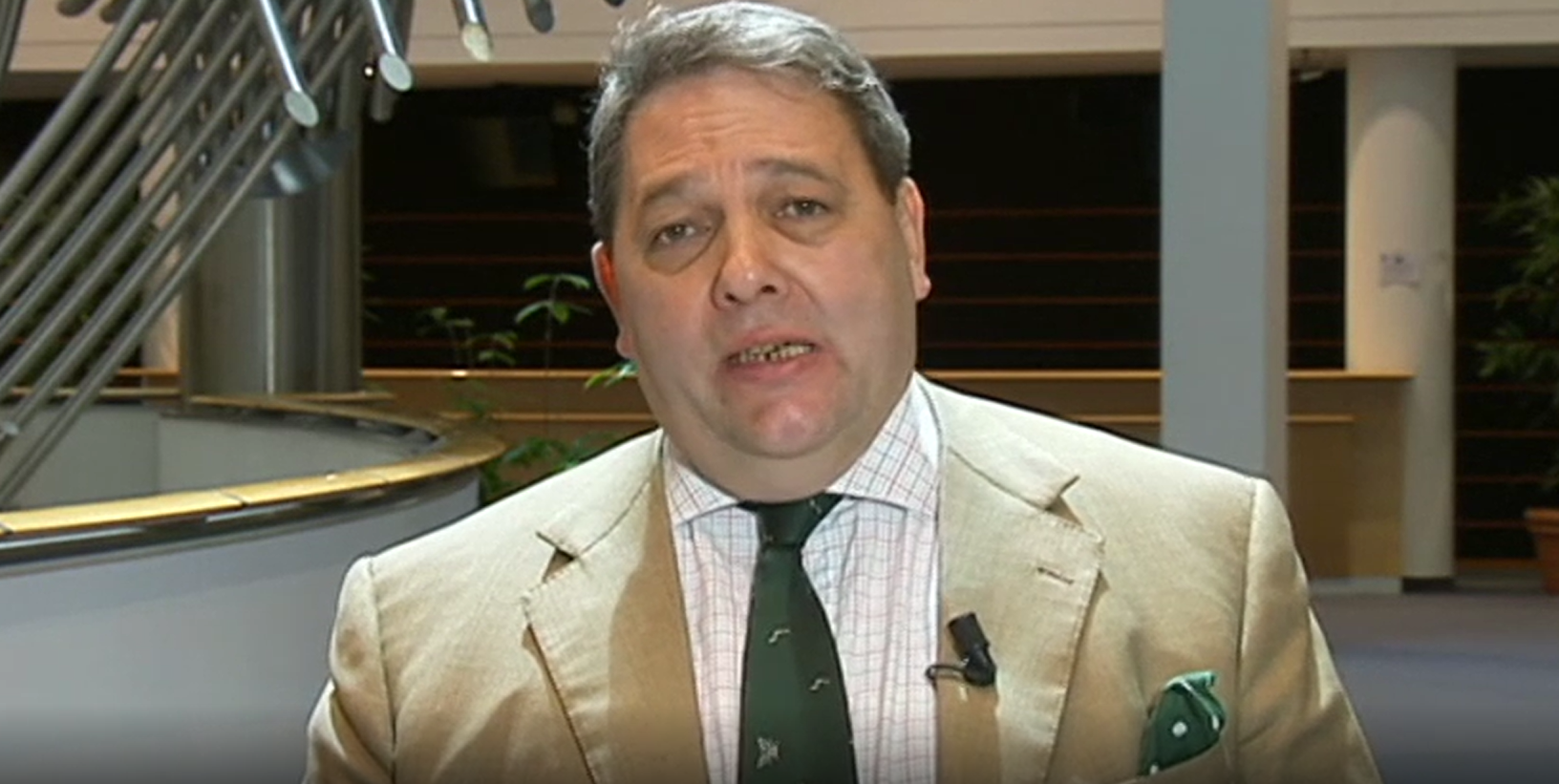
David Coburn, former Brexit Party and UKIP MEP, has denied receiving any payments linked to a pro-Russian influence campaign in the European Parliament, following the conviction of former MEP Nathan Gill for bribery.
Coburn, who led UKIP in Scotland and served alongside Gill in the European Parliament for five years, was named in WhatsApp messages between Gill and Oleg Voloshyn, a former pro-Russian Ukrainian MP. The messages reportedly discussed funds intended for Coburn while Gill was being bribed.
Speaking outside his residence in rural France, Coburn told the BBC he had never accepted money to deliver speeches promoting pro-Russian interests. “No,” he replied when asked directly about payments. He declined to answer further questions about why he was named in court documents and has not responded to subsequent written requests for comment.
The Crown Prosecution Service (CPS) submitted documents to the Old Bailey for Gill’s sentencing last week, including messages indicating a $6,500 (£5,000) payment intended for another MEP referred to as “David.” Coburn was the only publicly named David associated with the relevant pro-Russian “editorial board” of Ukrainian TV channels 112 Ukraine and NewsOne.
Gill, former Reform UK leader in Wales, was sentenced to ten-and-a-half years for accepting bribes to give pro-Russia interviews and speeches. The CPS documents reveal Voloshyn provided money to Gill for distribution, with references to payments for “the other MEP” believed to be Coburn.
Read Also: Georgia’s Ex-PM Garibashvili Charged In Money-Laundering Case
Both Coburn and fellow ex-UKIP and Brexit Party MEP Jonathan Arnott previously visited the two Ukrainian TV channels with Gill in October 2018. They also spoke in support of the broadcasters during a European Parliament debate where Gill was paid for his contributions. Arnott has said he would have reported any bribery offers and denied acting on Russian directives, describing suggestions of wrongdoing as “provably nonsensical.”
Coburn, during a December 2018 European Parliament session, criticised the Ukrainian government’s stance on the broadcasters, asking, “Can this chamber truthfully say Ukraine, which behaves this way, is ready for EU entry?” Both channels were later closed in 2021 under Ukraine’s current president, Volodymyr Zelensky.
The WhatsApp messages cited by the CPS were retrieved from Gill’s phone by counter-terrorism officers in 2021, two days before he was due to speak at a Moscow conference. The messages outlined payments between Voloshyn, Gill, and “David,” including a later confirmation of a further $4,500 in addition to funds already provided.
While Coburn has denied receiving any funds, the case continues to attract scrutiny due to the involvement of multiple former UKIP and Brexit Party MEPs in pro-Russian lobbying efforts. Investigators have not presented evidence that Coburn was aware of Gill’s bribery at the time.