
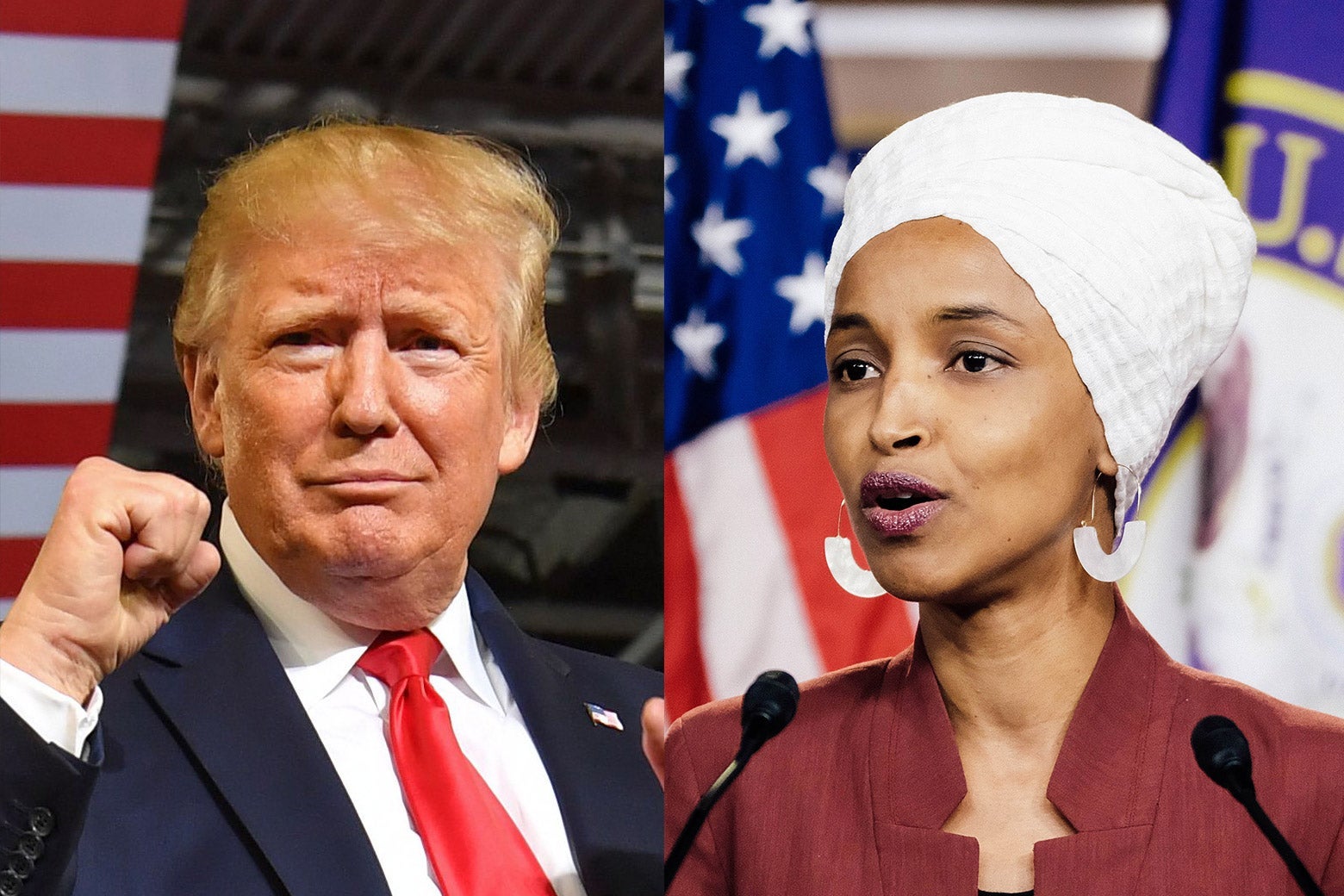
U.S. President Donald Trump calls for Representative Ilhan Omar’s removal amid unverified claims about her immigration and alleged personal conduct.
President Donald Trump has called for the removal of Representative Ilhan Omar (D-MN) from the United States, citing unverified allegations regarding her immigration history and personal conduct, according to reports. Trump’s remarks, made during a conversation with reporters aboard Air Force One, have reignited national debate over immigration, accountability, and political rhetoric.
The controversy centers on longstanding claims that Omar entered the U.S. in 1995 under a different family name as part of an asylum application. Conservative outlets have also cited reports suggesting discrepancies in how Omar and some family members applied for asylum compared with her siblings in the United Kingdom. Allegations, not substantiated in court, have circulated for years, including claims that Omar married a sibling to secure immigration benefits for him—a claim Omar and her supporters deny.
During recent remarks, Trump suggested Omar’s actions may have been a ploy to gain citizenship, framing the comments within broader criticism of her political stance and advocacy for Minnesota’s Somali community. On social media, he described Omar as “complaining about our Country” and criticized Somalia for ongoing political instability, poverty, and conflict.
Read Also: Trump Somali Immigrants Comments Spark Backlash In Minnesota
Omar has strongly rejected the accusations, calling them “lawless threats” and framing Trump’s comments as a personal attack on Somali Americans. Her office emphasizes her advocacy work on behalf of her constituents and the broader immigrant community in Minnesota. Minneapolis Mayor Jacob Frey and Somali-American city leaders have also condemned the rhetoric as inflammatory, highlighting concerns over civil liberties and community safety.
Trump’s remarks intersect with ongoing policy debates, including his plans to end Temporary Protected Status (TPS) for Somali nationals. He has linked these decisions to broader claims of fraud and mismanagement within Minnesota’s Somali community, though concrete evidence tying Omar personally to these issues has not been produced.
Legal analysts note that while questions about immigration compliance warrant scrutiny, calls for the removal of an elected official without verified evidence represent an extraordinary escalation in political discourse. The situation underscores the challenges of navigating policy concerns, personal attacks, and community impact in a highly polarized environment.
Observers emphasize the need to separate substantive policy debate from unverified personal allegations, urging public and political leaders to focus on verifiable issues rather than speculation. The ongoing controversy reflects broader tensions in U.S. politics over immigration, representation, and the role of social media in shaping public perception.