
The move affects United States envoys in Africa and beyond as the administration aligns overseas posts with Trump’s America First agenda.
President Donald Trump has ordered the recall of the United States ambassador to Nigeria and a group of other career diplomats in a sweeping shake-up of Washington’s overseas representation, according to a report by Politico and confirmation from the State Department.
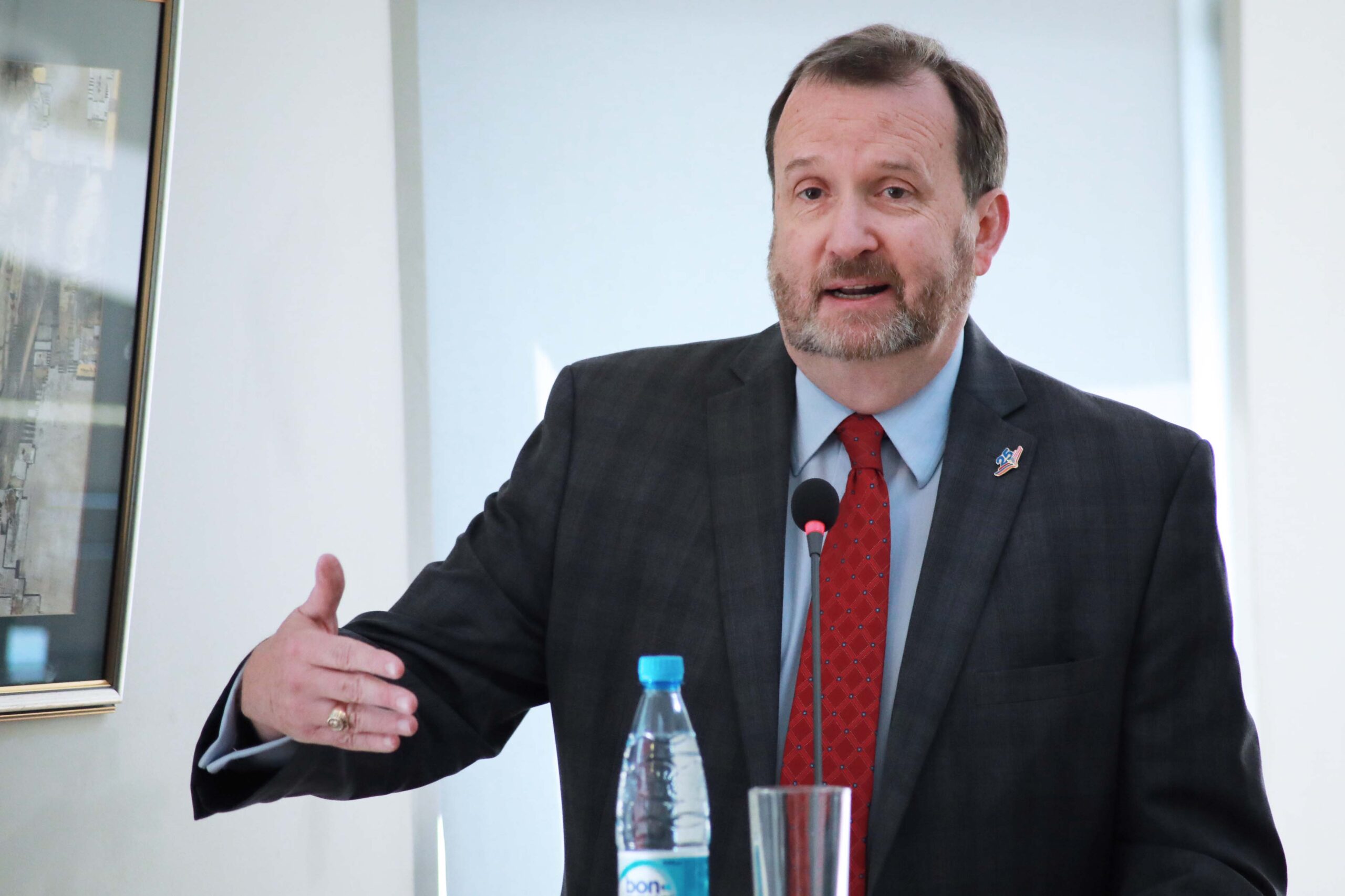
The decision affects U.S. Ambassador to Nigeria Richard Mills and dozens of other chiefs of mission, most of whom were appointed during the previous administration. Their ambassadorial postings are expected to end in January 2026, a State Department official said, as the White House moves to ensure diplomatic leadership abroad reflects President Trump’s foreign policy priorities.
The official emphasized that the diplomats are not being dismissed from government service. Instead, they will return to Washington and may take on other assignments within the State Department if they choose, preserving their status as career members of the U.S. Foreign Service.
Africa has been the region most heavily impacted by the recalls. Ambassadors to at least 13 African countries are included in the move, among them Nigeria, Burundi, Cameroon, Côte d’Ivoire, Senegal, and Uganda. Additional recalls extend across the Asia-Pacific region, Europe, the Middle East, South Asia, and parts of the Western Hemisphere.
Read Also: U.S. President Trump’s Administration Revokes Over 95,000 Visas
In a statement, the State Department described the changes as routine, noting that ambassadors serve at the pleasure of the president and are expected to advance the administration’s policy agenda.
“An ambassador is a personal representative of the president,” the statement said. “It is the president’s right to ensure that individuals serving in these roles are aligned with and advancing the America First agenda.”
Still, the breadth and timing of the recalls have raised concerns among some lawmakers and within the American Foreign Service Association, which represents U.S. diplomats. Critics warn that abrupt leadership changes could disrupt embassy operations, slow diplomatic initiatives, and complicate ongoing negotiations in key regions.
In Nigeria, the departure of the U.S. Ambassador comes at a sensitive moment in bilateral relations. Africa’s most populous nation is a major U.S. partner on regional security, counterterrorism, trade, and development, particularly in West Africa. Any transition in diplomatic leadership is likely to require adjustments in coordination between Washington and Abuja.
U.S. officials said chargé d’affaires or senior embassy staff will continue to oversee day-to-day operations until new ambassadors are nominated and confirmed, a process that can take months.
The recalls underscore President Trump’s broader effort to reshape U.S. foreign policy and diplomatic posture, signaling a renewed emphasis on loyalty to his administration’s priorities as Washington recalibrates its engagement around the world.