
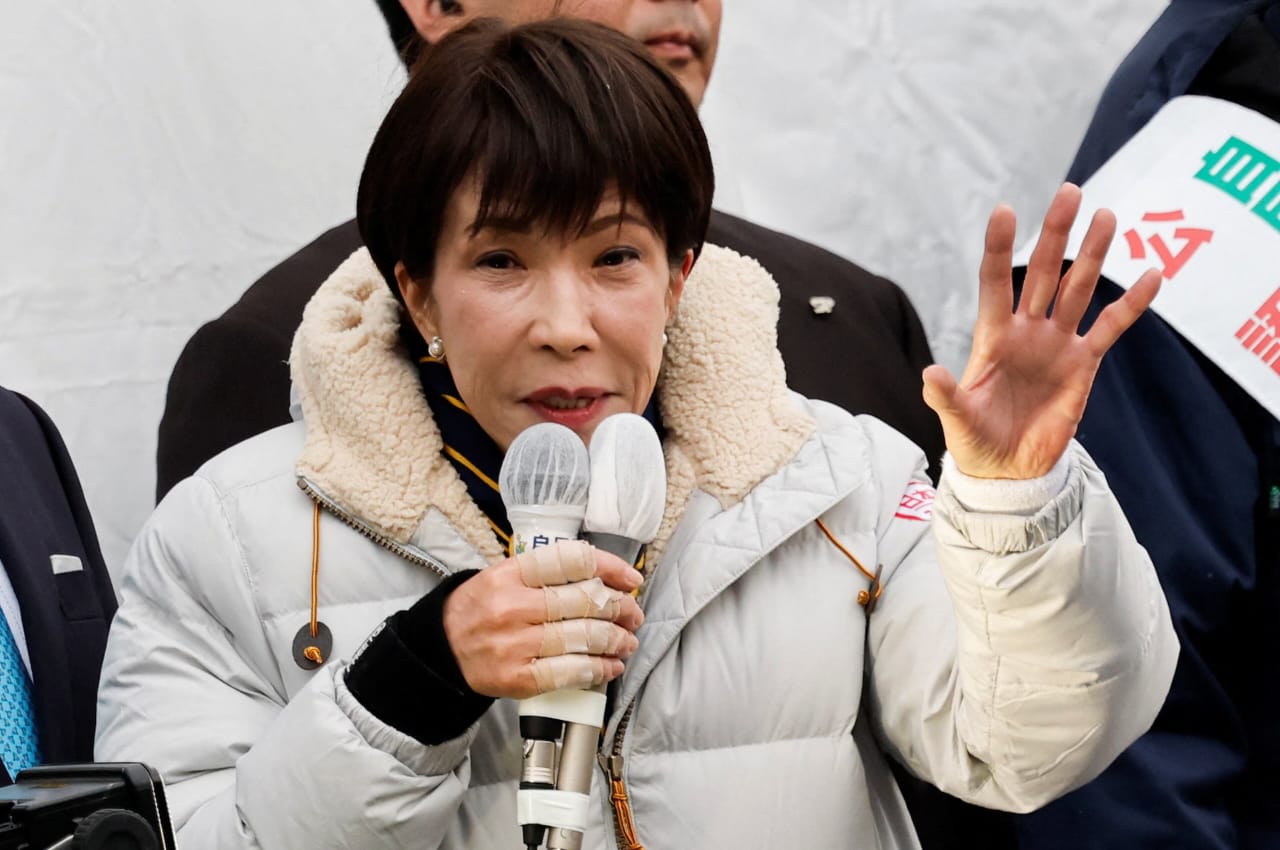
Snowfall blanketed large parts of Japan on Sunday as voters made their way to polling stations in a rare mid-winter national election expected to hand Prime Minister Sanae Takaichi a decisive victory. From rural towns to major cities, thick drifts slowed transport, disrupted travel, and threatened to suppress turnout, even as surveys suggested her governing alliance was headed for a commanding result.
Takaichi’s conservative bloc is projected to secure roughly 300 seats in the 465-member lower house, according to multiple opinion polls, a sharp increase from the 233 seats it defended going into the vote. If confirmed, the outcome would cement her authority just four months after she became the country’s first female prime minister by winning the leadership of the Liberal Democratic Party.
In Niigata prefecture, where snow banks climbed over two metres in some areas, residents trudged through near-whiteout conditions to vote. Outside a small-town polling station, 54-year-old teacher Kazushige Cho said the weather would not stop him from backing Takaichi’s party.
“She works hard and pushes policies forward instead of stalling,” he said. “I believe the country can move in a good direction under her leadership.”
Takaichi, 64, called the snap election shortly after taking office, hoping to convert her early popularity into a strong parliamentary mandate. Known for her blunt speaking style and tireless public image, she has quickly reshaped the political landscape. She accelerated defense spending to counter China’s growing influence, a move that drew sharp reactions from Beijing, and proposed cutting consumption taxes to ease the pressure of rising living costs.
Those proposals, while popular with many voters, have unsettled financial markets. Investors worry about how Japan, already carrying the heaviest public debt burden among advanced economies, would pay for tax relief without worsening fiscal risks.
“If Takaichi wins big, she will have more freedom to push through her core promises,” said Seiji Inada, managing director at political consultancy FGS Global. “Markets will be watching closely, and the yen could face renewed pressure if investors lose confidence in Japan’s budget discipline.”
Read also: Trump Endorses Japan’s Takaichi Ahead Of Election
Her most headline-grabbing pledge is to suspend the eight percent sales tax on food for two years. Supporters say the move would protect households from inflation. Critics argue it would load even more debt onto future generations.
In Niigata, 74-year-old Mineko Mori walked her dog through falling snow before heading to vote. She said she feared that tax cuts now could mean heavier burdens later.
“I worry about what kind of country we are leaving to our children and grandchildren,” she said. Mori planned to vote for Sanseito, a small far-right party that gained attention in last year’s upper house election with promises to tighten immigration controls and crack down on foreigners who break the rules.
Despite concerns from older voters, Takaichi has built an unusually strong following among young people. One recent poll showed more than 90 percent of voters under 30 expressing support for her. A youth-driven phenomenon dubbed “sanakatsu”, loosely translated as “Sanae-mania”, has taken hold. Fans rush to buy the same handbag she carries and the pink pen she uses to scribble notes in parliament.
The enthusiasm, however, does not always translate into ballots. Younger Japanese voters traditionally turn out at much lower rates than their elders, who have long formed the backbone of LDP election victories.
Late in the campaign, Takaichi also received an endorsement from U.S. President Donald Trump, a signal likely to resonate with conservative and nationalist-leaning voters.
If her LDP, together with its partner the Japan Innovation Party known as Ishin, crosses the 310-seat mark, the coalition would gain a supermajority. That would allow it to override decisions from the upper chamber, where Takaichi’s camp currently lacks control.
She has staked her leadership on the outcome. If the coalition fails to retain the lower house, she has promised to resign.
Weather, however, loomed as a wild card. Forecasts predicted up to 70 centimeters of snow in northern regions, making this only the third lower house election held in February in the postwar era. Even Tokyo received a rare dusting, snarling traffic and slowing commuters.
Read also: Bitcoin Drops Sharply After Week Of Heavy Selling
By Sunday morning, the transport ministry reported 37 train lines suspended, 58 ferry routes halted, and 54 flights canceled nationwide.
Turnout in recent elections has hovered around the mid-50 percent range. A sharp drop due to the storms could magnify the influence of highly organized voting blocs.
One such bloc is Komeito, which left its long-standing alliance with the LDP last year and merged into a centrist grouping with the main opposition Constitutional Democratic Party. Komeito maintains close ties with the lay-Buddhist organization Soka Gakkai, which claims more than eight million members across Japan and is known for disciplined voter mobilization.
Voters are choosing representatives in 289 single-seat districts, with the remaining seats assigned through proportional representation based on party lists. Polls close at 8 p.m. local time, when broadcasters are expected to release early projections based on exit surveys.