
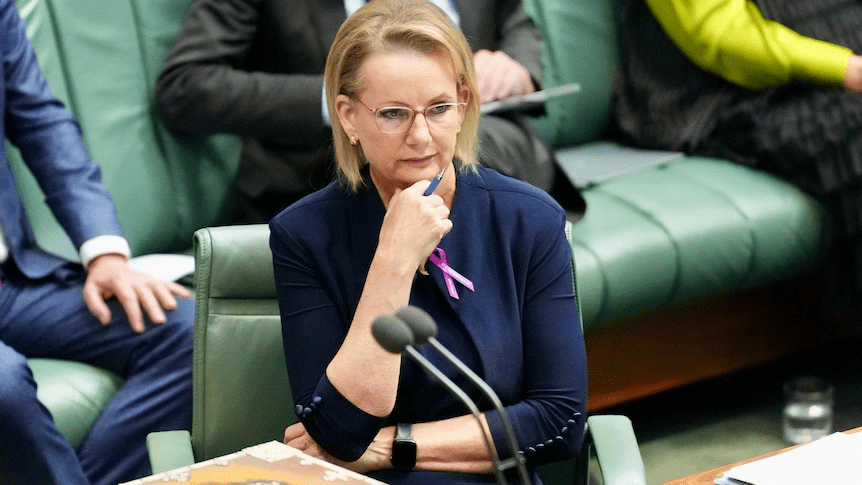
Angus Taylor secured the leadership of Australia’s Liberal Party on Friday after defeating Sussan Ley in a ballot that ended her tumultuous nine-month tenure as the first woman to hold the position.
The vote, conducted by secret ballot, delivered Taylor 34 votes against 17 for Ley, who announced immediately afterward that she would leave parliament entirely. She told reporters she planned to step away “completely and comprehensively from public life.”
Taylor’s victory follows his announcement Wednesday that he would mount a challenge, a move that concluded months of internal speculation about Ley’s future. Jane Hume was elected deputy leader in the same ballot.
Ley’s brief leadership was marked by persistent factional conflict and declining public support. The Liberal-National Coalition, a partnership established in the 1940s, ruptured twice during her time in charge—once in the immediate aftermath of last May’s election loss and again in recent weeks.
Those fractures exposed deeper disagreements over the causes of the Coalition’s devastating defeat to Labor, which nearly eliminated the Liberal Party from Australia’s major urban centers. Energy and climate policy proved particularly contentious, with no consensus emerging on how to rebuild electoral support.
Read also: Melbourne Protests Close Out Herzog Australia Trip
Polling conducted in recent weeks showed the populist One Nation Party, which secured just 6 percent of the national vote last year, overtaking the Coalition for second place behind the governing Labor Party. Ley’s personal approval numbers remained weak throughout her leadership.
Taylor, who represents the party’s conservative wing, previously lost the 2025 leadership contest to Ley by a narrow margin. A former management consultant, he entered parliament in 2013 and held ministerial portfolios under prime ministers Malcolm Turnbull and Scott Morrison.
In his social media statement Friday, Taylor described his election as “an immense honour” and said he anticipated collaborating with Hume, the new deputy.
Ley, speaking to reporters after the ballot, said she held “no hard feelings” toward Taylor but suggested the infighting she experienced had been corrosive. She remarked that it was essential he receive “clear air, something that is not always afforded to leaders.”
Reflecting on her leadership, Ley acknowledged the period had been difficult. “I was part of the early punk rock movement in Canberra, I will continue to find wisdom in one of punk’s defining themes, a fearless and honest belief in yourself,” she said.
Her resignation from parliament will trigger a byelection in Farrer, a rural New South Wales electorate the Liberals have held since the seat’s creation in 1949. Political observers expect the party to retain it, though One Nation’s recent polling surge has raised questions about the Coalition’s traditional base.
Taylor inherits a party struggling to define itself in opposition. The Coalition’s inability to present a unified message on climate and energy policy has complicated efforts to counter Labor Prime Minister Anthony Albanese, whose government has advanced climate legislation and economic reforms while the opposition remained consumed by internal disputes.
Hume, a former finance minister, represents Victoria and brings metropolitan credentials to a leadership team anchored by Taylor’s conservative positioning. Her selection appears designed to balance factional interests and broaden the Coalition’s appeal beyond rural constituencies.
One Nation, led by Pauline Hanson, has capitalized on voter frustration with mainstream parties by adopting hard-line positions on immigration and opposing climate measures. The party’s climb in national surveys has alarmed Coalition strategists concerned about losing votes on their right flank.
Read further: FDA Rejects Moderna Flu Shot Review Amid Policy Reversal
The Coalition has experienced repeated leadership upheaval over the past decade, with multiple changes at the top contributing to a perception of instability. Taylor now faces the task of unifying a fractured caucus and articulating a clear policy agenda ahead of the next federal election, due no later than 2028.
Labor has maintained a commanding lead in polling since taking office in May of last year. Albanese’s government has benefited from the Coalition’s disarray, allowing it to implement policy initiatives with limited effective opposition.
Taylor has not yet outlined his priorities or indicated whether he will shift the Coalition’s policy positions from those adopted under Ley. He is expected to address party members in the coming days and begin consultations on strategy ahead of the next parliamentary session.
The leadership change marks the end of a historic but difficult chapter for the Liberal Party, which elevated Ley following the 2024 election defeat in an effort to project renewal. Her departure after just nine months underscores the depth of divisions within the conservative coalition.