
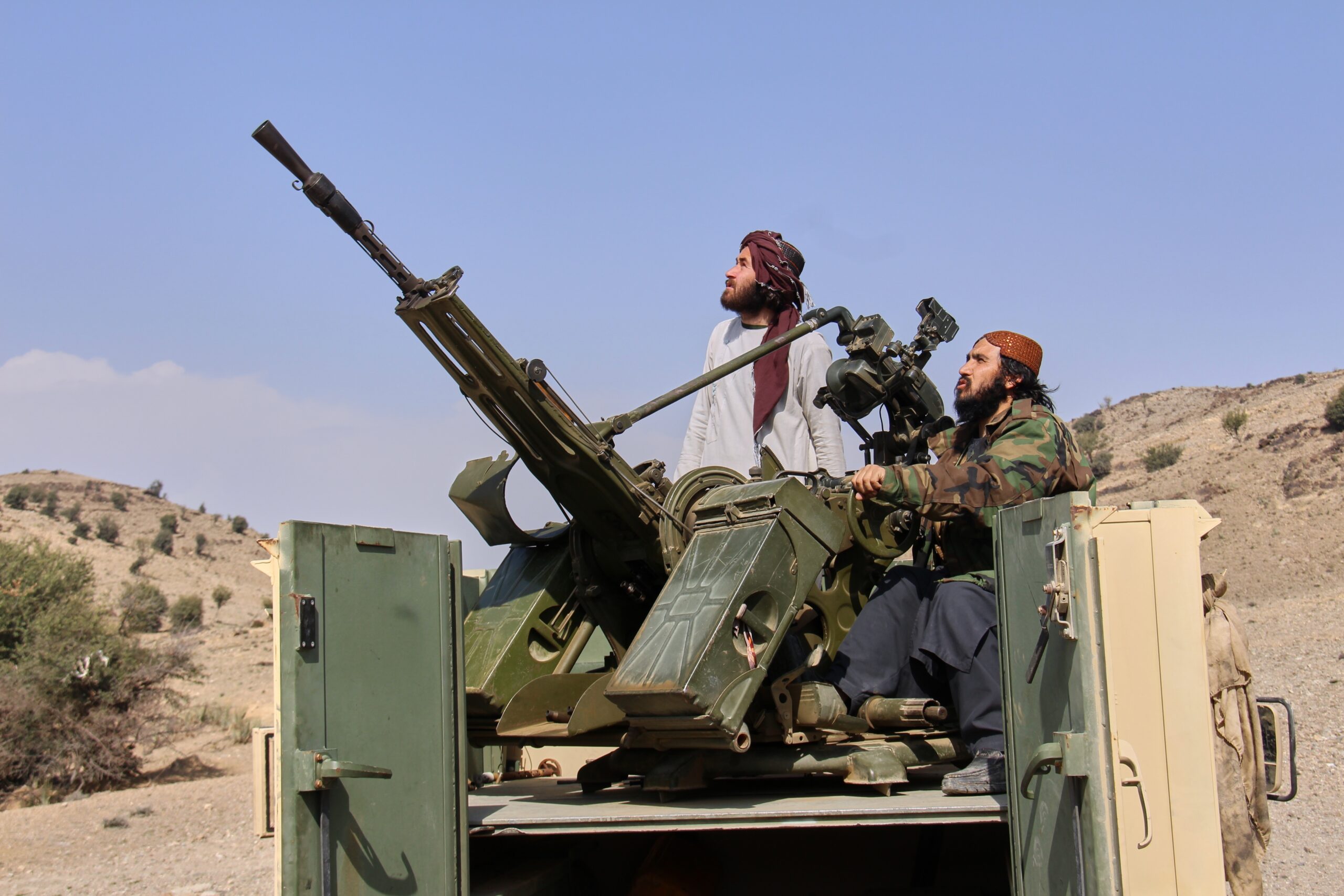
Pakistan’s military reported on Saturday that Operation Ghazab Lil Haq, Wrath for the Truth, had killed 331 Taliban fighters and wounded more than 500 others since the operation’s launch on Thursday night, as the conflict between the two neighbours entered its third consecutive day with no ceasefire in sight, diplomatic efforts gathering pace from Riyadh to Beijing, and the United States publicly backing Pakistan’s right to defend itself.
Information Minister Attaullah Tarar, posting a 9am Saturday update on X, said Pakistani forces had destroyed 104 Taliban checkposts, captured 22 positions, destroyed 163 tanks and armoured vehicles, and struck 37 locations across Afghan territory since the operation began. Director-General of Inter-Services Public Relations Lieutenant General Ahmed Sharif Chaudhry said Pakistani forces had successfully repulsed Taliban fighters at 53 border locations, describing the operation as ongoing and achieving its stated objectives.
“Operation Ghazab-lil-Haq is ongoing and will continue until its objectives are achieved,” security sources said, adding that “Pakistani forces are not targeting any civilian population or civilian targets.”
The Taliban’s figures diverged sharply from Islamabad’s. Taliban Interior Minister Sirajuddin Haqqani said in a speech that the conflict would be “very costly” for Pakistan, and Taliban Deputy Spokesman Hamdullah Fitrat said 52 civilians had been killed and 66 wounded in the Khost and Paktika provinces from Pakistani strikes. Earlier Taliban figures cited 19 civilian deaths and 26 injuries, with Deputy Spokesman Fitrat saying the majority of civilian casualties were women and children. Reuters could not independently verify the figures produced by either side. Afghanistan also claimed to have shot down a Pakistani military jet. Pakistan’s military categorically denied the claim, calling it “totally untrue.”
Pakistan’s Information Minister Tarar disclosed that Afghan Taliban fighters had attempted to launch drone attacks inside Pakistan from within its northwest territory, an escalation the military said its anti-drone systems had successfully thwarted. He described the Taliban government as an “illegitimate regime” that “actively sponsors cross-border terrorism, institutionalises slavery, and orchestrates the systematic erasure of women and minorities,” language that went significantly further than Islamabad’s standard diplomatic posture and indicated the political constraints on any rapid de-escalation.
Pakistani Defence Minister Khawaja Muhammad Asif was equally unambiguous. “Our patience has reached its limit. Now it is open confrontation,” he said in posts on Friday, formally characterising the conflict as a war for the first time.
Haqqani countered in his speech that Afghanistan had defeated “the world” through unity and patience rather than military superiority, an implicit reference to the Taliban’s 20-year insurgency against US-led NATO forces, while simultaneously signalling that Afghan forces beyond those already engaged had not yet been fully deployed. The comment was read as a warning that a broader Taliban mobilisation remained possible.
The asymmetry of military capability between the two sides is stark. Pakistan maintains a standing army of several hundred thousand troops, a modern air force, nuclear weapons, and advanced armoured capabilities.
The Taliban possesses no conventional air force and relies on light infantry, ground-based weapons, and asymmetric tactics refined over two decades of insurgency. Pakistan’s conventional superiority allows it to strike deep into Afghan territory at will, as demonstrated by Friday’s strikes on Kabul and Kandahar. But that same military history demonstrates that conventional dominance has not historically translated into durable strategic outcomes against a force willing to absorb losses and wage a long war.
Read Also: School Strike Kills Dozens Of Girls As Iran Civilian Toll Mounts
International pressure for restraint intensified through Saturday. The European Union called on both sides to de-escalate and return to dialogue. The United Nations demanded an immediate halt to hostilities. Russia urged a resumption of talks. China said it was “deeply concerned” and prepared to assist in easing tensions.
Jordan’s Foreign Ministry added its voice, backing diplomatic resolution. Saudi Arabia’s Foreign Minister Prince Faisal bin Farhan spoke with Taliban Foreign Minister Amir Khan Muttaqi on Friday about reducing tensions and keeping diplomatic channels open.
The United States took a notably different position. The State Department said Washington supported Pakistan’s right to defend itself against attacks by the Taliban. A US official, speaking on condition of anonymity, said Washington did not view Pakistan as the aggressor and acknowledged that Islamabad was under pressure to address security challenges. The statement placed Washington firmly behind Pakistan at a moment when the US is simultaneously conducting military operations against Iran, a posture that complicates any American-led mediation effort and signals to Kabul that international diplomatic cover for the Taliban’s position is limited.
Read Also: Pakistan Declares ‘Open War’ As Jets Strike Kabul Targets
The conflict has its origins in a pattern of cross-border militant attacks for which Pakistan holds the Taliban accountable. In 2025 alone, Pakistan recorded 699 terrorist attacks killing 1,034 people, the deadliest year in a decade, with Tehreek-e-Taliban Pakistan blamed for the majority. A Qatar-mediated ceasefire agreed in October 2025 collapsed after subsequent peace talks in Istanbul produced no lasting framework. Saudi-mediated negotiations in February secured the release of three Pakistani soldiers captured during last year’s clashes, an outcome that appeared to signal possible de-escalation before the February 22 airstrikes in Nangarhar reignited hostilities.
No ceasefire negotiations were confirmed as active or imminent as of Saturday evening. Pakistan said Operation Ghazab Lil Haq would continue until its objectives were achieved, without specifying what those objectives were. Afghanistan said it remained open to dialogue, while warning that any wider conflict would carry serious consequences for both sides.