
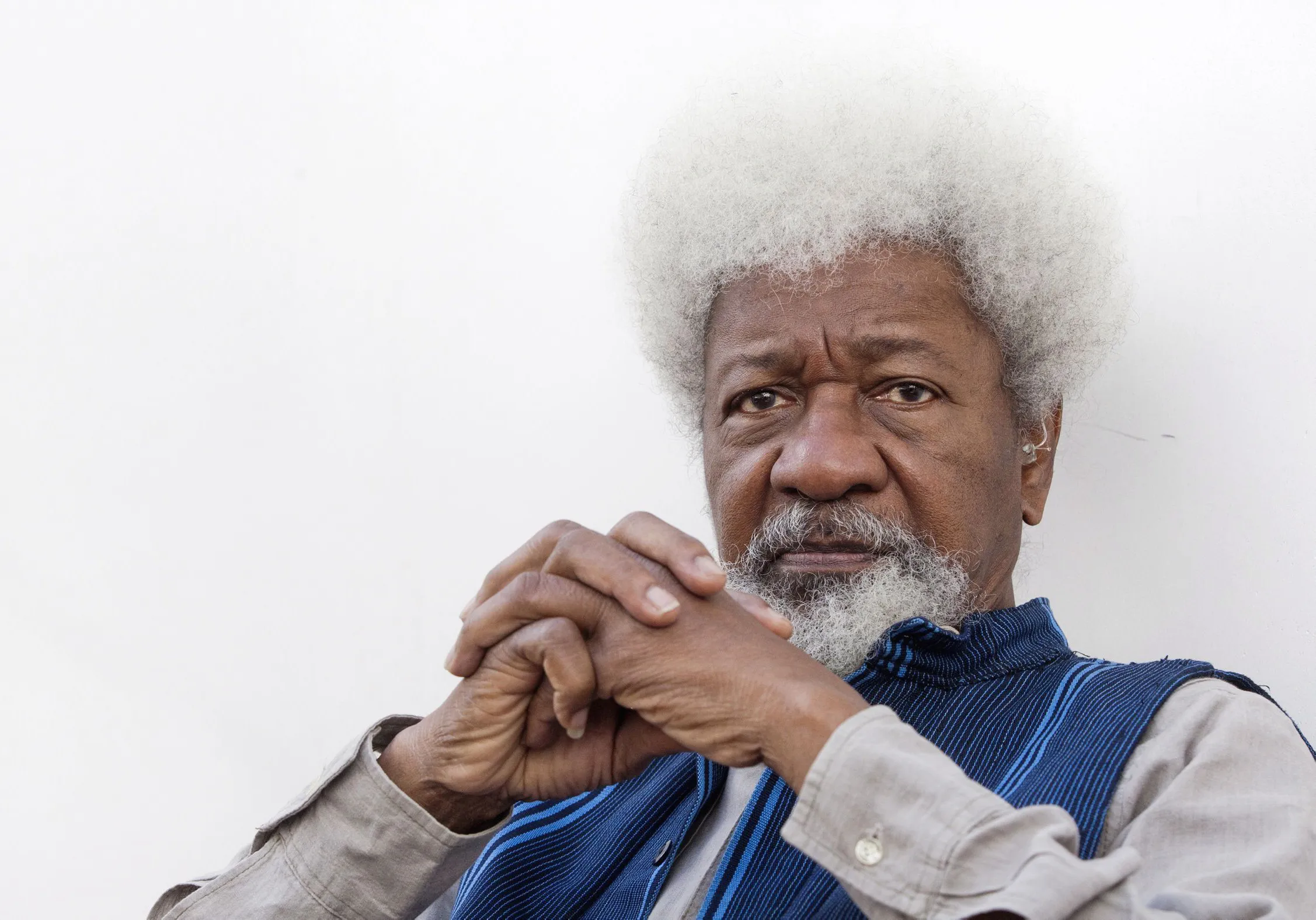
Renowned playwright, Prof. Wole Soyinka, has strongly criticized the Emir of Ilorin, Ibrahim Sulu-Gambari, for his involvement in preventing Yeye Ajesikemi Omolara, an Osun priestess, from organising an Isese festival in the state. The festival is intended to commemorate Ifa spirituality and practice.
As the Akintalun of Egba and Giiwa of Ijebu-Remo, Soyinka emphasised that such behavior has transformed Kaduna, a city that was once characterized by its inclusive nature, into a tragic symbol of violence and discord.
Soyinka drew attention to the alarming reality that such conduct has facilitated the savage lynching of Deborah Samuel, a young student from Sokoto’s College of Education. The presence of armed police did not prevent this tragic event, as it was triggered solely by an allegation of dishonoring a respected prophet.
In a statement titled, ‘Isese festival: An open letter to Sulu Gambari,’ the Nobel Laureate noted that ‘The greatest avatars that the world has known were not without human frailties, flaws, and errors of understanding. You are not omniscient. And you are not omnipotent.’
A delegation of Islamic clerics associated with the Majlisu Shabab-l-Ulamah Society visited the priestess at her residence. During their visit, they relayed a warning from the Emir of Ilorin, instructing her to refrain from hosting the three-day festival set to take place between July 22 and July 24, 2023, in Ilorin.
Faced with escalating threats to her life, the priestess decided to cancel the planned festival and communicated this development through an online video. She candidly expressed the multiple death threats she had been receiving, highlighting the severity of the situation.
Read also: Buhari Is A Failure – Soyinka Maintains Stand On Impeachment Plot
The Akogun of Isara in the statement said, ‘Your Royal Highness, so soon after the Moslem season of spiritual purification, it is sad to see the ancient city of Ilorin, a confluence of faiths and ethnic varieties, reduced to this level of bigotry and intolerance, manifested in the role of a presiding monarch. The truncation of a people’s traditional festival is a crime against the cultural heritage of all humanity. Year after year, Ramadan has been celebrated in this nation as an inclusive gathering of humanity, irrespective of divergences of belief. Not once, in my entire span of existence, have I encountered pronouncements by followers of any faith that the slaughtering of rams on the streets and marketplaces is an offence to their concept of godhead. Vegetarians hold their peace. Buddhists walk a different path. Prior to Ramadan, non-Moslems routinely join in observing the preceding season of fasting as a spiritual exercise worthy of emulation.’
More so, the elder statesman noted that the emir might find it enlightening that Abu Dhabi dedicated considerable resources, at the expense of the government, to implement various initiatives aimed at cultivating a society characterized by religious tolerance and mutual respect.
He said, ‘Your Royal Highness, it is conduct like this that has bred Boko Haram, ISIS, ISWAP and other religious malformations that currently plague this nation, spreading grief and outrage across a once peaceful landscape, degrading my and your existence with their virulent brand of Islam. It is conduct like this that has turned, before our very eyes, a once ecumenical city like Kaduna into a blood-stained mockery of cohabitation. It is conduct like this that makes it possible for a young student, Deborah, to be lynched in the very presence of armed police, on mere allegation of having belittled the image of a revered prophet.’
From the essayist’s standpoint, this continent has been the victim of centuries of scorn and plunder perpetrated by alien religions, with Christianity and Islam leading the way.
He said, ‘Your conduct is an affront to my sense of racial being, and that holds true for millions beyond these national and continental borders, stretching into the Americas and the Caribbean. There you will still encounter Isese and allied spiritualities. There, Isese still exerts its hold on the human spirit. Visit Brazil, go to Columbia, explore Cuba, and be humbled by the tenacity of this spirituality among the descendants of black humanity.’
Soyinka added, ‘We know the history of Ilorin and the trajectory of your dynasty – but these are not the issues. The issue is peaceful cohabitation, respect for other worldviews, their celebrations, their values and humanity. The issue is the acceptance of the multiple facets of human enlightenment.’
He urged the monarch to exert his influence and curtail the activities of those he deemed as promoters of division and intolerant arrogance, specifically singling out the Majlisu Shabab Ulamahu Society.
He also called on the monarch to personally extend an olive branch to the priestess, seek reconciliation, and explore avenues for rectifying the profound insult inflicted upon their collective race.