
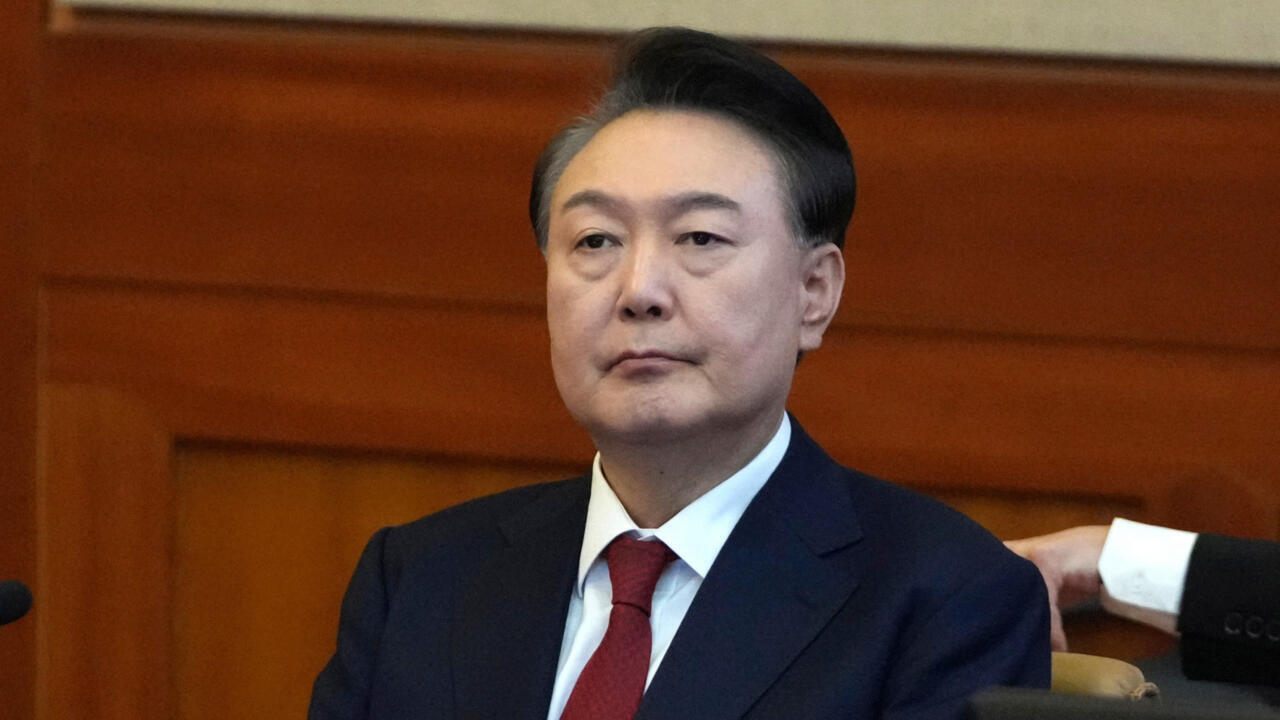
A Seoul court convicted former South Korean President Yoon Suk Yeol of violating election law Monday and sentenced him to 18 months in prison, suspended for three years, in a verdict that could eventually nullify his 2022 election win and force his party to repay nearly $27 million in campaign funds if it survives appeal at South Korea’s higher courts.
The Seoul Central District Court found Yoon lied during a December 2021 campaign debate when he denied introducing a lawyer to Yoon Woo-jin, then chief of the Yongsan Tax Office. The court said Yoon had deliberately allowed his name and position to be used to arrange the introduction and had the lawyer speak with the tax official on multiple occasions afterward. Yoon Woo-jin was separately sentenced in November to prison for accepting money from businesspeople in exchange for favorable treatment during tax audits.
The court also found Yoon lied in a January 2022 interview when he said a party official, rather than he himself, had introduced him to shaman Jeon Seong-bae, and separately denied that he and his wife, former first lady Kim Keon Hee, had ever met Jeon together. Judges said evidence indicated Yoon and Kim had in fact met Jeon jointly as early as 2013, introduced by Kim, and maintained a relationship with him for more than a decade. “Whether a presidential candidate has had a long-term relationship with a person like Jeon and has received advice from him is directly connected to the voter’s assessment of his ability, qualification and the possibility that he would rely on unofficial influence,” the court said in its ruling.
Read also: Former President Yoon Gets Life For Insurrection Over Martial Law
Independent counsel Min Joong-ki, who led the underlying corruption investigation, had sought a two-year prison term, arguing that Yoon’s false statements helped quiet controversy over both relationships during a presidential race he ultimately won by a narrow margin over his liberal rival. Yoon has denied wrongdoing throughout the case, and his legal team said in a statement that it would appeal, calling the ruling flawed.
The verdict carries stakes beyond Yoon personally. Under South Korean election law, political parties are reimbursed for campaign expenses when their presidential nominee wins or secures at least 15% of the vote; if that candidate later receives a final conviction carrying a prison term or a fine of 1 million won or more, the party must return the money. A final conviction against Yoon would require the People Power Party to repay 39.7 billion won, or about $27.1 million, in reimbursed election costs — and could go further, potentially nullifying the outcome of the 2022 presidential election itself.
Jeon, the shaman at the center of one of the false statements and known by the nickname Geonjin Beopsa, faces separate legal trouble of his own. Prosecutors have detained him on suspicion of illegally receiving political funds from candidates in South Korea’s 2018 local elections; he had reportedly served as an adviser at a company Kim Keon Hee previously ran. Shamans occupy an unusual place in South Korean politics, where figures claiming spiritual or supernatural insight have periodically been accused of wielding informal influence over senior officials, a history that has made any perceived closeness between a shaman and a sitting or aspiring president a recurring source of controversy.
Read also: Yoon Gets 30 Years In Korean Court Over Drone Incursion
Monday’s conviction adds to an accumulating set of prosecutions against Yoon stemming from his declaration of martial law on Dec. 3, 2024, an attempt to impose military rule that plunged the country into a brief but severe political crisis before the National Assembly voted to overturn it hours later. He was indicted and detained in January 2025, becoming the first sitting South Korean president to be arrested and charged with a crime. A lower court sentenced him to life in prison in February on insurrection charges tied to the martial law attempt, and to 30 years in June on separate treason charges alleging he sought to provoke conflict with North Korea by flying drones into its territory.
Like those earlier rulings, Monday’s verdict remains under appeal and has not taken legal effect while Yoon’s cases continue through South Korea’s higher courts, leaving both the question of his party’s repayment obligation and the possibility of an invalidated election unresolved for now.