
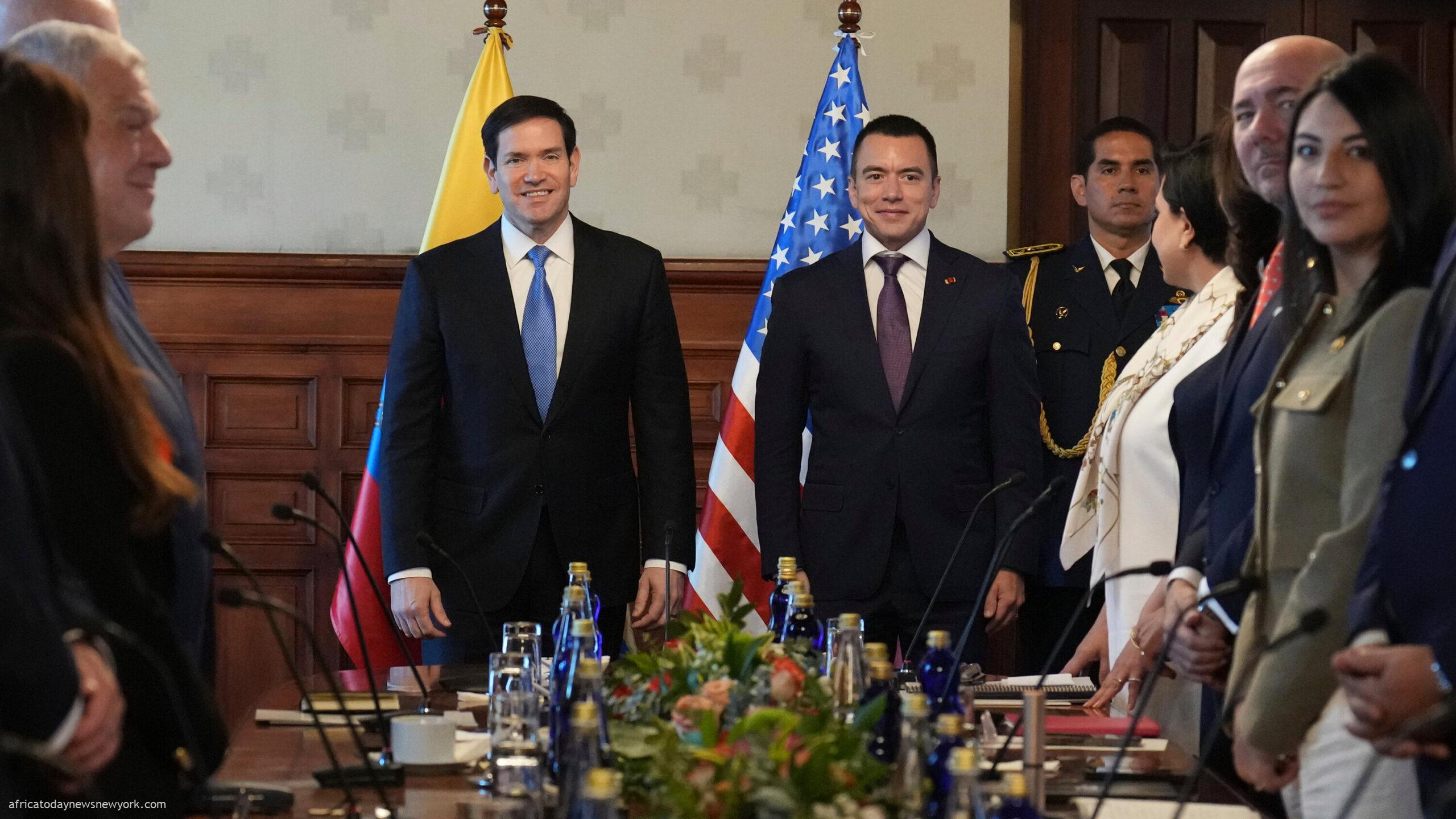
Secretary of State Marco Rubio signaled a sharp escalation in Washington’s fight against international crime groups, saying the United States would not rule out military action — even lethal strikes — against foreign gangs.
“Now they’re gonna help us find these people and blow them up, if that’s what it takes,” Rubio said during a visit to Ecuador this week, adding that “friendly governments” would collaborate in rooting out traffickers.
He confirmed that Los Lobos and Los Choneros, two of Ecuador’s most powerful cartels, will be formally designated as foreign terrorist organizations. The move gives the U.S. sweeping authority to target assets, pursue affiliates abroad, and share intelligence with Quito without restriction.
The remarks came just days after a U.S. strike on a boat in the Caribbean killed 11 alleged drug traffickers, according to the White House. Officials said the vessel carried members of Venezuela’s Tren de Aragua gang, though their identities have not been released. Legal experts warn the operation may have violated maritime law and human rights treaties.
Read Also: Emotional Argentina Farewell: Messi Signs Off In Style, Nets Twice
The Trump administration has cast the campaign as a long-overdue war against cartels. “They’ve been waging war on us for 30 years and no one has responded,” Rubio said. But the governments of Mexico and Ecuador have yet to publicly endorse U.S. strikes within their jurisdictions.
Ecuadorian President Daniel Noboa has repeatedly asked Washington and European allies to join his offensive against gangs. His government estimates that 70 percent of the world’s cocaine now flows through Ecuador, turning the small Andean nation into a global trafficking hub and fueling record levels of violence.
Rubio also announced $13.5 million in U.S. security aid and $6 million in drone technology for Ecuador. Noboa, who has described his crackdown as a “war,” is pushing to amend Ecuador’s constitution to allow foreign military bases for the first time since 2009.
The designation could also complicate migration. Experts note it may strengthen asylum claims for those fleeing cartel violence, but also risk penalizing migrants who paid extortion to gangs — potentially categorizing them as having “materially supported” terrorism.