
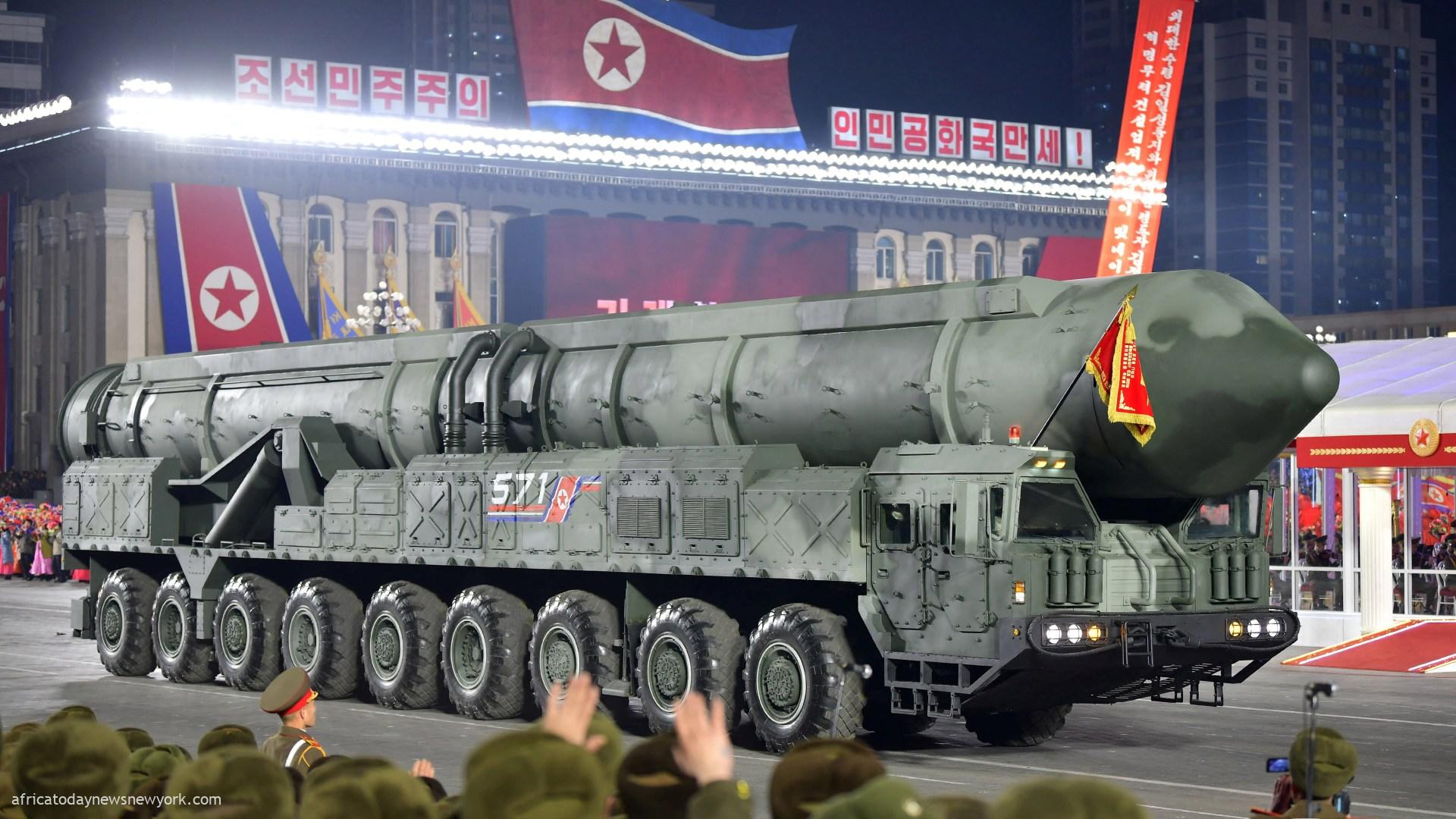
South Korea has warned that North Korea may now hold enough highly enriched uranium (HEU) to produce dozens of nuclear weapons, underscoring mounting concerns over Pyongyang’s accelerating programme.
Speaking on Thursday, Unification Minister Chung Dong-young said assessments suggest Pyongyang has amassed around 2,000 kilograms (4,400 pounds) of HEU enriched to 90 percent purity or higher. That level of enrichment qualifies as weapons-grade material.
Chung added that four enrichment facilities are believed to be operating, including the well-known Yongbyon complex, which North Korea agreed to shut down under earlier negotiations but later restarted in 2021. He stressed that “North Korea’s uranium centrifuges are operating even at this very hour.”
According to the International Atomic Energy Agency (IAEA), about 42kg of weapons-grade uranium is required for one nuclear device. If Seoul’s estimates are accurate, North Korea’s current stockpile could yield roughly 47 nuclear warheads.
Foreign analysts have long argued that leader Kim Jong Un is determined to expand the North’s nuclear arsenal, and satellite imagery has pointed to construction of additional enrichment plants. South Korea’s defence ministry has previously acknowledged Pyongyang possesses a “significant” quantity of HEU, but Thursday’s disclosure suggests a sharp increase in its potential arsenal.
Chung warned that sanctions alone would not be effective in halting the programme. Instead, he urged renewed diplomacy, insisting that only a summit-level dialogue between Pyongyang and Washington could break the current stalemate.
Read Also: US Drug Boat Attacks ‘Tyrannical’ – Colombia’s President
Talks on denuclearisation collapsed in 2019 after failed summits between Kim and then US President Donald Trump, leaving the process frozen. Kim recently signalled he was open to new negotiations, but only if Washington drops its demand for complete denuclearisation as a precondition.
North Korea, which conducted its first nuclear test in 2006, remains under sweeping United Nations sanctions for its banned weapons programme. It has never publicly confirmed the number or location of its uranium-enrichment facilities.
South Korea’s new president, Lee Jae Myung, has pledged a more conciliatory approach than his predecessor, vowing not to pursue regime change. Chung criticised the previous government’s hard line, arguing it allowed North Korea’s nuclear capacity “to expand without limit.”