
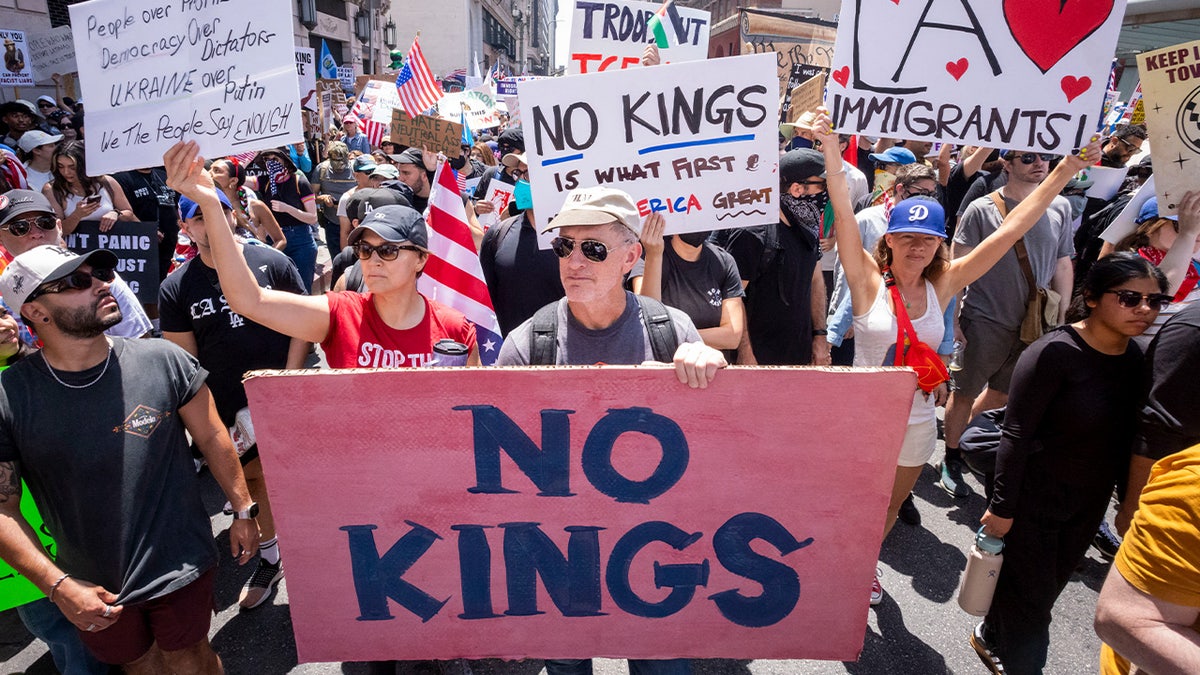
On Saturday, more than 2,600 “No Kings” protests were slated across all 50 states in a mass show of opposition to President Donald Trump’s policies on immigration, education, and national security. Organizers say the coordinated events aim to sound the alarm on what they perceive as creeping autocracy under his administration.
As a follow-up to the June protests, the protests, which range from massive marches in major cities to smaller assemblies in towns and suburbs, are a sign of the public’s ongoing dissatisfaction with the scope and speed of the present conservative agenda.
Leah Greenberg, co-founder of the progressive group Indivisible, framed the movement’s message plainly: “There is nothing more American than saying ‘we don’t have kings’ and exercising our right to peacefully protest.”
They cite increased immigration enforcement, widespread government workforce layoffs, and funding cuts to prestigious colleges due to protests about transgender rights, diversity, and Israel. Despite his generally silent response to the protests, Trump said in a Friday Fox Business appearance that “they’re referring to me as a king — I’m not a king.” Additionally, he charged that detractors had misrepresented his presidency.
The actions on Saturday were co-organized by more than 300 local organizations. Tens of thousands of volunteer marshals nationwide received legal training from the American Civil Liberties Union (ACLU), which also taught them protest safety procedures and de-escalation techniques. “No Kings” materials, such as social media campaigns and digital advertisements, went viral to increase attendance. In solidarity with democratic movements around the world, organizers encouraged attendees to wear yellow. (Yellow also played an important role in the protests in June.)
Read Also: Peru Protests Against President Jeri Leave One Dead
Several high-profile figures have endorsed the protests, including Senator Bernie Sanders, Representative Alexandria Ocasio-Cortez, and former Secretary of State Hillary Clinton.
On the other side, Republican leaders have attacked the movement. House Speaker Mike Johnson dismissed the rallies as a “hate America rally,” while others warned of potential incitement to violence in the wake of last month’s assassination of political activist Charlie Kirk.
According to American University researcher of American activism Dana Fisher, Saturday might see “the largest protest turnout in modern U.S. history,” with over 3 million people expected to attend based on registration and previous attendance. She maintained that the main objective is to forge a common identity and provide elected politicians who oppose Trump’s agenda more confidence, even if real numbers are not high. The rallies’ organizers admit that administration policy may not be changed right away, but they think a demonstration of solidarity might change the political narrative and inspire opposition at all governmental levels.