
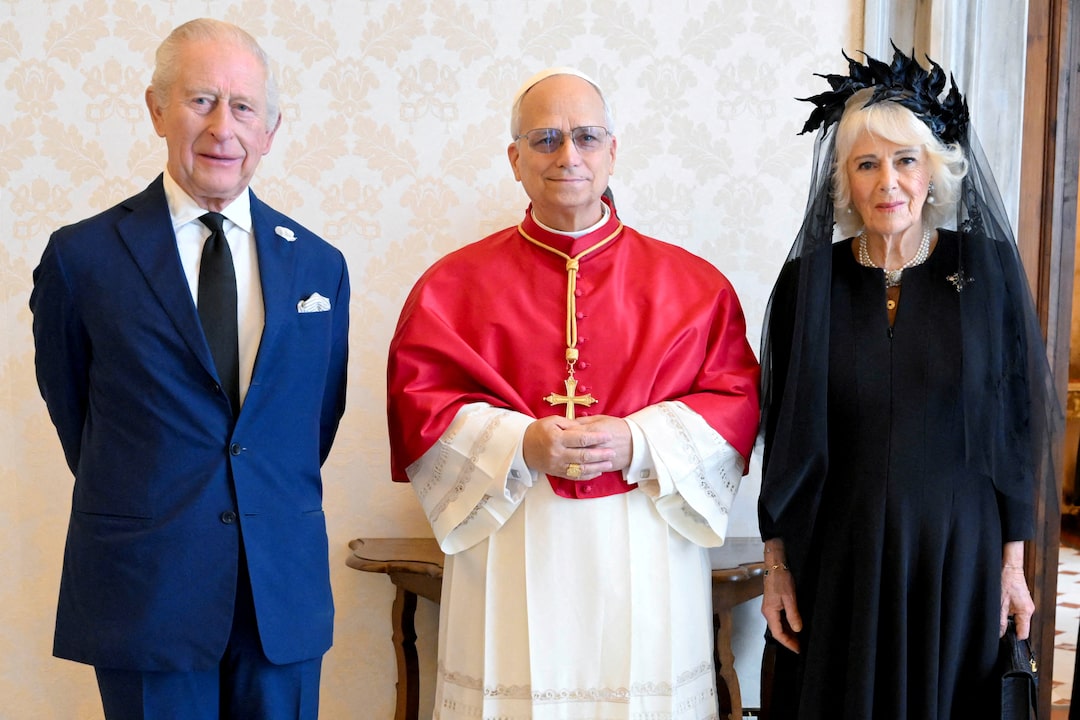
Britain’s King Charles III and Pope Leo XIV prayed together on Thursday inside the Vatican’s Sistine Chapel, in what marked the first joint worship between an English monarch and a Catholic pontiff since the English Reformation in 1534.
“There is a strong sense that this moment… offers a kind of healing of history,” said Rev. James Hawkey, canon theologian at Westminster Abbey. “This would have been impossible just a generation ago.”
During his Roman visit, Charles will travel to Basilica of St. Paul Outside the Walls, where Pope Leo plans to bestow upon him the title “Royal Confrater”. A special wooden chair bearing Charles’s coat of arms, to be used by future British monarchs, will be placed in the basilica’s apse.
Read Also: Pope’s First Exhortation Rebukes Trump’s Immigration Policy
In return, Charles has approved two British honours for Pope Leo: the role of “Papal Confrater” at St. George’s Chapel, Windsor Castle, and the Knight Grand Cross of the Order of the Bath.
The split between the Catholic Church and the Church of England was formalized in 1534 when King Henry VIII broke away from Rome after Pope Clement VII refused to annul his marriage to Catherine of Aragon. The dispute began as a personal matter, Henry’s desire for a male heir and his wish to marry Anne Boleyn, but quickly spiralled into a political and theological confrontation that reshaped England’s identity. By passing the Act of Supremacy, Henry declared himself “Supreme Head of the Church of England,” severing papal authority and ending nearly a millennium of English obedience to the Vatican.
Archbishop Cottrell stood in for Sarah Mullally, who is designated to become the first woman to serve as Archbishop of Canterbury next year, though she was not yet in office.
Bishop Anthony Ball, the Anglican representative to the Vatican, described the honors as indicative of “the commitment that both of our Churches have to working for a shared future.”
Since the 1960s, efforts toward Anglican-Catholic rapprochement have grown stronger. While both traditions agree on many core teachings, differences on issues such as ordination of women and clerical marriage remain significant.