
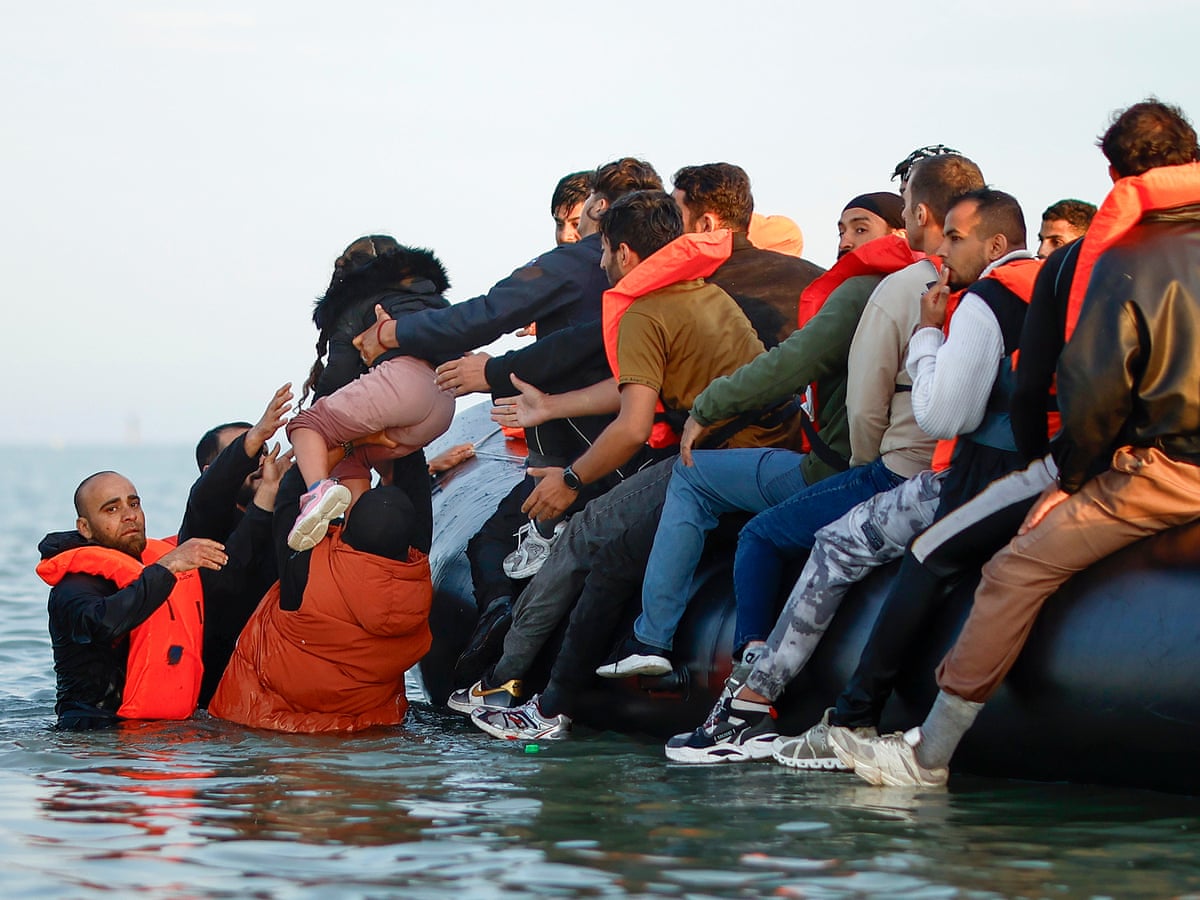
France is quietly stepping back from its recent promise to intercept small migrant boats in the English Channel, dealing a blow to the UK’s efforts to curb illegal crossings. Multiple French sources confirmed that plans for a tougher “maritime doctrine” — which would have empowered patrol boats to intercept and tow dinghies back to shore — have stalled amid political upheaval in Paris.
The shift marks a major reversal from July’s high-profile summit between President Emmanuel Macron and UK Prime Minister Sir Keir Starmer, where both leaders hailed closer cooperation to end the perilous crossings. At the time, France’s then–Interior Minister Bruno Retailleau was credited with championing the new, more aggressive approach in the Channel.
Retailleau’s leadership led to rare scenes of French police wading into the sea near Boulogne, slashing open an overcrowded “taxi boat” caught in the surf — footage that prompted Downing Street to describe the action as “a significant moment.” Soon after, French officials hinted that similar interventions at sea would begin “within days.”
But those plans have since evaporated. Retailleau was dismissed during the latest cabinet reshuffle, and his replacement has yet to announce any clear policy direction. Meanwhile, France’s domestic political tensions — marked by protests, strikes, and a fragmented parliament — have shifted the government’s attention away from migration control.
“It’s possible that the new measures at sea might never happen,” warned Peter Walsh, a researcher at Oxford’s Migration Observatory. “Without clear political backing, enforcement efforts are likely to return to the limited status quo.”
Currently, French patrols rarely intervene once boats are in open water, citing the risks to both migrants and officers. The smugglers’ so-called “taxi boats,” which ferry migrants from shallow canals near Dunkirk or Calais, continue launching almost daily, often dangerously overloaded.
Read Also: Trump Halts Putin Talks, Slaps Major Sanctions On Russia
In the UK, border security chief Martin Hewitt has voiced frustration at France’s hesitation. “Every day that passes means more lives at risk in one of the world’s busiest shipping lanes,” he said.
For now, the long-promised maritime crackdown appears to have drifted off course — another setback in the long, politically charged struggle to control the Channel crossings.