
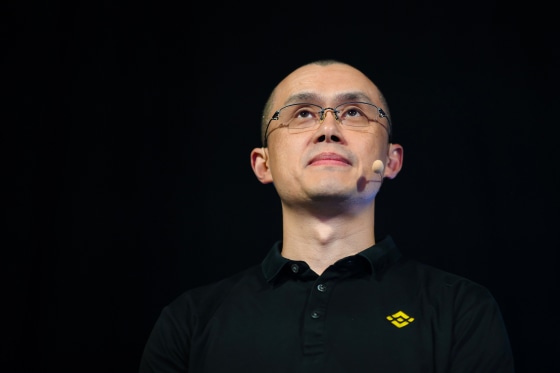
In a move that underscores his administration’s embrace of the cryptocurrency sector, President Donald Trump has granted a pardon to Changpeng Zhao, the billionaire entrepreneur behind Binance, the world’s largest digital currency exchange.
The announcement came Thursday from White House press secretary Karoline Leavitt, who framed the decision as a repudiation of the previous administration’s regulatory approach. “Mr. Zhao was prosecuted by the Biden Administration in their war on cryptocurrency,” Leavitt said, adding that Trump had “exercised his constitutional authority” in issuing the pardon.
Zhao, known widely in crypto circles as “CZ,” responded with gratitude on the social media platform X. “I am deeply grateful for today’s pardon and to President Trump for upholding America’s commitment to fairness, innovation, and justice,” he wrote, pledging to “do everything we can to help make America the Capital of Crypto.”
The pardon resolves legal troubles that saw Zhao become an unlikely figure in financial enforcement history. Born in China and holding Canadian citizenship, he stepped down from Binance’s helm in 2023 after the company admitted to failing to maintain proper safeguards against money laundering—a violation that cost the exchange $4.3 billion in penalties.
Zhao himself served four months in federal prison last year for breaking the Bank Secrecy Act, making him the first person ever imprisoned for such violations. That law requires American financial institutions to verify customer identities, track transactions for suspicious patterns, and report potential criminal activity to authorities. According to prosecutors at the time, the scale of Zhao’s violations was unprecedented.
The presidential pardon comes as Trump reshapes the regulatory landscape around digital currencies. While American presidents possess sweeping constitutional authority to issue pardons and commutations for federal crimes, they have traditionally reserved such clemency for the final days of their tenure. Trump has broken from that pattern, particularly when it comes to figures in the cryptocurrency world and those convicted of financial crimes.
Read also: Nigerian Govt Rubbishes Binance CEO’s Bribery Allegation
Zhao had publicly acknowledged seeking the pardon, telling a podcaster in May that he’d submitted an application to the Trump administration, though he claimed never to have spoken directly with the president. The details of the pardon remain undisclosed, but its implications are significant: it could clear the path for Zhao to return to active leadership at Binance, the platform he co-founded in 2017.
For Binance itself, the pardon may represent an opportunity to expand its American operations at a moment when the crypto industry is experiencing renewed momentum under Trump’s watch. The president campaigned aggressively on promises to reverse what he characterized as the Biden administration’s hostile stance toward digital currencies—a position that resonated strongly with crypto investors and entrepreneurs.
That campaign pitch appears to be translating into policy. In March, Trump pardoned the three co-founders of BitMEX, another cryptocurrency exchange, who had pleaded guilty in 2022 to charges similar to those Zhao faced. The president has also extended clemency to Trevor Milton, founder of the electric truck company Nikola, who was convicted of fraud, and commuted the sentence of an executive from the defunct media startup Ozy Media.
Perhaps most symbolically, Trump in January pardoned Ross Ulbricht, whose life sentence for operating Silk Road—an underground digital marketplace notorious for facilitating illegal transactions—had made him something of a folk hero within crypto communities.
The pattern is clear: Trump is positioning himself as the champion of an industry that felt besieged under his predecessor. Joe Biden’s administration had pursued cryptocurrency companies aggressively over allegations of fraud and violations related to illicit finance, creating what many in the sector viewed as an existential threat to their business model.
For Zhao, the pardon represents vindication after a tumultuous period that saw him go from leading the world’s dominant crypto exchange to serving time in federal prison. For the broader industry, it’s a powerful signal that the regulatory environment has shifted dramatically—and that Trump intends to make good on his promise to position America as the global center of cryptocurrency innovation.
Whether that vision proves sustainable remains to be seen. But for now, the crypto world has a clear ally in the White House, and Trump is using his clemency powers to prove it.