
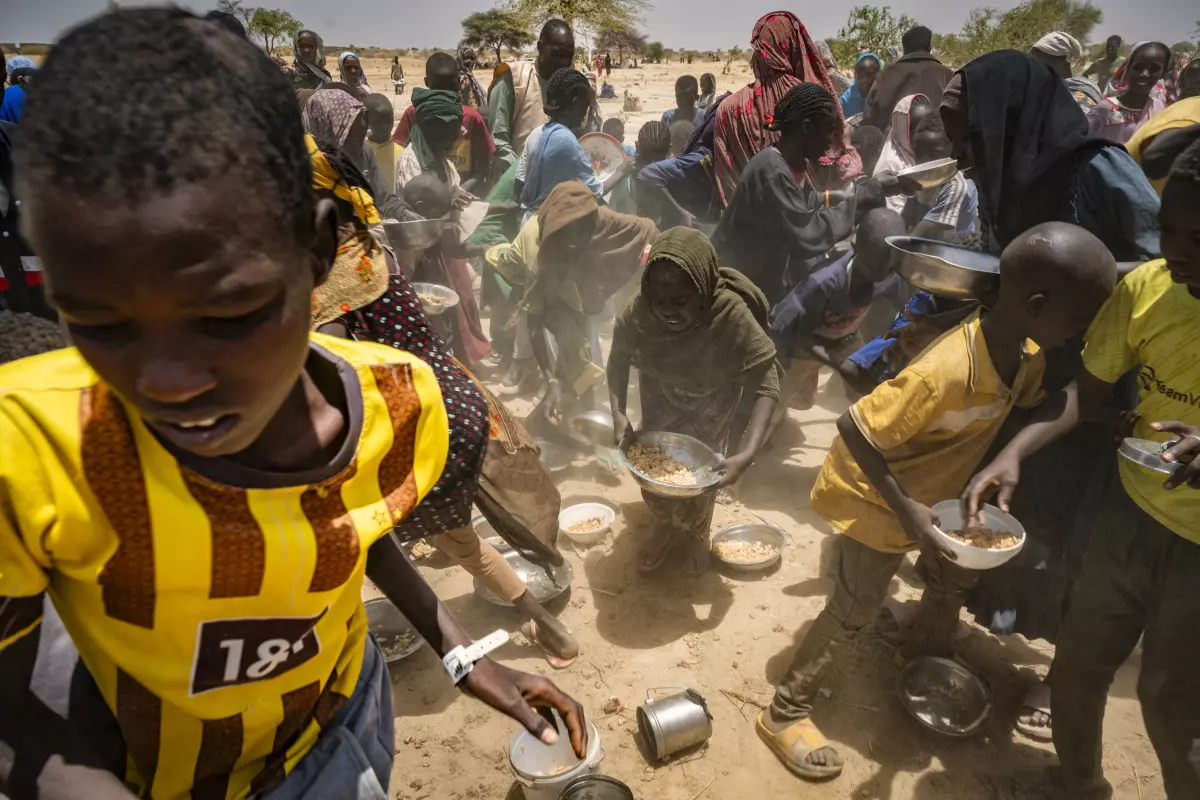
Sudan’s military has surrendered its final foothold in Darfur, leaving a quarter-million civilians—half of them children—at the mercy of paramilitary forces accused of systematic killings and ethnic violence in the regional capital of el-Fasher.
Army chief Abdel Fattah al-Burhan announced the withdrawal late Monday, a day after the Rapid Support Forces overran the main military base and declared control of the city. His statement framed the retreat as a humanitarian decision, claiming soldiers pulled out to “spare the citizens and the rest of the city from destruction” caused by what he called the RSF’s “systemic destruction and systemic killing of civilians.”
“We are determined to avenge what happened to our people in el-Fasher,” al-Burhan vowed. “We, as the Sudanese people, will hold these criminals accountable.”
But the evacuation has left el-Fasher’s residents facing what the United Nations described Monday as mounting “large-scale, ethnically motivated violations and atrocities.” UN High Commissioner for Human Rights Volker Turk warned that the “risk of further” massacres “is mounting by the day,” while Secretary-General António Guterres called developments a “terrible escalation” in a conflict where “the level of suffering that we are witnessing in Sudan is unbearable.”
Social media footage posted since Sunday shows RSF fighters celebrating around the captured military base, but also shooting and beating civilians attempting to flee. The UN Human Rights Office reported “summary executions” of those trying to escape, “with indications of ethnic motivations for killings”—language suggesting the paramilitary force is targeting specific communities in Darfur, a region scarred by genocide two decades ago.
Read also: Sudan’s RSF Claims Capture Of El Fasher Base As Siege Deepen
The Sudan Doctor Network characterized the RSF offensive as a “heinous massacre,” reporting dozens killed as fighters rampaged through neighborhoods, looting hospitals and medical facilities while “destroying what remained of essential life-supporting and health care infrastructure.” The Darfur Network for Human Rights said more than 1,000 civilians have been detained in what it described as “systematic targeting” that could constitute war crimes.
Among those seized was a local journalist, one of the few still reporting from el-Fasher, according to the Sudanese Journalists’ Union. The group warned of potential “mass violations” echoing the 2023 atrocities in Geneina, another Darfur city where RSF fighters killed hundreds in ethnic massacres that shocked international observers.
The Sudan Doctors Union went further, calling el-Fasher a “brutal killing field” and urging the international community to classify the RSF as a terrorist organization. The group accused the paramilitary force of pursuing “a barbaric policy that aims at terrorizing and annihilating civilians.”
Mathilde Vu, Sudan advocacy manager at the Norwegian Refugee Council, told Al Jazeera that information from el-Fasher has gone dark. “We’ve been trying to reach our partners in el-Fasher for the past 24 hours, with no success,” she said. “More and more we are seeing reports of mass atrocities, of executions, of kidnappings and of unbearable suffering.”
The city’s fall represents a potentially catastrophic turning point in Sudan’s civil war, which erupted in April 2023 when tensions between al-Burhan’s military and the RSF exploded into open combat in Khartoum. The conflict has since killed tens of thousands and displaced more than 12 million people—creating one of the world’s worst humanitarian disasters while attracting minimal international attention.
El-Fasher’s capture gives the RSF control over virtually all of Darfur, raising fears the region could split from Sudan entirely, echoing South Sudan’s secession more than a decade ago. For Darfur’s non-Arab communities, RSF dominance resurrects nightmares from the early 2000s genocide, when Arab militias known as Janjaweed—the RSF’s predecessors—slaughtered hundreds of thousands.