
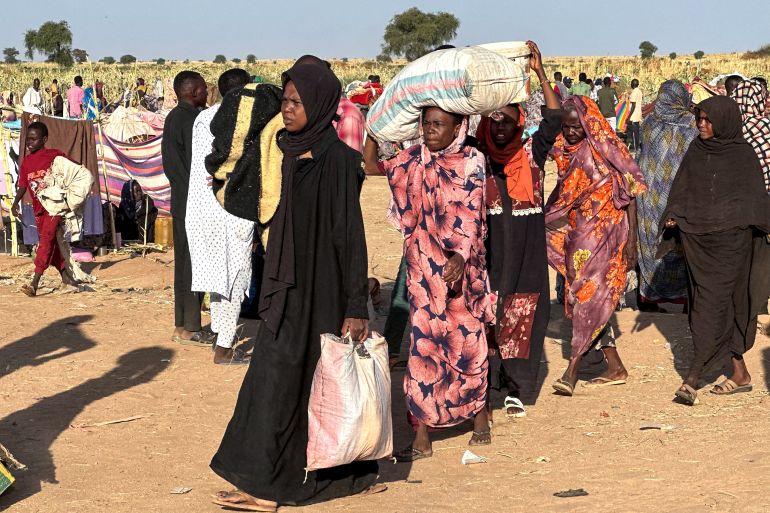
More than 4,500 people have fled Sudan’s North Kordofan state amid a fresh wave of attacks by the Rapid Support Forces (RSF), which are expanding their campaign of violence across central Sudan, according to the Sudan Doctors Network.
In a statement released Friday, the medical organization said nearly 2,000 people escaped from the Bara locality, a town the RSF recaptured last week, to El-Obeid, the state capital about 37 miles (60 kilometers) south. Thousands more remain stranded “under harsh conditions and facing severe shortages of food, water, and shelter,” it warned.
The group described the situation in North Kordofan as a “deteriorating security crisis,” with civilians trapped between advancing RSF units and government-aligned troops of the Sudanese Armed Forces (SAF).
The RSF burned entire villages in July, killing nearly 300 civilians, including children and pregnant women, before losing the area to the SAF in September. The paramilitary group reclaimed control last week in renewed fighting, triggering the latest civilian exodus.
Read Also: Sudan El-Fasher Massacre Investigation Ordered By RSF Leader
The attacks in North Kordofan mirror atrocities unfolding in El-Fasher, the capital of North Darfur, where RSF fighters have been accused of mass killings, summary executions, and sexual violence. Humanitarian monitors estimate that more than 1,500 people have been killed in El-Fasher alone, with many civilians still trapped after nearly 18 months of siege.
Al Jazeera and other international outlets have verified videos showing RSF soldiers standing over piles of bodies and shooting unarmed captives—images that have sparked global outrage.
“The RSF has been out of control,” said Bakry Eljack, a Sudan and South Sudan expert at Long Island University Brooklyn. “If we don’t do anything about this, it’s not going to end in El-Fasher—it’s going to expand to North Kordofan.”
RSF commander Mohamad Hamdan “Hemedti” Dagalo announced Wednesday the creation of an internal committee to investigate alleged “violations” by his troops.
“There’s no guarantee what we’ve seen in El-Fasher won’t be repeated somewhere else,” Eljack warned.
The conflict began in April 2023 after a power struggle between the RSF and the Sudanese Armed Forces erupted in Khartoum, quickly spreading nationwide. Since then, the RSF has seized control of over one-third of Sudan’s territory, including large parts of Darfur and Kordofan.
The United Nations says the war has killed tens of thousands and displaced nearly 12 million people, creating what it calls the world’s largest humanitarian crisis.
Speaking at an emergency UN Security Council session on Thursday, Martha Pobee, the UN’s assistant secretary-general for Africa, described the RSF’s capture of El-Fasher as “a significant shift in Sudan’s security dynamics.” She warned that “the territorial scope of the conflict is broadening” and urged renewed international pressure to halt the fighting.