
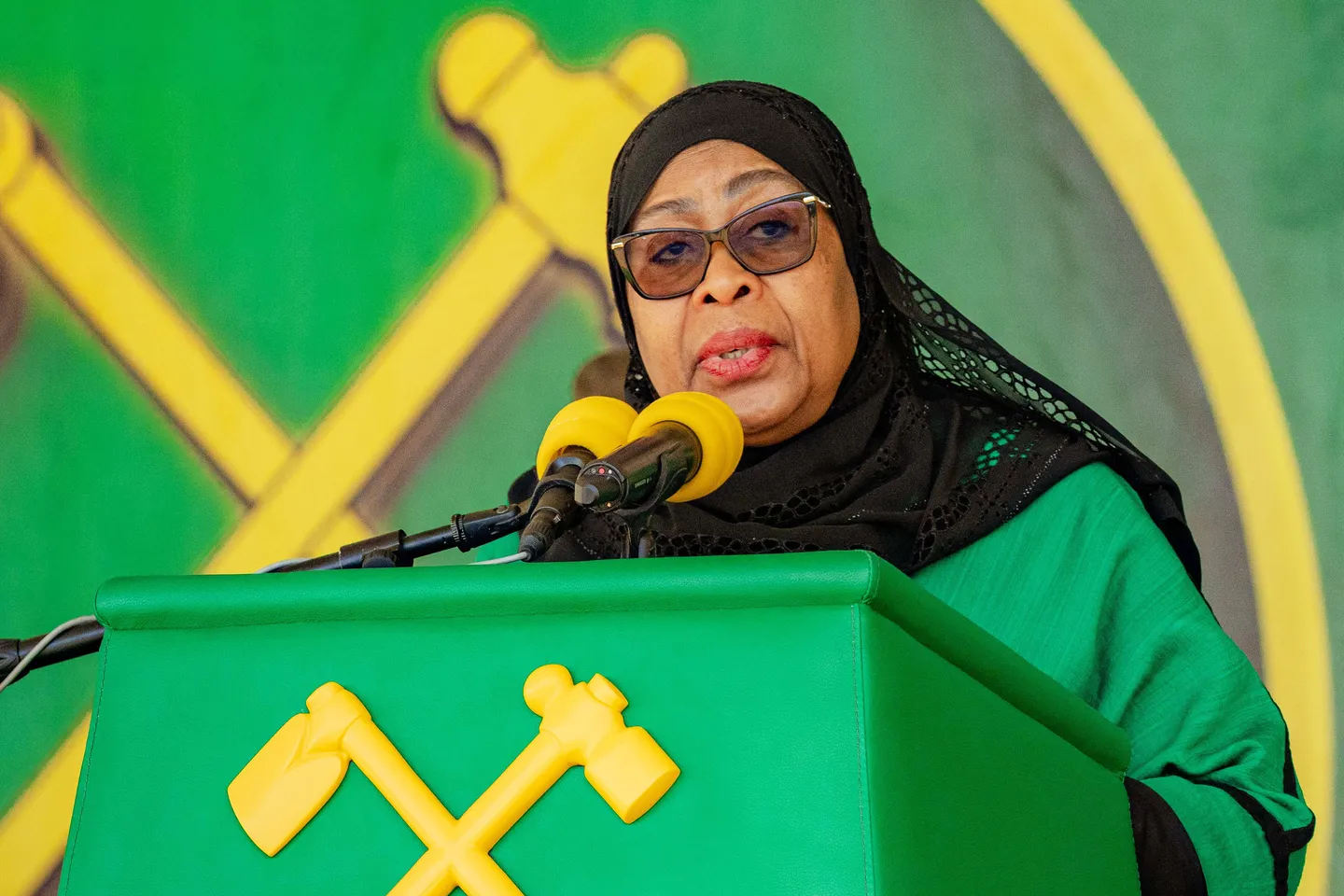
Tanzanian President Samia Suluhu Hassan has been declared the winner of the country’s presidential election, securing a new term in office after a contentious vote marred by violence, arrests, and an internet blackout.
The National Electoral Commission announced on Saturday that Samia, representing the ruling Chama Cha Mapinduzi (CCM) party, received 97.66% of the votes, about 31.9 million out of 32 million cast. Voter turnout reached nearly 87% of the country’s 37.6 million registered voters.
Election results were announced as protests and deadly clashes continued across Tanzania. Opposition parties and human rights groups accused the government of widespread voter suppression, ballot manipulation, and intimidation.
In the semi-autonomous region of Zanzibar, where CCM’s Hussein Mwinyi won reelection with nearly 80% of the vote, the opposition called the process “massively fraudulent,” according to the Associated Press.
International observers voiced alarm over the conduct of the election, citing a lack of transparency and restrictions on media and opposition monitoring. An ongoing nationwide internet shutdown has made it difficult to verify reports of casualties.
Protests erupted in several cities following the vote, with the largest demonstrations reported in Dar es Salaam. Security forces were deployed to disperse crowds, remove anti-government posters, and block major roads.
Read Also: Protesters Shot Amid Tanzania Election Unrest
The opposition Chadema party told AFP that “around 700” people had been killed in clashes with police, while a diplomatic source told the BBC there was credible evidence of at least 500 deaths. The government has denied the scale of the violence, describing the unrest as “isolated incidents.”
Foreign Minister Mahmoud Kombo Thabit said security forces “acted swiftly and decisively to address the situation.” Authorities have extended curfews in several regions in an effort to restore calm.
President Samia, who became Tanzania’s first female leader in 2021 following the death of President John Magufuli, faced little real opposition. Two key opposition figures, Tundu Lissu and Luhaga Mpina, were sidelined, one on treason charges he denies and the other excluded on legal technicalities.
Sixteen smaller parties participated in the election, though none had significant national support. CCM has maintained an unbroken grip on power since Tanzania’s independence in 1961.
Rights groups including Amnesty International accused the government of using intimidation tactics ahead of the polls, citing cases of enforced disappearances, torture, and extrajudicial killings. Authorities dismissed the allegations, saying the election was “free and fair.”
President Samia is expected to address the nation after her official inauguration, though her administration has yet to comment on international criticism of the election process.