
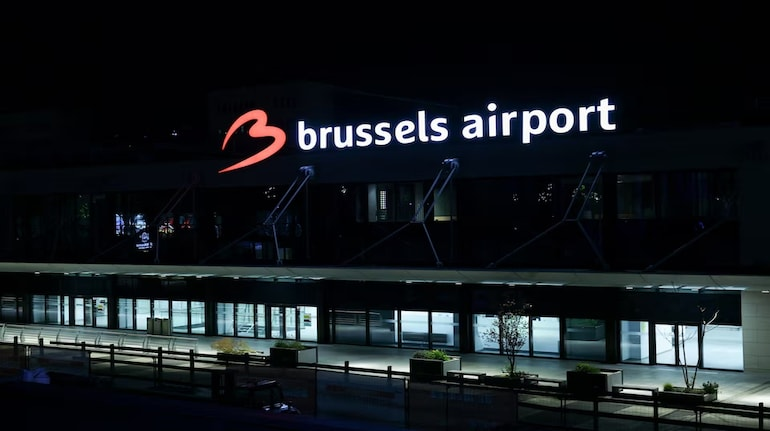
Belgium’s aviation system buckled Tuesday night under a bizarre security threat that’s become grimly familiar across Europe: unidentified drones penetrating restricted airspace and forcing airports to shut down.
Brussels airport first spotted a drone at 8 p.m. local time, triggering an immediate suspension of operations. Liege—one of Europe’s busiest cargo hubs—followed shortly after with its own sighting. Both facilities reopened an hour later, only to close again at 10 p.m. when drones reappeared. Normal operations didn’t resume until 11 p.m., leaving passengers stranded and cargo shipments delayed.
The disruption’s ripple effects stretched into Wednesday morning. Brussels airport warned travelers on its website that “delays and some flight cancellations” from Tuesday’s chaos “might still impact flight operations on Wednesday morning.” Flight tracking data from FlightAware counted 59 cancelled and 43 delayed departures at Brussels on Tuesday alone, with additional flights diverted to neighboring airports.
Interior Minister Bernard Quintin confirmed an investigation is underway but released few details about the drones themselves—their size, capabilities, or operators remain unknown. “We cannot accept that our airports are disrupted by unauthorised drone flights,” he said, calling for “a coordinated, national response.”
Read also: Lithuanian Forces Shoots Down Smuggler Balloons From Belarus
The airport incidents followed an even more alarming episode Saturday at Kleine Brogel, a Belgian military airbase in the country’s northwest. Defense Minister Theo Francken said three unauthorized drones flew over the installation at high altitude, evading both a drone jammer and pursuit by helicopter and police vehicles.
“This was not a simple flyover, but a clear command targeting Kleine Brogel,” Francken wrote on X, his language suggesting the incursion was deliberate reconnaissance rather than hobbyist error.
Belgium’s troubles fit an increasingly disturbing European pattern. Since September, Denmark, Germany and Norway have all reported mysterious drone activity near civilian airports and military installations. The incidents share troubling characteristics: sophisticated aircraft that operate at night, evade countermeasures, and disappear before authorities can identify operators.
Denmark’s intelligence service has publicly attributed its drone flights to Russia, describing them as “hybrid warfare” designed to “put pressure on [Europe] without crossing the line into armed conflict in a traditional sense,” according to Reuters reporting. That assessment—from a NATO member’s official intelligence apparatus—marks a significant escalation in how European governments view the threat.
The hybrid warfare framing is deliberate. Traditional military aggression triggers Article 5 collective defense obligations under NATO’s founding treaty. But drones hovering over airports? That occupies legal and strategic gray zones where responses remain unclear and alliance commitments untested.