
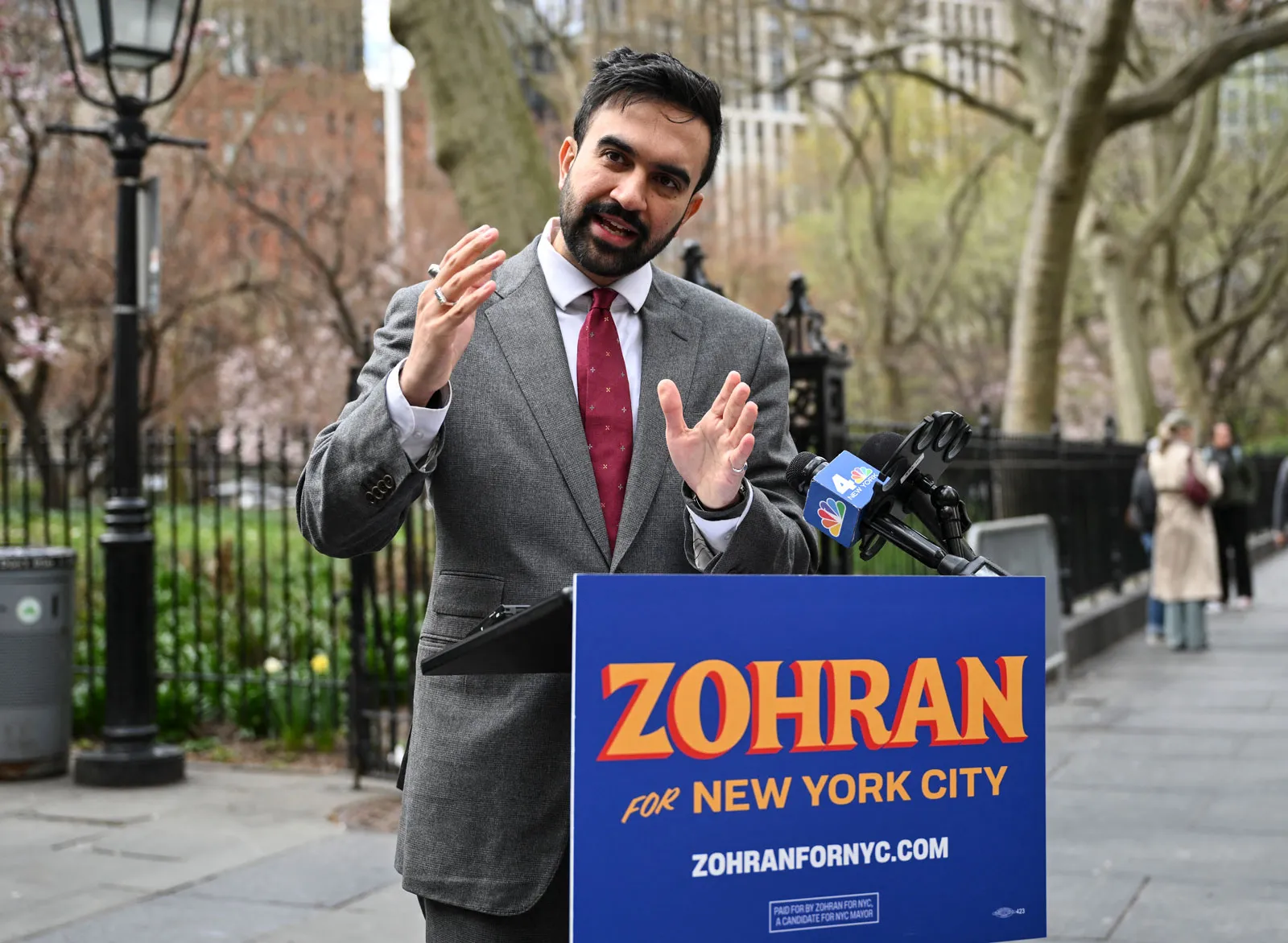
Zohran Mamdani has shattered multiple barriers to claim New York City’s mayoralty, defeating establishment favorite Andrew Cuomo in a contest that crystallized the Democratic Party’s ideological fracture and captivated observers far beyond America’s largest metropolis.
The 34-year-old state assemblyman’s Tuesday victory makes him the first Muslim, first South Asian, and first Africa-born leader of the 8.4-million-person city that serves as global finance and culture capital. But Mamdani and his fervent supporters insist the historic symbolism misses the point—this campaign was about affordability, not identity.
“Tonight, against all odds, we have grasped it. The future is in our hands,” Mamdani told cheering crowds at his victory party. “My friends, we have toppled a political dynasty.”
With 90 percent of ballots counted, the democratic socialist assembled a decisive 9-percentage-point margin, capturing 1,033,471 votes against Cuomo’s 852,032. Republican Curtis Sliwa managed just 7 percent, reduced to footnote status in a race that became a proxy battle for the Democratic Party’s soul.
Cuomo, who lost June’s Democratic primary to Mamdani before mounting an independent bid, framed the contest in apocalyptic terms as he cast his ballot Tuesday morning. “You have an extreme radical left that is run by the socialists that is challenging, quote unquote, moderate Democrats,” the former governor said. “And that contest is what you’re seeing here.”
He called it a “civil war in the Democratic Party that has been brewing for a while”—then conceded hours later, telling his own supporters, “tonight was their night.”
Mamdani’s coalition defies easy categorization. Standing before seas of campaign signs and supporters in yellow beanies, the mayor-elect rattled off the demographics that powered his upset: “Yemeni bodega owners and Mexican abuelas, Senegalese taxi drivers and Uzbek nurses, Trinidadian line cooks and Ethiopian aunties.” He name-checked working-class neighborhoods from Kensington to Midwood to Hunts Point, communities that share economic anxiety more than ethnic or religious bonds.
“This city is your city, and this democracy is yours too,” he declared.
His platform hammered relentlessly on housing costs, subway fares, and grocery prices—kitchen-table economics that resonated across New York’s staggering diversity. While progressive activists celebrated his democratic socialism and immigrant rights advocacy, swing voters responded to simpler promises: making the most expensive city in America affordable again.
That pragmatic appeal allowed Mamdani to assemble what political scientists call a “coalition of the ascendant”—young voters, people of color, working-class families—while peeling off enough moderate Democrats uncomfortable with Cuomo’s donor-funded establishment politics.
The Cuomo name once dominated New York politics like royalty. Andrew’s father Mario served three terms as governor. Andrew himself governed for a decade before resigning amid scandal in 2021, then attempted rehabilitation through this mayoral run backed by the party machinery and Wall Street money that historically controlled Democratic nominations.
Mamdani’s victory demolishes that architecture. His campaign rejected corporate donations, instead mobilizing thousands of small-dollar contributors and volunteer canvassers who knocked on doors across all five boroughs. The grassroots energy recalled Bernie Sanders’ presidential bids, suggesting democratic socialism’s appeal extends beyond college towns into America’s most diverse, complex urban environment.
In his victory speech, Mamdani confronted the establishment’s criticisms head-on with theatrical defiance. “I am young despite my best efforts to grow older,” he told supporters, drawing laughter. “I am Muslim, I am a democratic socialist and, most damning of all, I refuse to apologise for any of this.”
That unapologetic stance marks a generational shift. Where previous minority candidates often downplayed identity or ideology to court centrist voters, Mamdani campaigned as himself—then won decisively.
What remains unclear is whether his victory represents isolated phenomenon or genuine realignment. New York’s peculiar politics—extreme wealth inequality, powerful unions, influential immigrant communities, progressive activists—may not translate elsewhere. Moderate Democrats will argue Cuomo’s personal baggage doomed his candidacy rather than his ideology.
But Mamdani’s coalition suggests something deeper is shifting. The diverse voters who elected him aren’t demanding ideological purity—they want leaders who prioritize working families over wealthy donors, who tackle housing costs and transit failures, who reflect the city’s actual demographics rather than its power structures.
Whether that model scales beyond New York will be tested in coming elections. For now, the city that never sleeps has delivered its verdict: the future belongs to politicians willing to challenge establishment orthodoxy, even—or especially—when party elders warn against it.
Mamdani inherits a city confronting homelessness, crumbling infrastructure, post-pandemic recovery, and climate vulnerability. His socialist label guarantees scrutiny of every policy choice. Wall Street will watch nervously. Progressive activists will demand he deliver on campaign promises.
But Tuesday night belonged to celebration. A political dynasty fell. A democratic socialist won. And New York demonstrated once again its capacity to surprise, disrupt, and reimagine what’s possible in American politics.