
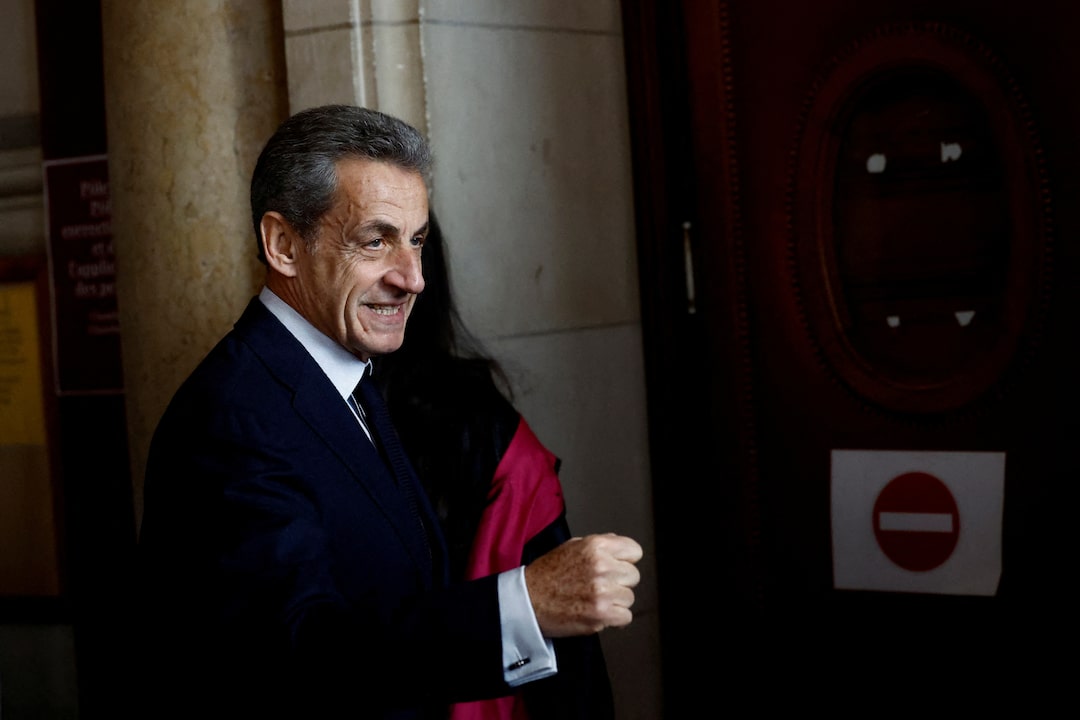
A Paris appeals court announced Thursday that former French President Nicolas Sarkozy will have his corruption conviction reviewed over three months starting March 16, just days after he was released from custody pending the legal challenge.
The 69-year-old conservative leader walked free earlier this week after an appellate panel ruled he should remain out of prison while contesting a five-year sentence handed down in September. That ruling found Sarkozy guilty of criminal conspiracy to secure illegal campaign financing from late Libyan dictator Muammar Gaddafi for his successful 2007 presidential run.
“Truth will prevail. This is a fact that life teaches us,” Sarkozy posted on X shortly after returning home.
The appeal hearings will run through June 3, giving Sarkozy’s legal team nearly three months to argue for overturning the conviction. The original verdict marked one of the most severe legal blows to a French political figure in recent memory, with prosecutors alleging the former president conspired to funnel millions in illicit funds from Gaddafi’s regime to finance his first presidential campaign.
Read Also: Sarkozy Released From Prison Pending Appeal In Funding Case
Sarkozy, who served as France’s president from 2007 to 2012, has consistently denied wrongdoing. He maintains the allegations are politically motivated attacks designed to tarnish his legacy.
The case represents a dramatic fall for a leader who once commanded influence on the world stage, negotiating directly with global powers during his five-year tenure. His initial imprisonment, though brief, underscored the severity of the charges and France’s willingness to hold even its highest-ranking officials accountable.
Legal experts note that French appeals in high-profile corruption cases can take years to resolve. The March hearing date suggests authorities are moving relatively quickly given the case’s complexity and international dimensions.
The Libya financing scandal is one of several legal battles Sarkozy has faced since leaving office, though it carries the most serious potential consequences.
In December 2024, France’s highest court upheld a 2021 conviction against Sarkozy for bribery and influence peddling, sentencing him to one year of house arrest with an electronic monitoring bracelet. That case, known as the “Bismuth affair,” stemmed from wiretapped phone conversations revealing Sarkozy allegedly attempted to bribe a judge in exchange for confidential information about investigations into his activities. He served several months under house arrest before the electronic tag was removed in May. Sarkozy has indicated he plans to take that case to the European Court of Human Rights.
Last year, a Paris appeals court also upheld a conviction related to illegal campaign financing in his failed 2012 reelection bid, finding he knowingly exceeded spending limits. The so-called “Bygmalion affair” involved allegations that Sarkozy’s team diverted tens of millions of euros and hired a public relations firm to cover up the overspending on lavish campaign rallies. He received a one-year sentence, with six months to be served.
Earlier this year, Sarkozy was stripped of France’s highest honor, the Legion of Honour, following these corruption convictions, a rare and humiliating rebuke for a former head of state.
Despite the cascade of legal troubles, Sarkozy remains an influential figure within France’s conservative political circles and maintains close ties with some current government officials, including occasional private meetings with President Emmanuel Macron.