
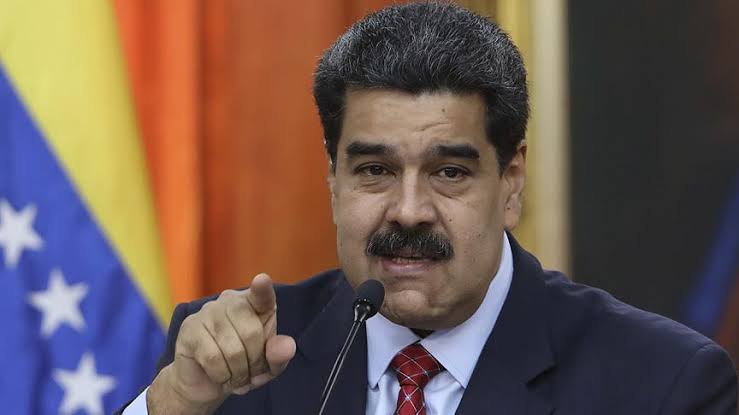
The United States announced plans to designate Venezuela’s Cartel de los Soles as a Foreign Terrorist Organization (FTO), a move that would significantly expand Washington’s powers to pursue the group and those it alleges are tied to it, including President Nicolás Maduro.
US Secretary of State Marco Rubio said in a statement on Sunday that the designation is expected to take effect on 24 November, marking one of the Trump administration’s most sweeping actions yet against the Venezuelan government.
The FTO label would, in effect, classify Maduro as a terrorist because Washington maintains that he leads the Cartel de los Soles, an accusation the Venezuelan president repeatedly denies.
An FTO designation makes it illegal under US law to knowingly provide any form of support to the group. It also enables broader criminal penalties, asset freezes, and coordinated law-enforcement operations, strengthening tools already used under previous sanctions from the US Treasury Department.
Washington uses the term “Cartel de los Soles” to describe what it claims is a criminal network involving drug trafficking, illegal mining, and corruption within Venezuela’s political and military elite. The United States has not released publicly available evidence directly linking Maduro to drug-trafficking activities, but US officials say the designation reflects long-standing concerns about the government’s alleged protection of trafficking routes.
Read Also: U.S. Caribbean Military Strikes Face Scrutiny At G7 Meeting
Rubio said in his statement that “neither Maduro nor his cronies represent Venezuela’s legitimate government,” calling the group’s alleged activities a threat to regional security.
The move comes as speculation grows over whether the United States may carry out strikes on targets inside Venezuela as part of its campaign against alleged narcotics networks in the region.
President Donald Trump told reporters on Sunday that he had asked Rubio to consult Congress on possible next steps and added that “we may be having some discussions” with Maduro, though he offered no timeline or details.
The Venezuelan leader has accused Washington of preparing for confrontation. In October, he said the US was “fabricating a new war” after the Pentagon deployed the USS Gerald Ford carrier strike group to the Caribbean.
Since September, the US has launched at least 21 airstrikes on boats off the coasts of Venezuela and Colombia, killing more than 80 people, in what it describes as operations targeting drug-trafficking vessels. The deployment marks the largest US military presence in the Caribbean in decades.
The Trump administration has taken an aggressive approach toward Maduro, who began a new term in January amid accusations of election fraud. In August, the US increased its reward for information leading to Maduro’s arrest to $50 million, describing him as a leading “narco-trafficker.”
Venezuela acknowledges that cocaine moves through its territory but argues that trafficking hubs in Colombia, Peru, and Bolivia—where most of the world’s coca is produced—play a far larger role. US officials have also linked fentanyl flows to cartel activity, though drug experts say fentanyl consumed in the US is overwhelmingly manufactured in Mexico using chemicals imported from Asia, not Venezuela.