
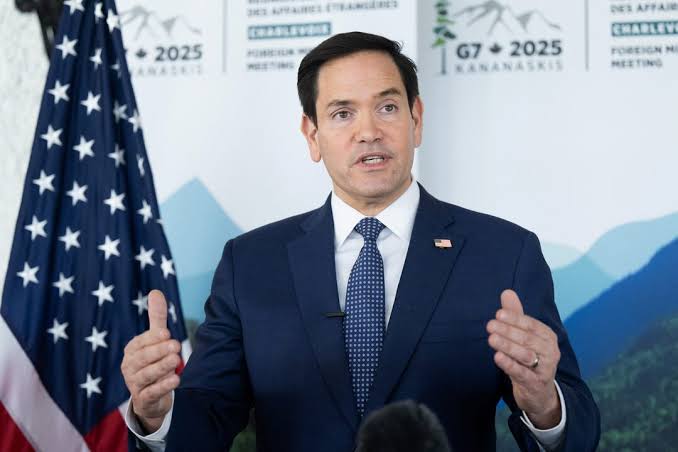
U.S. Secretary of State Marco Rubio is expected to face pointed questions from allies over American military operations in the Caribbean when Group of Seven (G7) foreign ministers meet in Canada on Wednesday, as unease grows about whether recent U.S. strikes comply with international law.
Since the start of the year, the U.S. military has conducted at least 19 strikes on vessels it says were involved in drug trafficking across the Caribbean and the Pacific coasts of Latin America, killing at least 76 people. Washington claims the actions were lawful under Article 51 of the U.N. Charter, which allows for self-defense against armed attacks. But several G7 partners say the operations may violate international law, particularly the law of the sea.
French Foreign Minister Jean-Noel Barrot said Tuesday that Paris views the strikes as a breach of international law and a potential threat to its territories in the region. “We have observed with concern the military operations in the Caribbean region, because they violate international law and because France has a presence in this region through its overseas territories,” Barrot said on the sidelines of the G7 summit.
Read Also: Maduro Alleges US Manufacturing Conflict With Venezuela
A senior European official, speaking ahead of the meeting, said the G7 “is the ideal place” to raise the issue with Washington, even though it was not formally on the agenda.
Independent United Nations experts also criticized the U.S. actions last month, saying that “the use of lethal force in international waters without proper legal basis violates the international law of the sea and amounts to extrajudicial executions.”
The controversy has already led to diplomatic fallout. According to a CNN report on Tuesday, the United Kingdom has suspended intelligence sharing with Washington on suspected drug-trafficking vessels in the Caribbean, citing legal concerns over the strikes.
Colombian President Gustavo Petro also announced that his government would halt intelligence cooperation with the U.S. until it ends attacks on boats in the region.
A U.S. State Department official confirmed that Secretary Rubio briefly met with UK Foreign Secretary Yvette Cooper on the sidelines of the G7 to discuss “ongoing cooperation and areas of concern,” but did not comment on whether the strikes were addressed.
The G7 foreign ministers are also using the summit to discuss President Donald Trump’s push to end the war in Ukraine, amid skepticism from European allies. Ukrainian Foreign Minister Andrii Sybiha, attending the meeting, said Kyiv would urge the G7 to strengthen air defense systems and long-range missile capabilities. “I will urge the G7 to further strengthen our air defenses and energy assistance,” Sybiha told reporters, emphasizing that Ukraine seeks to “achieve peace through strength.”
Earlier Wednesday, Canada announced new sanctions targeting Russia’s drone and liquefied natural gas sectors, as well as ships from Moscow’s “shadow fleet.” The U.S. imposed similar sanctions last month on Russian oil giants Rosneft and Lukoil to increase pressure on Moscow to negotiate an end to the 3½-year conflict.
Trump, who has sought closer ties with Russian President Vladimir Putin, met him in Alaska in August and has since proposed an immediate ceasefire that would freeze troops in their current positions, a plan Moscow supports but Kyiv rejects.