
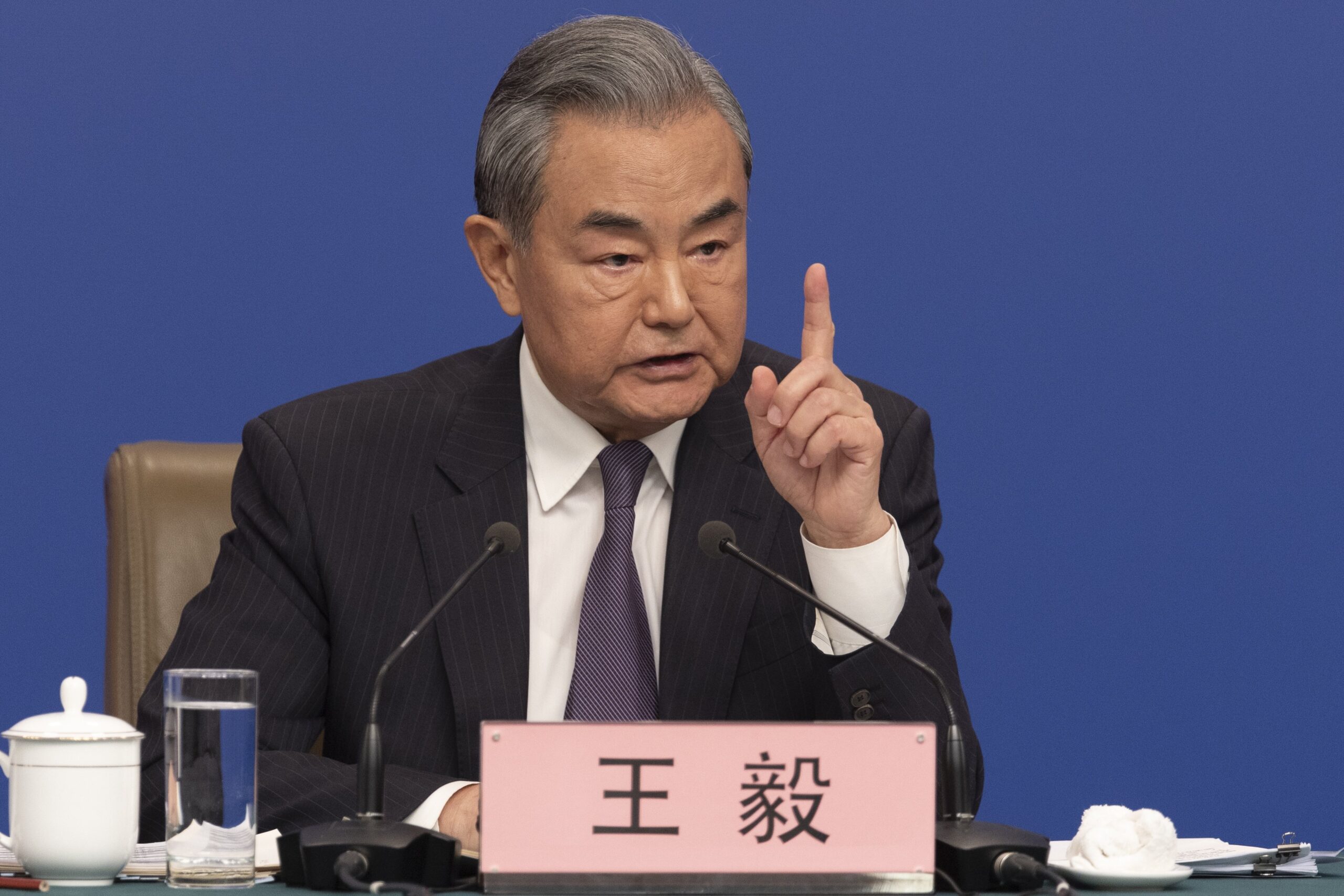
China’s Foreign Minister Wang Yi sharply criticised Japan on Sunday, calling it “shocking” that Prime Minister Sanae Takaichi had signalled the possibility of a military response to a future Chinese attack on Taiwan. The comments marked Beijing’s strongest intervention yet in a diplomatic dispute that has dragged on for more than two weeks and strained ties between the two Asian neighbors.
Wang, the most senior Chinese official to address the matter publicly, said Japan had crossed a red line that “must not be touched,” according to a statement published on the Chinese Ministry of Foreign Affairs website. His remarks showed Beijing’s alarm over Takaichi’s response in parliament on November seven in which she said a Chinese assault on Taiwan could prompt action from Tokyo.
The row has since expanded beyond political rhetoric and now threatens broader trade and cultural engagement between the countries. China raised the issue with United Nations Secretary General Antonio Guterres on Friday, pledging to defend its position.
Read Also: China-Japan Taiwan Dispute Intensifies At UN
In Sunday’s statement, Wang accused Takaichi of attempting to justify military involvement in a conflict over Taiwan. Beijing views the island as part of its territory and has not ruled out the use of force to bring it under its control. Taiwan rejects the claim and insists its people alone decide the island’s future.
Wang said China would “resolutely hit back” to defend its sovereignty and protect what he described as the achievements of the post second world war order. He added that if Japan “persists in its wrong course,” other nations would have reason to revisit Japan’s wartime history and prevent any “resurgence of militarism.”
Japan’s Foreign Ministry did not immediately respond to requests for comment on Sunday. However, in its reaction to China’s letter to the UN a day earlier, the ministry dismissed Beijing’s allegations as “entirely unacceptable” and said Japan’s commitment to maintaining peace had not changed.
Taiwan’s Foreign Ministry also condemned China’s message to the UN, arguing that it “contained rude and unreasonable content” and distorted historical facts. The ministry added that Beijing’s approach conflicted with Article two, paragraph four, of the UN Charter, which prohibits threats or the use of force in international relations.
Despite the political dispute, China remains Japan’s second largest export market after the United States. Chinese buyers purchased roughly one hundred twenty five billion dollars worth of Japanese goods in 2024, including industrial machinery, semiconductors and automobiles, according to UN COMTRADE data. Analysts say prolonged tension could create further uncertainty for Japanese companies heavily reliant on these sectors.
The exchange comes at a time when both countries are navigating broader security shifts in East Asia. Beijing has increased military activities around Taiwan this year, while Japan has expanded its defence cooperation with the United States and regional partners.