
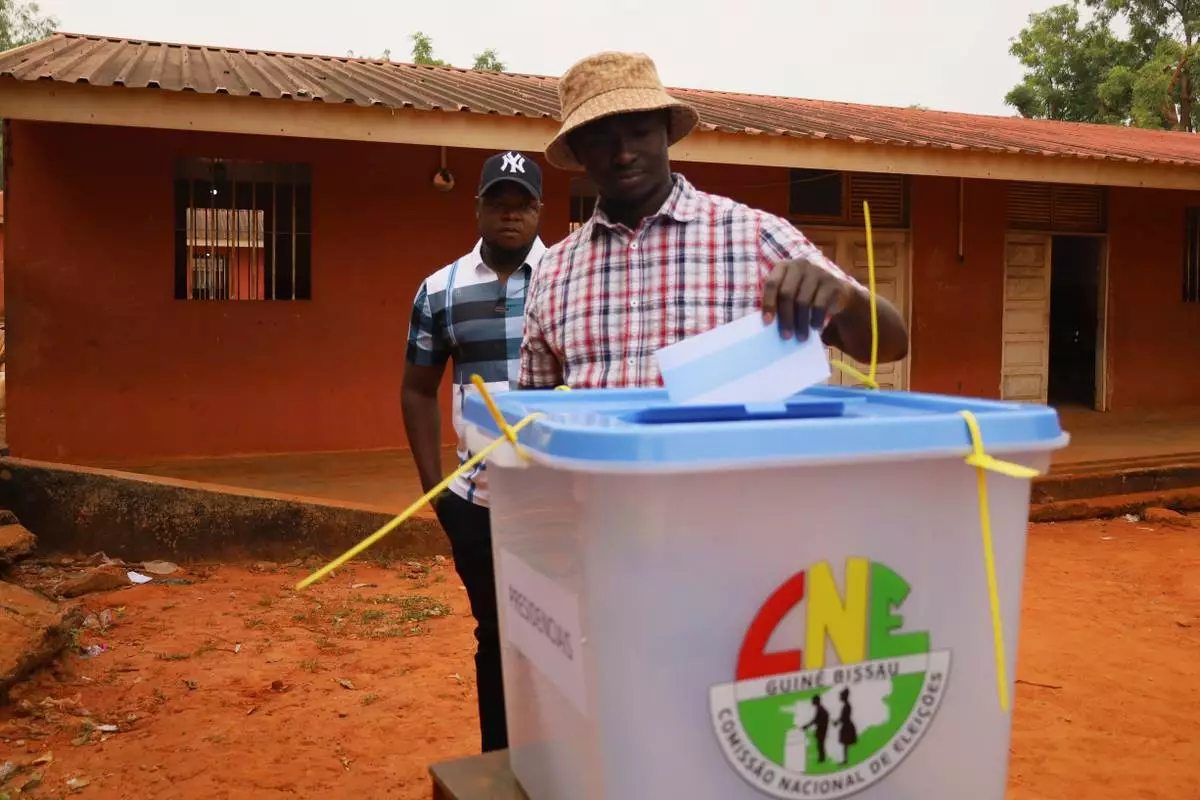
Polling stations opened across Guinea Bissau on Sunday as voters chose a president and new lawmakers, with incumbent Umaro Sissoco Embalo seeking a rare second term in a country long marked by political turmoil. Nearly half of the population is registered, according to election officials, and the contest is expected to be tight.
Embalo faces eleven challengers. Among them is Fernando Dias, a newer figure in national politics who carries the backing of the historic independence movement that fought Portugal in the sixties and seventies. That party could not present its own candidates after authorities ruled its paperwork had been submitted too late.
The vote is seen as a measure of whether the country can move toward a steadier political future after decades of unrest. Since independence, the nation has experienced repeated takeovers and attempted takeovers, and that history continues to overshadow public life.
Embalo cast his ballot in the eastern city of Gabu, wearing his familiar red keffiyeh, and urged citizens to take part. He said the country needed leadership that would bring “stability and progress” and insisted he expected victory.
He has promised to continue road building, widen access to clean water and push for calm after years of political strain. Critics argue that he has stretched his authority, claiming his mandate expired earlier this year, an accusation he rejects.
Read Also: Guinea Doing All It Can For December Elections — PM
Dias has positioned himself as the main challenger. Speaking with Reuters before the vote, he accused the president of planning moves that would weaken state bodies if granted another term. He also faulted Embalo for what he described as a lack of action against the cocaine trade moving through the country from South America to Europe.
Guinea Bissau has held a reputation for years as a major stopover point for narcotics bound for Europe. In an assessment published in August, the Global Initiative Against Transnational Organized Crime said the trade may currently be more lucrative than at any other moment in the country’s modern history.
Jorge Monteiro, a customs officer voting in the capital, said only serious resolve from national leaders could turn the tide. He called the trafficking “a scourge” that needed a firm response from whoever wins.
Embalo has rejected suggestions that his government is linked to the trade.
Election observers say the atmosphere is charged. Lucia Bird Ruiz Benitez de Lugo, who leads a regional programme at the same research group, told Reuters that campaigning conditions had been uneven, with the opposition facing obstacles despite strong backing from many residents.
Voters shared mixed feelings as the main campaigns wrapped up on Friday. A tailor named Saico Cande said he believed the president could address the security and food challenges facing the country. A businesswoman, Berta da Goya, said she remained uneasy after Embalo dissolved parliament following what his government described as an attempted takeover in late 2023.