
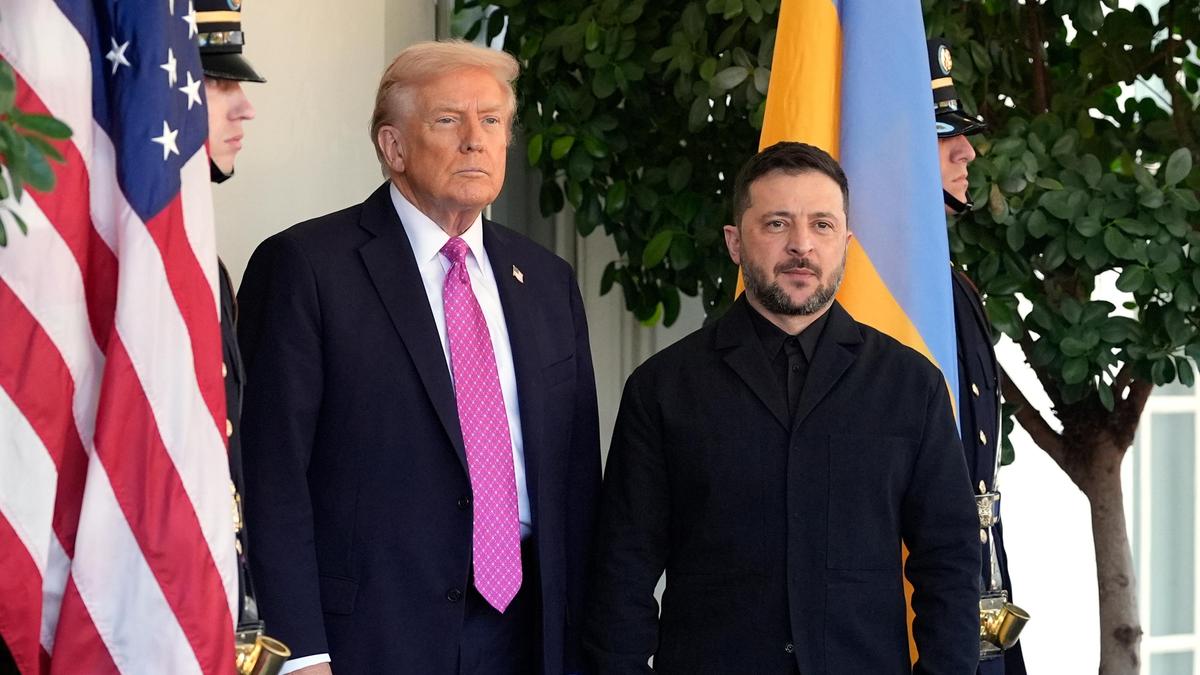
Ukraine‘s president has dispatched his top aide to Geneva for emergency talks over Donald Trump’s war-ending blueprint, even as European powers scramble to counter an American proposal they warn leaves Kyiv defenseless against future Russian aggression.
Volodymyr Zelensky announced Saturday that Andriy Yermak will lead Ukrainian negotiators meeting U.S. officials “in the coming days” to discuss Trump’s 28-point plan—a framework the American president insists Ukraine must approve within a week or face unspecified consequences.
Security officials from France, Britain and Germany plan to join Sunday morning discussions, G20 summit sources confirmed, in what amounts to a hasty Western coordination effort after Washington drafted its proposal without consulting European allies who’ve bankrolled Ukraine’s defense for nearly four years.
Trump’s plan demands Kyiv surrender occupied territories, slash military forces, and formally renounce NATO membership—effectively granting Moscow the core demands it pursued through invasion. The terms have triggered alarm across European capitals and within Ukraine itself.
“Our representatives know how to defend Ukraine’s national interests and what is necessary to prevent Russia from launching a third invasion,” Zelensky said while announcing his negotiating team, language signaling he won’t simply accept Trump’s framework as written.
Rustem Umerov, Ukraine’s security council secretary tapped for the talks, characterized the Geneva meetings as “aligning our vision for the next steps”—diplomatic phrasing that suggests significant gaps remain between American proposals and Ukrainian positions. Umerov previously led Turkey-based negotiations with Russia that produced prisoner swaps but no territorial settlements.
Read also: US Peace Plan: Zelenskiy Warns Of Pressure As Tension Rises
Moscow hasn’t confirmed whether it will send representatives, though Zelensky’s decree indicated Russian participation. Vladimir Putin said Trump’s blueprint could “lay the foundation” for final settlement while threatening to seize additional Ukrainian land if Kyiv walks away—a carrot-and-stick approach designed to pressure acceptance.
European leaders at South Africa’s G20 summit issued unusually blunt pushback against their American ally. A joint statement from key European nations plus Canada and Japan called Trump’s plan “a basis which will require additional work,” then specified objections: “We are clear on the principle that borders must not be changed by force. We are also concerned by the proposed limitations on Ukraine’s armed forces, which would leave Ukraine vulnerable to future attack.”
That language represents diplomatic rejection barely disguised by polite phrasing. European powers are effectively telling Washington its proposal rewards Russian aggression and sets Ukraine up for renewed invasion once Moscow rebuilds forces.
Emmanuel Macron delivered a darker assessment, suggesting to G20 attendees that “The G20 may be coming to the end of a cycle” given the grouping’s inability to resolve major crises—a pointed reference to American unilateralism on Ukraine undermining multilateral coordination.
Britain, Germany and France have sustained Ukraine militarily and financially, particularly after American support wavered following Trump’s return. Those three now find themselves caught between maintaining transatlantic solidarity and abandoning a partner they’ve invested billions defending.
Zelensky acknowledged the impossible position Friday in a national address, warning Ukraine faces “one of the most challenging moments in its history” and a potential “very difficult choice: either the loss of dignity or the risk of losing a key partner.” That unusually stark language suggests he’s preparing Ukrainians for the possibility of breaking with Washington rather than accepting terms many view as surrender.
The negotiations unfold as Russia’s numerically superior, better-equipped army grinds forward along the front. Ukrainians are enduring brutal winter conditions after Moscow systematically bombed energy infrastructure, while corruption investigations exposing graft in the energy sector have sparked public fury—compounding pressures on Zelensky’s government.
Whether Geneva talks produce genuine negotiation or simply formalize Ukraine’s rejection of American terms remains unclear. What’s certain is that Trump’s ultimatum has fractured Western unity at precisely the moment Putin is calculating whether continued warfare or negotiated settlement better serves Russian interests.