
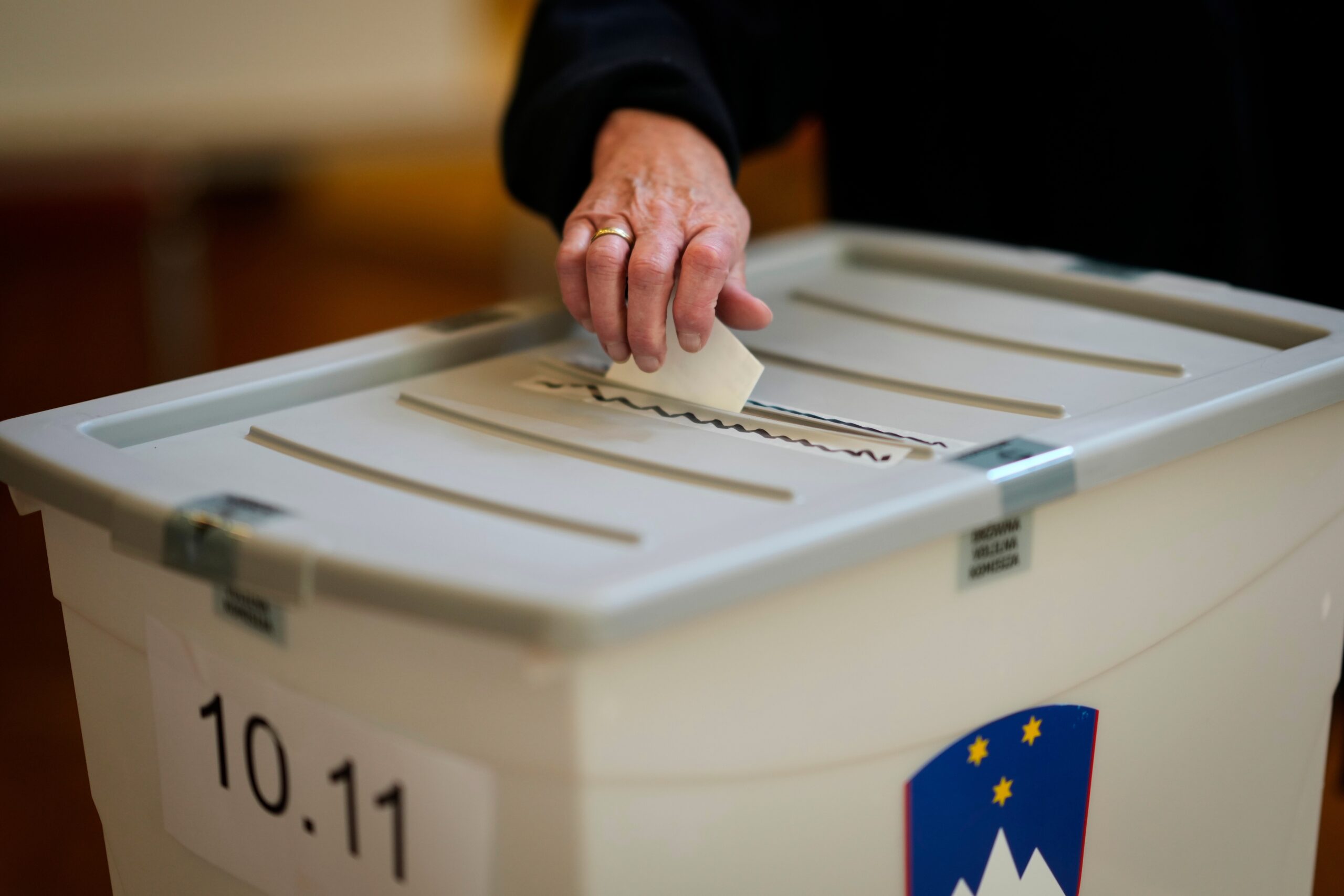
Slovenian voters have overturned a landmark assisted-dying law, halting a measure the country’s parliament had approved only months earlier and throwing a deeply emotional national debate back into uncertainty.
Preliminary results released late Sunday showed that about 53 percent of eligible voters rejected the legislation, a margin narrow enough to reveal how divided the country remains on the question of whether a person should be allowed to choose the manner of their own death. Turnout hovered at just under 41 percent, the minimum needed for the result to stand.
The vote suspends the law for at least a year and reverses momentum that had been building since 2024, when Slovenians first voted in favor of legalising assisted dying. Parliament followed suit this July, setting out strict criteria: only adults suffering from terminal illnesses, facing intolerable pain, and with no remaining treatment options would qualify. The law did not extend to mental illness, nor did it allow broad interpretations of suffering.
But opponents, led by the civil group Voice for the Children and the Family and strongly supported by the Catholic Church, gathered enough signatures to force a renewed vote. On Sunday night, the group’s leader, Ales Primc, framed the result as a moral victory. “Solidarity and justice have prevailed,” he said, calling the outcome “a miracle” and positioning the referendum as a defense of what he called a culture of life.
Read also: Somalia, Newest Non-permanent Member Of UN Security Council
Prime Minister Robert Golob had urged voters to keep the law in place, describing it as a matter of dignity and personal agency in one’s final days. “Each of us deserves the right to decide how we leave this world,” he said in the days leading up to the referendum.
The referendum surfaces a broader European struggle over end-of-life rights. Several countries including Austria, Belgium, the Netherlands and Switzerland already permit medical assistance in dying under varying conditions. Others continue to treat it as a criminal offense, even in the face of extreme suffering. France’s lower house endorsed a similar bill earlier this year, and lawmakers in the United Kingdom are preparing for debate on their own proposals.
For Slovenia, the renewed rejection means the country returns, at least temporarily, to a legal landscape where the gravest medical decisions remain out of the patient’s hands. What comes next is unclear: whether parliament will attempt new legislation, whether another referendum will follow, or whether the country will settle into a long pause on an issue that rarely remains settled for long.