
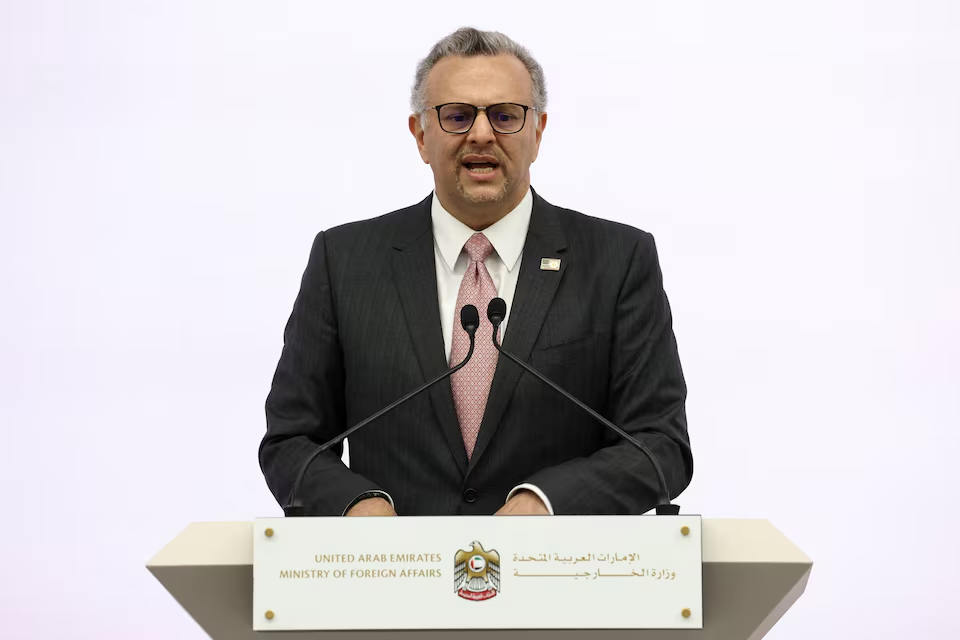
Neither of Sudan’s rival forces has signed onto a new American truce proposal aimed at halting the country’s twenty-month war, senior US envoy Massad Boulos said on Tuesday in Abu Dhabi.
The plan, described by Washington as the strongest framework yet for an immediate halt to fighting, was delivered recently to the Sudanese Armed Forces (SAF) and the Rapid Support Forces (RSF). But Boulos said the army returned with conditions the US considers unworkable, while the RSF has not issued formal acceptance.
The Trump administration signalled last week it would take a more direct role in trying to stop the conflict, which erupted in April 2023 and has driven millions from their homes, fuelled famine conditions, and unleashed waves of ethnic attacks across Darfur. Earlier efforts led by the US, Saudi Arabia, Egypt and the United Arab Emirates repeatedly collapsed, including a previous proposal circulated in September.
Speaking to reporters, Boulos said both sides had yet to formally embrace the text. “We have presented a strong text for a truce, but neither the SAF nor RSF have formally accepted the text we put forward,” he said, adding that recent criticism from the army stemmed from “incorrect information”.
SAF leader Abdel Fattah al-Burhan dismissed the latest plan on Sunday, calling it the most unfavourable he had seen. He argued it marginalised the army and gave the RSF unwarranted legitimacy. The army has also objected to the UAE’s participation in negotiations and insisted it would only accept a ceasefire if RSF fighters withdraw from civilian districts.
Read Also: Trump Sudan Peace Effort Begins After Saudi Request
The UAE has faced repeated accusations of providing weapons to the RSF, allegations it denies. At the Abu Dhabi briefing, UAE presidential adviser Anwar Gargash said “disingenuous claims and misinformation campaigns” would not stop the country from engaging in diplomacy. He also said Sudan’s political future “cannot be dictated by the Muslim Brotherhood or related groups”, a reference to Islamist influence in parts of the army, which Burhan denies.
Boulos added that if Washington moves ahead with classifying the Muslim Brotherhood as a terrorist organisation, regional affiliates could also come under review.
On Monday, RSF commander Mohamed Hamdan Dagalo declared a unilateral ceasefire under mounting international pressure after his fighters were accused of brutal assaults on civilians late last month. It remained unclear on Tuesday whether the halt in fighting had taken hold.
Boulos said he welcomed the announcement but stressed that “external financial and military support to the warring parties must stop”. He did not name specific states.
The Sudanese government, represented by the army, dismissed the RSF’s move as little more than a tactic. Government spokesman Khalid Aleisir called it “a clear political manoeuvre” designed to deflect attention from reports of atrocities.
The RSF has claimed that accounts of abuses have been exaggerated and said any fighters involved in wrongdoing would be punished.
The war has continued to grind on despite recurring mediation attempts. According to Reuters and the United Nations, the conflict has killed thousands, displaced millions, and left entire regions cut off from food and medical aid.