
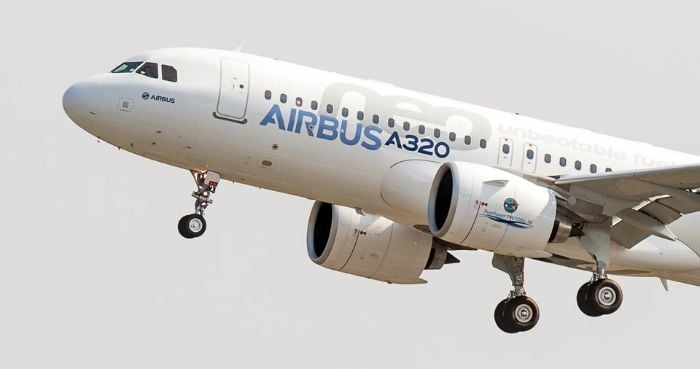
Airbus said Monday that fewer than 100 of its A320-family jets remain grounded worldwide for a software update, easing concerns that thousands of aircraft might be parked for an extended period after the company issued a sweeping alert last week.
The plane maker had warned airlines on Friday that roughly 6,000 aircraft were affected by a software vulnerability tied to the A320 series — the backbone of short-haul travel across much of the world. The notice urged operators to take “immediate precautionary action” and apply a software replacement aimed at preventing a data corruption risk.
By Monday, Airbus said most operators had already completed the necessary fix. “The vast majority have now received the necessary modifications,” the company said in a statement. “We are working with our airline customers to support the modification of less than 100 remaining aircraft to ensure they can be returned to service.”
The scale of the initial alert had prompted speculation that airlines might face major disruptions, with hundreds of planes sidelined. But in practice, many carriers reported little to no impact. Several European airlines said their schedules were largely unaffected, and cancellations remained minimal.
Still, the patch has not been painless for everyone. Avianca, the Colombian carrier whose fleet is dominated by A320-family jets, said about 70 percent of its aircraft required the update. The airline warned of “significant disruptions in the next 10 days” and suspended ticket sales until December 8 as a precaution.
Read Also: Venezuela’s Maduro Scorns US Terms: ‘No Slave’s Peace Here’
The urgency behind the update stems from an incident investigated by Airbus involving a JetBlue flight in October. According to the company, a technical anomaly suggested that intense solar radiation could distort data tied to key flight-control functions — a risk considered rare but serious enough to require immediate action across the global fleet.
For Airbus, the episode marks another reminder of how dependent modern aviation is on increasingly complex digital systems. While no safety incidents have been linked to the software issue, the company’s swift warning underscores the industry’s cautious posture toward anything that could compromise flight-control integrity.
With most aircraft now back in the sky and the remainder expected to follow in short order, airlines are watching closely to ensure the fix holds — and that a brief digital scare doesn’t turn into a broader operational challenge.